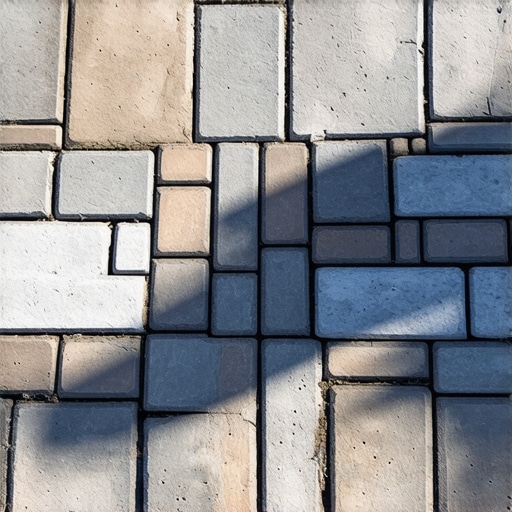
The joinery of the earth and why it fails
I spend my mornings surrounded by the scent of linseed oil and the sharp tang of fresh varnish, hunched over a workbench where a millimeter of error means a ruined heirloom. You might think a patio is different from a 19th-century dovetail joint, but you would be wrong. Both rely on the invisible support beneath the surface. In Culpeper, the red clay acts like a slow-motion thief, stealing the stability of your walkways until that expensive stone looks like a discarded deck of cards. The reality is simple: your pavers are sinking because the foundation was built on a lie. To stop the drift before 2026, we have to look at the bones of the project. This guide breaks down the structural integrity required to keep your hardscapes flat when the Virginia weather decides to turn the soil into soup. Editor’s Take: Sinking pavers are a symptom of hydrostatic pressure and poor base compaction; fixing the surface is a temporary mask for a foundational failure.
The friction of the aggregate
Most people look at a stone and see beauty, but I see weight and the need for resistance. When you are layering a base for landscaping Culpeper VA projects, you cannot just dump gravel and hope for the best. The technical failure usually happens in the sub-base. We use a three-step compaction protocol that mirrors how I’d reinforce a sagging floor joist. First, the excavation must go deeper than the standard four inches; in our local soil, six is the bare minimum. You need a non-woven geotextile fabric to act as a barrier. Think of it as the grain in a piece of oak—it provides the internal structure that prevents the stone from being swallowed by the silt. Without this, your gravel eventually migrates downward, leaving your pavers to settle into the void. It’s not just about digging; it’s about the specific gravity of the materials. We prefer a 21A or 57 stone, depending on the drainage requirements of the specific lot. landscaping culpeper demands this level of respect for the geological reality of the Piedmont region. If the base isn’t vibrated into a literal rock-hard state, your 2026 summer will be spent tripping over uneven edges. We don’t use ‘seamless’ solutions because they don’t exist in nature—we use mechanical interlock.
The red clay curse of Culpeper
Walk down near the historic district or out toward the rolling hills of Rixeyville and you’ll see the same story everywhere. Our soil is heavy, holds water like a sponge, and expands when the temperature drops. This frost heave is the enemy of every hardscape. If you are doing grass seeding or traditional landscaping, you can ignore the sub-surface to an extent. But with stone, the water must have a path out. I’ve seen patios near Southridge that were installed by ‘pros’ who forgot that water follows the path of least resistance. We install perforated pipe systems behind any retaining wall and use a ‘weep hole’ strategy that ensures the pressure doesn’t blow out the side of the installation. The local weather patterns are changing; we are seeing more flash-rain events that saturate the ground in minutes. This is why grass pickup and maintaining a clear perimeter are vital—clogged drainage is a death sentence for your stonework. It’s like leaving a fine table out in a humid basement; the wood will warp, and the stone will sink. You have to respect the local climate or the local climate will move your house.
The lie of the quick fix
Contractors love to talk about polymeric sand as if it’s a magical glue. It’s not. It’s a finishing touch, like the final coat of wax on a cabinet. If the pavers are already shifting, adding more sand is like trying to fix a broken chair leg with Scotch tape. The messy reality is that most sinking issues are caused by poor edge restraints. If the border isn’t anchored with heavy-duty spikes and a concrete ‘toe’ or a professional-grade plastic restraint, the pavers will spread laterally. This ‘creep’ creates gaps that allow water to penetrate the base. Once that water gets under the stone, the freeze-thaw cycle does the rest. I’ve spent years restoring things people thought were trash, and the lesson is always the same: if you skip the prep work, you’re just wasting expensive materials. You see it in mowing habits too; people scalp the grass and wonder why the soil erodes near their walkways. Everything is connected. A well-built hardscape should outlast the person who paid for it. That only happens when you stop looking for the cheap shortcut and start looking at the physics of the site.
From dry-stacking to 2026 technology
The old ways involved dry-stacking stone and letting time settle the score. While I appreciate the history, the 2026 reality is that we have better tools for stability. Permeable paver systems are the new gold standard. They allow water to flow through the joints into a massive reservoir of stone underneath, which then slowly leaches into the ground. This prevents the ‘pool’ effect that kills traditional patios. Does thatching help my patio drainage? Generally, no, but it does keep the surrounding turf healthy enough to prevent runoff from hitting your stone edges. Is grass seeding necessary around a new patio? Absolutely, as the root structure of the new grass acts as a secondary anchor for the soil near your edge restraints. How often should I check for sinking? Once a year, preferably after the first hard thaw in March. Can I fix one sinking paver without pulling up the whole patio? Yes, if you catch it early and the base underneath hasn’t completely washed away. What is the best stone for Culpeper weather? High-density concrete pavers or local flagstone, provided the base is at least 6-8 inches deep. Why does my patio hold water? Your pitch is likely off; every hardscape needs at least a 1-2% grade away from the home foundation. Will mowing near the edge damage the pavers? Not if you have a proper edge restraint installed; otherwise, the vibration and weight can cause minor shifting over time.
The enduring finish
Building something that lasts isn’t an accident. It’s a series of deliberate choices made long before the first stone is laid. In my shop, I don’t rush the glue-up because I know the wood will move. On your property, you shouldn’t rush the excavation. If you want a landscape that remains a source of pride rather than a tripping hazard, you have to treat the earth like the living, moving entity it is. We build for the long haul, ensuring that every joint is tight and every base is solid. If your current patio feels more like a roller coaster than a floor, it’s time to stop the sinking and start the restoration. Let’s build something that survives the next decade of Virginia seasons.