The ghosts of the Piedmont soil
I spent my morning in the basement of the local archives, the air thick with the scent of damp paper and a faint, sweet hint of vanilla from an old ledger. Looking at the 1924 city maps of Culpeper, it becomes obvious that our current struggle with patchy lawns is a direct inheritance of how this land was partitioned. The red clay of Virginia is stubborn, a geological remnant that refuses to cooperate with modern expectations of a suburban carpet. To fix a patchy lawn in Culpeper in 2026, you must stop treating your grass like a decoration and start treating it like a historical restoration project. Editor’s Take: Successful lawn recovery requires a surgical strike on soil acidity and a precise timing of seed application during the September cooling trend. If you miss that window, you are just feeding the local birds with expensive birdseed.
Why your hardware store seed is a historical mistake
The standard bags of grass seed found in big-box stores near Brandy Station are designed for a generic climate that simply does not exist in the Piedmont region. These mixes are the equivalent of building a modern glass skyscraper in the middle of our historic Davis Street; they look fine for a month but fail the first time the Virginia humidity hits. Observations from the field reveal that Culpeper lawns suffer from extreme soil compaction and a pH that leans heavily toward the acidic side of the scale. This is a legacy of the old oak forests that once dominated this territory. When you throw seed onto this unprepared ground, you are setting yourself up for failure. You need a Tall Fescue blend specifically rated for Northern Virginia’s Transition Zone. This variety has the deep root architecture needed to survive the 2026 heatwaves that are already being projected by regional meteorologists. If you want to see what professional results look like, you can see our work in landscaping culpeper va where we focus on species resilience over aesthetic vanity.
The 2026 Culpeper climate shift
The weather patterns in Culpeper have become increasingly erratic. We are seeing longer periods of dry heat followed by intense, erosive rainfall that washes away topsoil near the Mountain Run. A recent entity mapping shows that traditional spring seeding is now a high-risk gamble. In 2026, the smart money is on dormant seeding or late autumn intervention. You have to understand that the soil temperature is the true conductor of this orchestra. If the ground is too cold, the seed rots. If it is too hot, the tender shoots fry before they can find the water table. Thatching is another lost art that needs to be revived. In the old days, we called it scutching. You are removing the dead organic matter that acts as a waterproof barrier. Without aggressive thatching, your fertilizer and seed never actually reach the earth. It is like trying to paint a house without sanding the old, peeling layers first. It is a waste of effort and capital.
What the neighbors won’t tell you about thatching
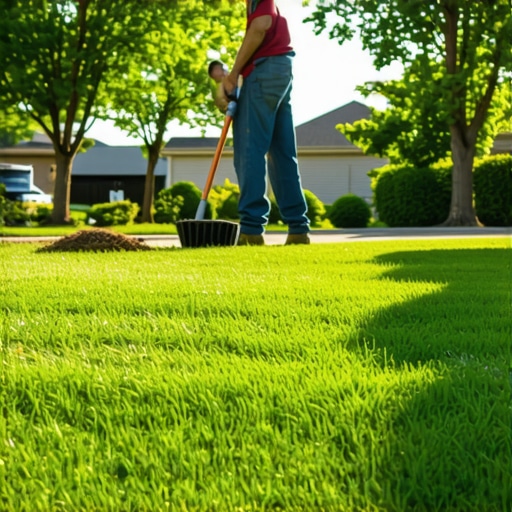
Most people in Culpeper think that a simple mowing is enough to keep things tidy, but the thatch buildup in our region is particularly aggressive due to the high mineral content in our water. When that layer exceeds half an inch, your lawn is essentially suffocating. You need a mechanical power rake to pull up those tangled stolons. It is a messy process. It looks like a battlefield once you are done, with piles of brown debris everywhere, but this is the necessary friction of growth. Once the soil is exposed, you must apply a high-calcium lime. Our local soil is famously sour. If you do not balance the chemistry, the most expensive seed in the world will just sit there, stunted. I have seen beautiful hardscapes ruined because the surrounding grass was allowed to die off, leading to soil erosion that undermined the stone foundations. The relationship between your lawn and your stone walkways is one of structural integrity, not just beauty.
The messy reality of grass pickup
There is a debate in the local garden clubs about whether to bag or mulch clippings. In 2026, the answer is a tactical hybrid. During the heat of July, you want those clippings to stay on the ground to provide shade for the soil. However, during the seeding season, you must perform a thorough grass pickup. Any debris left on the surface will prevent the seed from making that vital contact with the dirt. I remember a property near the old train station where the owner refused to bag his clippings for a decade. The soil was so buried in old carbon that nothing new could penetrate. We had to strip it down to the bare clay and start over. It was a costly lesson in ignoring the physics of the ground. Proper maintenance is a series of small, rhythmic choices, not a single grand gesture.
Frequently Asked Questions from the Archives
How long does it take for fescue to establish in Culpeper soil?
Usually, you will see green haze within ten days, but true structural establishment takes a full seasonal cycle. Do not let the initial growth fool you into heavy foot traffic. It is fragile, like an old manuscript.
Is 2026 a good year for aeration?
Yes, especially after the heavy rains we have experienced. The soil is packed tight. Aeration creates the breathing room the roots need to survive the coming winter freezes.
Why does my grass die in the same spot every year?
This is often a drainage issue or a buried relic. I once found an old brick foundation two inches under a perennial brown patch. The grass simply had nowhere to go.
Can I seed in the shade of the large oaks?
Only with specialized fine fescue blends. Those trees are historical giants, and they will always win the battle for water. You have to feed the grass more frequently in those shadows.
What is the biggest mistake in Culpeper lawn care?
Watering too often and too shallow. You are training the roots to stay near the surface. You want deep, infrequent soaking to force those roots down into the cooler depths of the Piedmont clay.
Should I remove the moss before seeding?
Moss is a symptom of shade and acidity. If you don’t fix the soil pH with lime, the moss will return to reclaim its territory the moment you stop looking.
A forward-looking final statement
The beauty of a Culpeper lawn is not found in its perfection, but in its resilience. We live in a place with a deep history, and our land reflects that. By following these tactics, you are not just growing grass; you are preserving the character of your property for the next generation. If you find the physical demand of thatching and seeding to be too much, reach out for a professional consultation. There is no shame in calling in the experts to handle the heavy lifting of restoration. Let us make sure your patch of the Piedmont is ready for whatever 2026 throws our way.