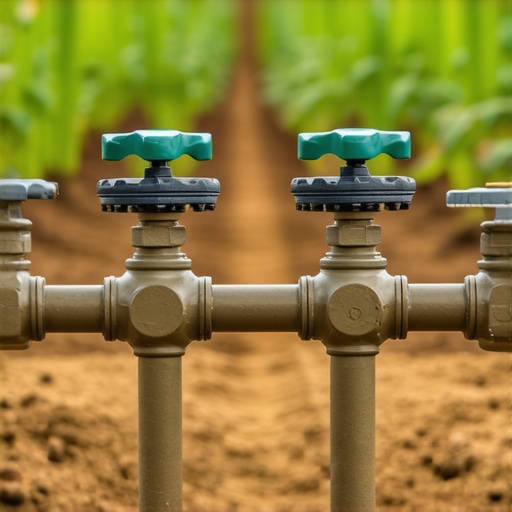
The Hard Truth About Your Irrigation Pressure
I always drill into my new crew members: if you don’t fix the soil grading first, and the valve pressure second, every plant you put in the ground is just expensive compost. I’ve spent twenty years watching homeowners throw thousands of dollars at new sod installs only to watch the water roll off the surface like rain off a tin roof. Most of the time, the culprit isn’t the soil alone—it is high-velocity water. When your irrigation system operates at 70 or 80 PSI, the water doesn’t soak; it hits the ground with enough force to compact the surface, creating a localized hardpan that rejects every drop. You aren’t watering your lawn. You are power-washing it. If your sprinklers look like a fine mist or a fog, you are losing 35% of your water to evaporation before it even hits the grass blades.
Why Irrigation Runoff Destroys Your Sod Investment
Irrigation runoff occurs when the application rate of your sprinkler system exceeds the infiltration rate of your soil, typically caused by excessive nozzle pressure and poor valve regulation. To stop runoff, you must align the system’s hydraulic output with the soil’s physical capacity to absorb moisture through pressure stabilization. It is a matter of physics. If your soil can only handle 0.5 inches of water per hour, but your high-pressure nozzles are dumping 1.2 inches, the math simply doesn’t work. The excess water follows the path of least resistance, usually down your driveway and into the storm drain, taking your expensive nitrogen-based fertilizers with it. This is not just a waste of money; it is a violation of basic civil engineering principles regarding site drainage.
“A retaining wall doesn’t fail because of the stone; it fails because of the water trapped behind it.” – Hardscape Engineering Axiom
How much pressure should an irrigation system have?
For most residential systems using standard spray heads, the sweet spot is 30 PSI. If you are running high-efficiency rotary nozzles, you want closer to 40 or 45 PSI. Anything over 50 PSI begins to shear the water into microscopic droplets that drift away in the slightest breeze. This is called ‘misting’ or ‘fogging.’ It is the enemy of a deep-rooted landscape. We use a pitot tube and a pressure gauge to test every zone. If the gauge reads 60 PSI at the head, we know we have a problem at the valve. High pressure also wears out the internal seals and the plastic gears in rotor heads. It shortens the life of your entire system. Fix the pressure, and you fix the longevity of the hardware.
The Engineering of Water Velocity: PSI vs. GPM
Understanding the difference between Pressure (PSI) and Flow (GPM) is what separates a professional landscaper from a guy with a shovel. Pressure is the force; flow is the volume. When pressure is too high, the velocity of the water inside the lateral lines increases. This leads to ‘water hammer,’ which can literally blow the solenoids off your valves or crack the PVC fittings underground. We follow the ‘5-feet-per-second’ rule. Water should never travel faster than that through your pipes. If it does, the friction loss is astronomical and the surge pressure will eventually cause a catastrophic failure. Stop thinking about how much water you can spray and start thinking about how much the soil can hold. It is about soil saturation, not surface wetting.
| Pressure Level (PSI) | Water Behavior | Impact on Sod/Soil |
|---|---|---|
| 20 – 25 PSI | Low Flow / Drooping | Poor coverage; brown spots. |
| 30 – 45 PSI | Optimal Droplet Size | Maximum infiltration; healthy roots. |
| 55 – 70 PSI | Misting / Fogging | High runoff; wind drift; waste. |
| 80+ PSI | Aerosolization | Structural damage; severe erosion. |
Fix 1: Installing a Master Valve Pressure Regulator
The most effective way to handle high municipal water pressure is at the source. A brass master pressure regulator installed right after your backflow preventer can knock down a 100 PSI street supply to a manageable 65 PSI for the entire manifold. This protects your main lines and every valve in the box. I prefer the heavy-duty Zurn or Wilkins models. They are expensive, but they don’t fail. Cheap plastic regulators are for amateurs. A master regulator ensures that even if the city spikes the pressure at 3 AM, your system won’t explode. It provides a baseline of safety for the entire property’s plumbing.
Fix 2: Using Pressure-Regulated Valves (PRS)
Sometimes the master regulator isn’t enough because different zones have different needs. Your drip zones for the foundation shrubs need 25 PSI, while your lawn rotors need 45 PSI. This is where individual valve pressure regulation comes into play. Modern valves like the Rain Bird PGA or Hunter ICV series allow you to thread a pressure-regulating module (like the Accu-Sync) directly onto the valve. This allows you to dial in the exact PSI for that specific zone. This is critical for yard cleanup projects where you are trying to rehabilitate a stressed landscape. You can lower the pressure for the flower beds while keeping the lawn zones robust. It gives you surgical control over the hydraulics.
“Excessive water pressure is the primary cause of component failure and water waste in residential irrigation systems.” – The Irrigation Association Handbook
Why is water running off my new sod?
New sod has a shallow root system and the soil beneath it is often compacted from the heavy machinery used during landscaping. If you apply water too fast, it can’t penetrate the thatch and the soil interface. The water builds up at the surface and begins to move laterally. This is exacerbated by high pressure which creates smaller droplets that can’t break the surface tension of dry soil. To stop this, you must lower the pressure and switch to a cycle-and-soak method. You need to apply water in short bursts, allowing time for the ‘capillary action’ of the soil to pull the moisture down. If you see water on the sidewalk, turn the system off immediately. You’ve reached the saturation limit for that cycle.
Fix 3: Retrofitting with PRS Spray Heads
If you don’t want to dig up your valve boxes, you can fix the pressure at the head. Pressure-Regulated Spray (PRS) heads have a small regulator built into the stem of every sprinkler. Whether the valve is sending 70 PSI or 40 PSI, the head only puts out a steady 30 PSI. This is now code in many states like California and Texas for a reason. It works. We recently did a sod install on a steep slope where runoff was a nightmare. By switching to PRS heads and high-efficiency rotary nozzles, we eliminated the misting and the runoff. The water stayed on the hill. The grass actually grew. It is a simple swap that saves thousands of gallons of water a year.
Fix 4: Managing Soil Infiltration with Core Aeration
You can have the best irrigation valves in the world, but if your soil is as hard as a parking lot, you will still have runoff. This is where yard cleanup becomes more than just raking leaves. You need to physically open the soil. Core aeration removes 3-inch plugs of dirt, breaking up the surface compaction and allowing the water a direct path to the root zone. I tell my clients: aeration is the ‘lung’ of the lawn. It allows for gas exchange and water infiltration. After aerating, top-dress with a thin layer of compost. This introduces organic matter that acts like a sponge, holding the water in place so it doesn’t run off into the gutter. It is a biological solution to a mechanical problem.
The 10-Point Irrigation Audit Checklist
- Check the static pressure at the outdoor spigot using a $10 gauge.
- Inspect every head for ‘misting’ or ‘fogging’ while the zone is running.
- Look for ‘weeping’ valves where water leaks out even when the system is off.
- Ensure every head is straight; tilted heads cause uneven application and runoff.
- Clear grass and debris away from the spray path to prevent pooling.
- Test the solenoid resistance with a multimeter to ensure electrical health.
- Adjust the arc and radius of every nozzle to keep water off the pavement.
- Clean the internal filters in every spray head to maintain even flow.
- Check the valve box for standing water, which indicates a cracked manifold.
- Verify the controller’s ‘cycle and soak’ settings to match your soil type.