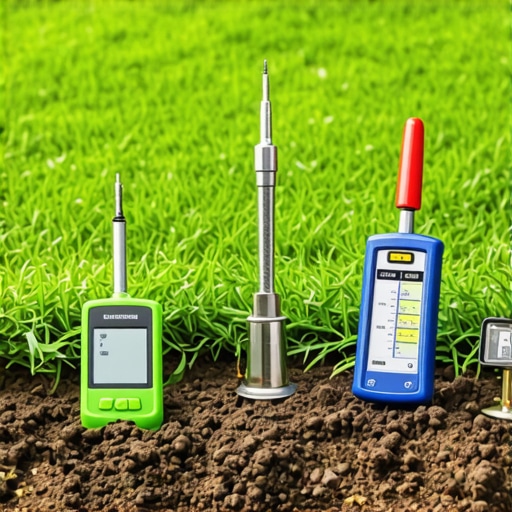
Why Your 2026 Sod Project Fails Before the First Roll is Laid
I always drill into my new crew members: if you don’t fix the soil grading and compaction first, every plant you put in the ground is just expensive compost. Last season, I watched a neighbor spend six grand on premium fescue sod only to have it turn into a crisp, brown carpet by July. They blamed the grower. They blamed the heat. I took a 12-inch screwdriver out of my truck and couldn’t push it half an inch into their dirt. That yard wasn’t soil; it was an 8,000-square-foot brick. Before you even think about a sod install or a major yard cleanup for 2026, you need to understand the physics of the ground beneath your boots. Compaction is the silent killer of landscaping, and most homeowners don’t realize they have a problem until the irrigation bill hits $400 and the grass is still dying of thirst.
What is Soil Compaction and Why Does it Kill Turf?
Soil compaction is the physical compression of soil particles, which eliminates the macropores and micropores necessary for oxygen and water movement. For a sod install, high bulk density creates a physical barrier that prevents root penetration, leading to shallow rooting, nutrient deficiencies, and localized dry spots despite heavy watering.
“Soil compaction is the most common cause of plant failure in the urban landscape because it restricts the flow of air and water to the root zone.” – Texas A&M AgriLife Extension
When you compress soil, you’re essentially suffocating the microbiology. Without pore space, there is no gas exchange. Carbon dioxide builds up, oxygen is depleted, and the roots literally drown in a dry hole. It’s a paradox: the soil is so tight that water can’t get in, but the little water that does get in can’t drain away, leading to root rot. If you are planning a 2026 project, you have eighteen months to fix this. Don’t waste them.
Test 1: The Standard Screwdriver Resistance Test
The screwdriver test provides an immediate, sensory-based assessment of soil resistance by measuring how much manual force is required to penetrate the upper 6 to 12 inches of the soil profile. If a standard 10-inch screwdriver cannot be pushed fully into the ground with moderate hand pressure, your bulk density is too high for sod.
Wait for a day after a light rain so the soil is moist but not saturated. Take a heavy-duty screwdriver and try to push it into the ground in ten different spots across your yard. If you hit a “wall” within the first three inches, your new sod’s roots will never establish. They will simply mat across the surface, making the grass susceptible to even the slightest drought. This test is the quickest way to determine if your yard cleanup needs to include a heavy-duty aeration or full tilling. It is crude, but it works. If you can’t get to 6 inches, stop the project and call a professional with a core aerator.
Test 2: The Infiltration (Perc) Rate Analysis
The infiltration test measures the hydraulic conductivity of your soil by timing how long it takes for a specific volume of water to disappear into a pre-dug hole. Healthy landscaping soil should drain at a rate of 1 to 2 inches per hour; anything less indicates subsurface compaction that will lead to irrigation runoff and ponding.
To run this, dig a hole 12 inches deep and 12 inches wide. Fill it with water and let it drain completely to saturate the surrounding soil. This is critical. Then, fill it again and place a ruler in the hole. Record how many inches the water level drops every hour. If it takes six hours to drop an inch, you have a drainage crisis. This often happens in new builds where heavy machinery has smeared the clay, creating a waterproof seal. No amount of irrigation tweaking will fix a yard that won’t take a drink.
How deep do grass roots grow in compacted soil?
In severely compacted soil, grass roots are often restricted to the top 1 to 2 inches of the soil profile. In contrast, roots in well-aerated, loose soil can reach depths of 6 to 10 inches, allowing the plant to access deep water reserves and withstand 2026 summer heat waves without irrigation stress.
Test 3: Bulk Density Core Sampling
Bulk density is a scientific measurement of the weight of dry soil per unit of volume, used by agronomists to quantify the level of compaction. For silt loam or clay soils, a bulk density exceeding 1.47 g/cm³ begins to physically restrict root growth, while levels above 1.60 g/cm³ can stop it entirely.
| Soil Type | Ideal Bulk Density (g/cm³) | Root Restriction Level (g/cm³) |
|---|---|---|
| Sand | < 1.60 | > 1.80 |
| Silt | < 1.40 | > 1.65 |
| Clay | < 1.10 | > 1.47 |
You can do this at home with a soup can and a kitchen scale, but it’s better to send a sample to a lab. You take a known volume of soil, dry it in an oven at a low temp until all moisture is gone, and then weigh it. High density means there is no room for air. If your 2026 sod install is going over clay, you are likely sitting at that 1.50 mark. You’ll need to incorporate organic matter like compost to break that density down before the first pallet of grass arrives.
Test 4: The Visual Core Inspection
Visual core inspection involves removing a 6-to-12-inch deep soil plug to examine the structure, color, and rooting patterns of existing vegetation. This allows you to identify plow pans, horizontal plating, or construction debris that may be buried beneath the surface, preventing successful landscaping establishment.
Use a soil probe or a sharp spade to cut a clean slice of earth. Look at the layers. Do you see horizontal plates? That’s compaction from heavy traffic. Do you see a grey, smelly layer? That’s anaerobic soil where water is trapped and rotting the organic matter. I often find buried plywood or chunks of concrete from the home’s construction. No irrigation system can fix a buried slab of drywall. This is part of a thorough yard cleanup—getting the garbage out of the root zone before the 2026 season starts.
Will new sod fix a hard yard?
No, laying new sod over hard, compacted soil is a recipe for failure. The sod will initially look good because of the peat-based soil it was grown in, but within months, the roots will hit the compacted layer and stop, leading to a “matted” root system that cannot support the grass during dormancy or drought.
Test 5: Penetrometer PSI Verification
Penetrometers are specialized tools that measure the pounds per square inch (PSI) of pressure required to break the soil surface. In hardscape engineering and turf management, a reading over 300 PSI indicates a “root-limiting” environment where the soil is too dense for the delicate vascular system of the grass to expand.
“A bulk density of 1.6 g/cm³ or higher in silt loam soils will severely restrict root penetration, regardless of nutrient levels.” – NRCS Soil Quality Institute
If you’re serious about your 2026 sod install, rent a penetrometer. Walk the yard. If the needle jumps into the red zone (over 300 PSI) within the first four inches, you must intervene. You either need to perform deep-tine aeration or, in extreme cases, a full excavation and soil amendment. I’ve seen 400 PSI on yards where the owners thought they just needed more fertilizer. You can’t fertilize your way out of a physics problem.
Your 2026 Preparation Checklist
- Call 811: Always mark your utility lines before doing any deep soil testing or aeration.
- Check Soil pH: Compaction often goes hand-in-hand with poor chemistry; aim for 6.0 to 7.0.
- Mechanical Aeration: Pull 3-inch cores, at least 20-30 holes per square foot, to relieve pressure.
- Top-Dress with Compost: Fill those aeration holes with organic matter to prevent them from collapsing.
- Audit the Irrigation: Ensure your irrigation heads provide even coverage; dry spots accelerate soil hardening.
Landscaping isn’t about the green stuff you see on top; it’s about the brown stuff you don’t see underneath. If you treat your soil like a living organism rather than a trash dump, your 2026 sod install will thrive for a decade. If you ignore these tests, you’re just throwing money into the wind. It will rot. Don’t skip the prep. Do the work now, or pay for it later when the grass dies in July. Real landscaping starts with a shovel and a plan, not a credit card and a nursery delivery.