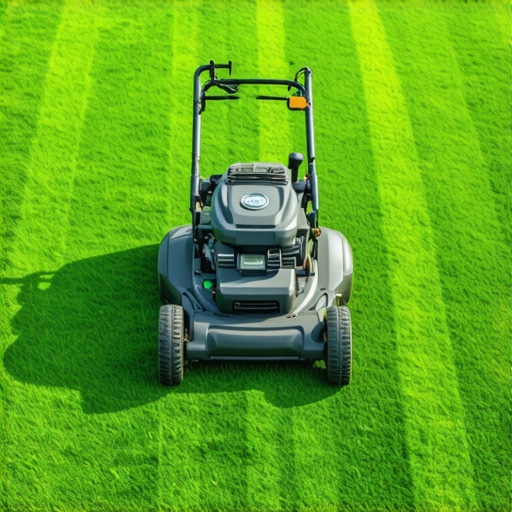
The quiet violence of a blade set too low
The morning air in Culpeper smells of damp earth and the faint sweetness of wild clover. I stand on the edge of the porch, watching the fog lift off the Piedmont hills, feeling the rhythm of the soil beneath my boots. Most people see a lawn as a green carpet to be conquered. They want it short, tight, and uniform, like a sterile hallway. But the grass is a living lung. When you scalp it, you are essentially suffocating the very thing you claim to care about. In 2026, the secret to a resilient yard isn’t a faster mower or more chemicals; it is the patience to let the blade stay tall. To stop grass scalping in Culpeper, set your mower deck to at least 3.5 inches, sharpen your blades every four weeks, and never remove more than a third of the grass height in a single session. This simple shift prevents soil baking and keeps the weeds from finding a foothold in the shade of the taller stalks.
What the grass feels when the sun hits bare dirt
Think of the grass blade as a solar panel. When you shave it down to the soil line, you destroy the plant’s ability to feed itself. The roots, sensing the trauma, begin to shrink. In our local Virginia transition zone, this is a death sentence. Without leaf surface, the plant cannot sweat, and in the humid heat of a Culpeper July, it simply cooks. I have seen too many neighbors try to save time by ‘mowing it short’ only to spend double on landscaping culpeper va services to fix the brown patches a month later. Thatching becomes a nightmare when the grass is too weak to decompose its own clippings. Proper landscaping culpeper isn’t about control; it’s about cooperation with the biology of the Fescue and Bluegrass blends that call this county home.
[image_placeholder]
Observations from the field reveal that lawns kept at four inches require 40% less water because the taller grass shades the ground, keeping the moisture where it belongs. It is a slow, steady wisdom. When you rush the cut, you invite crabgrass to the party. Crabgrass seeds need light to germinate. A tall, thick canopy is the only natural herbicide that actually works without poisoning the birds that wake us up at dawn.
Why the Culpeper clay demands a taller canopy
Our soil here is heavy. It is a dense, red clay that holds onto heat like a brick oven. If you scalp your grass near the South East Street area or out toward Brightwood, you are exposing that clay to direct sunlight. It cracks. It hardens. It becomes a tomb for roots. This is why grass seeding often fails in the fall; the ground has been so baked by poor mowing habits in the summer that the new life cannot penetrate the surface. When we talk about mowing, we are really talking about soil temperature management. A shaded soil stays cool, allowing the microbial life to break down nutrients. If you are struggling with a lawn that looks like a desert, stop looking at the fertilizer bag and start looking at your mower’s height adjustment lever. Most people have it set two notches too low because they are chasing an aesthetic that doesn’t belong in the Virginia climate.
The myth of the shortcut that saves time
The rogue marketer will tell you that mowing low means mowing less often. This is a lie that sells more repair services. Cutting grass too short triggers a stress response in the plant, causing it to push all its remaining energy into rapid, vertical leaf growth to survive. You end up with thin, leggy stalks that look terrible. A rhythmic, weekly trim at a high setting actually stabilizes growth. For those managing complex hardscapes, the temptation to weed-whack the edges down to the dirt is strong. Don’t do it. Scalping the edges of a stone walkway creates a dust bowl that washes out your joint sand during the first heavy rain. We see it all the time around Yowell Meadow Park. The best grass pickup is no pickup at all. Leave those nitrogen-rich clippings on the ground, provided they are small enough to settle between the tall blades. It’s free food for the earth.
Looking toward a more rhythmic 2026 growing season
The old ways of hacking at the yard until it looks like a golf course are fading. In 2026, we are seeing a return to the orchard-style lawn, where health is valued over a buzzcut. People ask me about the ‘perfect’ schedule. There isn’t one. You mow when the grass tells you it’s ready, not when the calendar says it’s Saturday. If it rained for three days straight, wait. Mowing wet grass is the fastest way to tear the plant rather than cut it. A torn blade is an open wound, inviting fungus to move in. How often should I sharpen my blades? Ideally, every 20 hours of use. A dull blade shreds the grass, leaving a brown, frayed tip that looks like a bad haircut. Is grass pickup necessary? Only if the clippings are clumped and thick enough to block the sun. Otherwise, let them return to the dust. What about thatching? If you mow high and often, you likely won’t need to de-thatch more than once every few years. Can I seed in the spring? You can, but in Culpeper, the fall is far superior because the roots have all winter to hide from the heat. Why is my grass yellow after mowing? You likely cut off more than 30% of the blade, exposing the shaded, pale bottom of the stalk to the sun. Does mowing height affect weeds? Yes, tall grass is the enemy of dandelions and clover because it starves them of light. If you need a hand getting the rhythm right, you can always contact us to talk about a sustainable plan for your property.
The sun is higher now, and the dew is gone. The yard is a conversation between the rain, the sun, and the person holding the handle. Treat it with the respect a living thing deserves, and it will reward you with a coolness and a greenness that no chemical can mimic. Stand tall, let the grass do the same, and watch the life return to your little corner of Virginia.