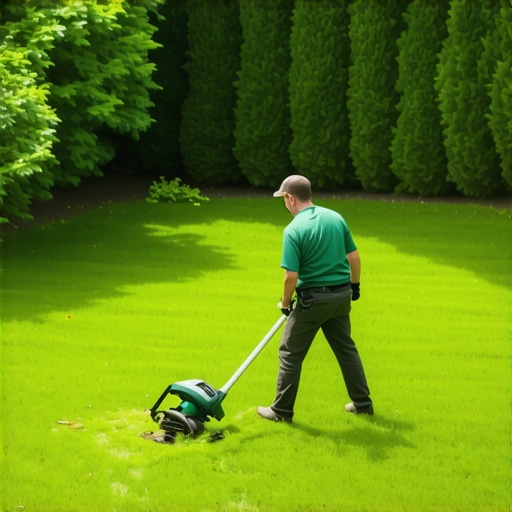
The Engineering Reality of Site Reclamation
To clear a 2026 yard overgrowth in one day, you must deploy industrial flail mowers to reduce biological mass, apply Triclopyr-based herbicides to woody stems, and use a power rake to extract thatch layers, ensuring the soil grade is preserved for immediate sod installation. Clearing land is not a weekend hobby; it is a mechanical and chemical battle against ecological succession. I always drill into my new crew members: if you don’t fix the soil grading first, every plant you put in the ground is just expensive compost. I remember an apprentice who thought he could skip the compaction check on a 4,000 square foot yard. He threw down high-end Tall Fescue sod directly onto loose, aerated soil that hadn’t been leveled. After the first heavy rain, the yard looked like a topographic map of the Himalayas. The drainage failed because the micro-depressions held water, rotting the root system within forty-eight hours. We had to rip it all out. Don’t be that guy. Yard cleanup requires an understanding of soil horizons and mechanical advantage.
The Physics of Vegetation Removal
When you walk into a yard that has been neglected for two seasons, you aren’t just looking at tall grass. You are looking at a dense matrix of cellulose and lignin that has locked up the nitrogen cycle. To clear this in twenty-four hours, you need to think in terms of tonnage. A standard residential lawn mower will choke on six-inch overgrowth because the deck height cannot clear the discharge. You need a brush hog or a heavy-duty flail mower. These machines use high-mass blades to pulverize woody material into a fine mulch that won’t smother the soil surface. If you leave clumps of green waste, you create an anaerobic environment that kills the beneficial microbes needed for the next phase of your landscaping.
“The success of any turfgrass establishment depends entirely on the physical and chemical state of the upper six inches of the root zone.” – Penn State Center for Turfgrass Science
1. The Mechanical Knockdown Protocol
Start with a high-torque brush cutter to scalp the area to a height of two inches. This exposes the root flares and any hidden irrigation components. Most 2026 yard overgrowth hides broken sprinkler heads or valve boxes that have been heaved by frost. Use a systematic grid pattern. Do not jump around the yard. Work from the perimeter toward the center to force any local fauna out of the work zone. This is about efficiency. If your blade speed drops, you are moving too fast. Keep the RPMs high to ensure a clean structural cut rather than a tear. Tearing the plant tissue leads to slower decomposition of the remaining stalks.
2. Chemical Suppression of Woody Invasive Species
Once the canopy is removed, you will find the real enemies: woody vines and stump sprouts. Standard glyphosate won’t cut it for 2026 yard overgrowth. You need a concentrated Triclopyr ester. This chemical mimics plant hormones and causes rapid, uncontrolled growth that essentially ‘burns’ the plant out from the inside. Use a surfactant to ensure the chemical sticks to the waxy cuticles of the leaves. For larger stumps, use the ‘cut-stump’ method. Cut the stem flush to the ground and paint the cambium layer with a 25 percent concentration within five minutes. If you wait longer, the plant will seal its vascular system and the chemical will not reach the root ball. It will grow back. Don’t let it.
3. Managing Nitrogen Immobilization
A common mistake is tilling green debris directly into the soil. This triggers nitrogen immobilization. Bacteria require nitrogen to break down the carbon in the dead grass. If you bury the debris, the bacteria will steal all the available nitrogen from the soil, leaving none for your new sod or plants. Your yard will turn yellow and stay yellow. Instead, use a power rake to pull the debris to the surface and haul it off-site. Your soil chemistry depends on this balance. If you must till, you have to compensate by adding a high-nitrogen starter fertilizer, such as a 21-0-0 ammonium sulfate, to feed the decomposition process and the new plants simultaneously.
How do I kill woody brush without hurting my trees?
To kill woody brush without damaging established trees, you must use selective basal bark treatments or targeted foliar applications during the late growing season when the brush is drawing nutrients down to its roots. Avoid using soil-active herbicides like Bromacil or Prometon near the drip line of desirable trees, as their root systems extend far beyond the canopy and will readily uptake the poison. Precision is your only protection. Use a handheld sprayer with a cone nozzle to minimize drift.
| Material Type | Recommended Tool | Labor Hours (per 1k sq ft) | Disposal Method |
|---|---|---|---|
| Tall Grass | Zero-Turn Mower | 0.5 | Compost |
| Woody Brush | Flail Mower | 1.5 | Mulch/Haul |
| Invasive Vines | Brush Cutter | 2.0 | Incineration/Landfill |
| Old Sod/Thatch | Power Rake | 1.0 | Green Waste Facility |
4. The Irrigation Integrity Audit
Before you even think about new sod install, you must pressure test the irrigation lines. Overgrowth often conceals leaks that have turned the subsoil into a slurry. Check the static pressure at the main valve. If you see a drop of more than 5 PSI when the zones are off, you have a subterranean leak. Digging up a new lawn because you didn’t check a $10 fitting is a professional sin. Ensure your spray heads are set at the correct grade. They should be flush with the soil surface so the mower blades don’t shear them off, but high enough to clear the grass height when pressurized. Don’t guess. Use a level.
5. Soil Compaction and Grading
After the cleanup, the soil is likely disturbed. You need a 500-pound water-filled roller to reset the base. Loose soil settles unevenly, creating hazardous holes and poor drainage patterns. You want the soil to be firm enough that a 200-pound man leaves a footprint no deeper than a quarter-inch. This density is critical for capillary action. If the soil is too loose, the water will drain through too quickly, and the roots of your new sod will desiccate. If it is too tight, you get runoff. Aim for a 1 percent to 2 percent slope away from the house foundation to manage hydrostatic pressure.
“A retaining wall doesn’t fail because of the stone; it fails because of the water trapped behind it.” – Hardscape Engineering Axiom
6. Rapid Sod Installation Protocol
If you are clearing a yard in one day, you need the sod delivered as soon as the grading is finished. Sod is a living, breathing organism. Once it is cut at the farm, the ‘shelf life’ is about 24 hours, especially in the heat. Lay the sod in a staggered brick pattern. This prevents long seams where water can channel and erode the soil. Use a sharp linoleum knife for the edges. Don’t overlap the pieces. Overlapping creates air pockets that kill the roots. After laying the sod, roll it again. This ensures ‘root-to-soil’ contact. Without that contact, the grass is dead on arrival. It will rot.
Is it cheaper to clear land or buy sod?
Clearing land is significantly cheaper in terms of material costs, but sod installation provides an immediate erosion control and weed suppression layer that saves thousands in long-term maintenance. When you clear land and leave it bare, you are inviting every weed seed in the county to germinate in your newly disturbed soil. The cost of herbicides and labor to manage a seeded lawn over two years often exceeds the upfront cost of high-quality sod. Professionals choose sod for the instant structural integrity it provides to the topsoil.
- Check soil pH: Aim for 6.5 to 7.0 for optimal nutrient uptake.
- Clear all surface stones larger than 1 inch.
- Apply a pre-emergent herbicide if you are not sodding immediately.
- Mark all utility lines by calling 811 before any deep excavation.
- Verify that your irrigation timer is programmed for short, frequent cycles during the first 14 days of new sod.
7. The Post-Cleanup Moisture Management
Once the yard is cleared and the sod is down, the job isn’t over. The soil is in shock. For the first week, you need to keep the top two inches of soil saturated. This isn’t about deep watering yet; it’s about cooling the root zone. After day ten, shift the schedule. Deep, infrequent watering is the goal. You want to force the roots to chase the moisture down into the deeper soil horizons. If you water every day for five minutes, you get a lazy root system that will die during the first heat wave. One inch of water per week, delivered in two sessions, is the industry standard for established turf. Don’t skip this. The first year is the settling-in period where the engineering of your cleanup is truly tested. Watch the grade. Check the drainage. Keep the blades sharp. Proper yard cleanup is a science, not a chore. Follow these steps and you won’t just clear a yard; you’ll build a foundation that lasts for decades. Don’t take shortcuts. The dirt always tells the truth.