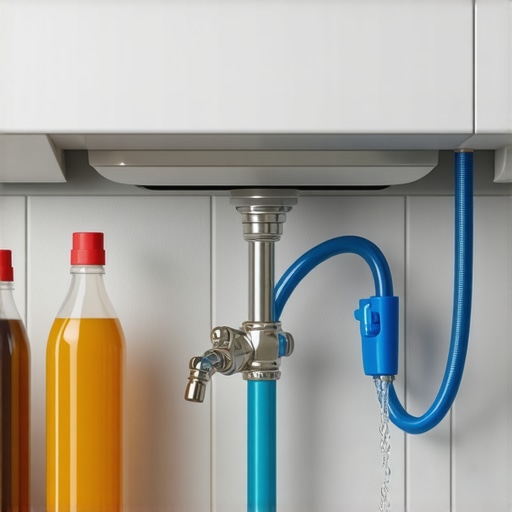
Why Your Drip Irrigation System is Failing From Within
Mineral accumulation and salt buildup in drip lines occur when hard water minerals like calcium and magnesium solidify inside the emitters. This restricts water flow, causes hydrostatic pressure imbalances, and ultimately kills expensive plant stock through invisible drought stress. Don’t ignore the white crust. It is the signature of a dying system.
The Apprentice Lesson: Soil Grading and System Integrity
I always drill into my new crew members: if you don’t fix the soil grading first, every plant you put in the ground is just expensive compost. I learned this the hard way twenty years ago on a job site in high-density clay soil. We did a massive sod install, but the client refused to pay for a high-grade filtration system on their well-water source. They figured if the water was clear, it was clean. Three months later, I got the call. Half the yard was brown, and the other half was a swamp. I had to go back and perform a forensic audit of the lines. Every single emitter was choked with calcium carbonate. The water was still pumping at 40 PSI at the valve, but nothing was reaching the root zones. The lesson: ignore your water chemistry, and your landscaping will rot from the roots up. It is a mathematical certainty.
“A drip irrigation system is only as good as its filtration and its maintenance schedule; without flushing, the emitters become micro-dams for mineral scale.” – Irrigation Efficiency Manual (ASABE Standards)
Hack 1: The Pressure Flush and Acetic Acid Shock
The acetic acid shock treatment involves injecting a high concentration of white vinegar into the main irrigation lateral to dissolve calcium bonds through a rapid chemical reaction. By isolating the zone and introducing the vinegar, you convert solid calcium carbonate into soluble calcium acetate, which can then be flushed out. This is not a gentle rinse; it is a chemical purge.
To perform this, you need to shut off the main water supply and drain the zone. Use a venturi injector or a simple hand-pump sprayer adapted to the line. Inject pure, 5% acidity white vinegar. Let it sit in the lines for exactly six hours. Do not leave it overnight. Prolonged exposure can degrade lower-quality rubber gaskets in your valves. Once the time is up, open the end-caps of your drip lines. This is crucial. If you don’t open the flush valves, you are just pushing the loosened scale further into the emitters. Flush with clean water at maximum operating pressure until the water runs clear. Check the PSI. It should be steady.
Hack 2: The Emitter Submersion Soak for Localized Clogs
The localized submersion soak is the most effective method for cleaning individual emitters or drip stakes that show signs of severe calcification or bio-film growth. By submerging the physical orifice in a 50/50 vinegar solution, you allow the acid to penetrate the internal labyrinth of the emitter, restoring the factory-rated flow rate. This prevents the need for total line replacement during a yard cleanup.
You will need a bucket, white vinegar, and a stiff nylon brush. If you have button emitters, pop them off the line. If you have integrated dripline, you will have to lift the line out of the mulch. Submerge the affected sections in the solution. You will see bubbling; that is the carbon dioxide being released as the acid eats the scale. It is simple chemistry. After two hours, use the brush to clear the surface debris. Reinstall and test. If the drip pattern isn’t a perfect bead, the emitter is toast. Throw it away. Don’t waste time on dead components.
Hack 3: The Gravity-Fed System Purge
A gravity-fed vinegar purge utilizes the natural elevation gradients of your property to distribute de-scaling agents through the entire irrigation network without the need for high-pressure pumps. This method is ideal for low-pressure systems where mineral deposits have significantly reduced the volumetric flow rate to less than 50% of the design capacity.
Place a large reservoir at the highest point of the irrigation zone. Fill it with a solution of one gallon of vinegar for every five gallons of water. Gravity will pull the solution through the lines, following the path of least resistance. Because the pressure is low, the vinegar has more contact time with the internal walls of the tubing. This is particularly effective for removing the ‘slime’ or bio-film created by iron-oxidizing bacteria. Leave it for 4 hours. Close the reservoir and switch back to the main line. Flush the lines immediately to prevent the dissolved sludge from resettling. It works. Every time.
How much vinegar should I use for irrigation cleaning?
For a standard 100-foot run of half-inch drip tubing, you need approximately 1.5 to 2 gallons of white vinegar to ensure the line is fully primed. This volume accounts for the internal capacity of the pipe and allows for some concentration loss as it reacts with the mineral scale. Always use 5% or 6% acidity white vinegar; industrial 30% vinegar is too corrosive for most plastic fittings and can kill your sod install if not neutralized properly.
| Method | Effectiveness | Risk Level | Time Required |
|---|---|---|---|
| Pressure Flush | High | Moderate | 6 Hours |
| Emitter Soak | Very High | Low | 2 Hours |
| Gravity Purge | Moderate | Low | 4 Hours |
Will vinegar kill my plants if I use it in the drip lines?
Vinegar can act as a contact herbicide, but when used as a system cleaner and followed by a thorough water flush, the risk to landscaping is minimal. The key is dilution and flushing. Never run the irrigation system with vinegar in the lines directly onto the foliage. The acetic acid must be flushed out through the end-caps, not the emitters, to ensure no concentrated acid reaches the root zone or the leaf surface of your plants. If you are worried, water the area deeply with fresh water after the cleaning process to further dilute any residual acid in the soil.
“Water quality is the silent variable in landscape longevity; 80% of irrigation failures in well-watered regions are due to chemical precipitates rather than mechanical wear.” – Agronomy Extension Circular
Maintenance Checklist for 2026 Irrigation Health
- Check the 200-mesh filter screen every 14 days during peak season.
- Perform a manual line flush through the end-caps once a month.
- Test your water pH; if it is above 7.5, you will have chronic scaling.
- Inspect the ‘last emitter’ on every run to ensure it hasn’t lost pressure.
- Replace any emitters that show a salt ‘crust’ immediately.
Landscape maintenance is not about reacting to problems; it is about preventing them through engineering logic. If you treat your irrigation like a precision machine, it will last twenty years. If you treat it like a garden hose, you will be replacing it in two. The choice is yours. Don’t skip the maintenance. It’s cheaper than new plants. It’s that simple.