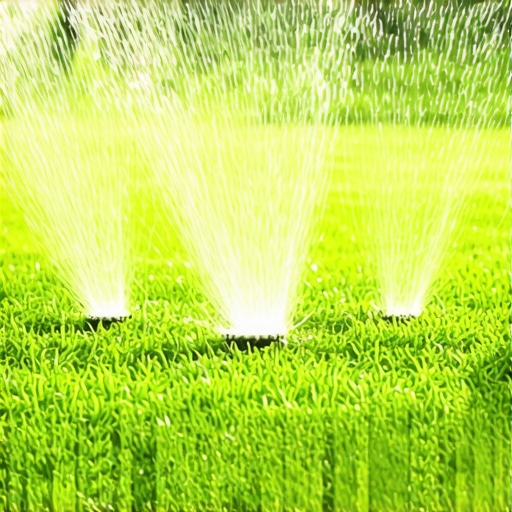
Diagnosing the 2026 Dry Spot: A Forensic Autopsy of Failed Turf
Dry spots in a managed landscape are rarely a sign of ‘under-watering’ in the traditional sense; they are almost always a failure of distribution uniformity (DU) and hydraulic pressure management. When you see a patch of straw-colored fescue or dormant bermuda, you are looking at the architectural failure of an irrigation system that has lost its fight against evapotranspiration. The 2026 season has proven that standard ‘mow-and-blow’ tactics fail when thermal stress hits a certain threshold. I always drill into my new crew members: if you don’t fix the soil grading and the hydraulic physics first, every plant you put in the ground is just expensive compost. You can dump ten thousand gallons on a yard, but if the nozzles are atomizing the water into a mist that drifts into the neighbor’s driveway, your soil profile remains bone-dry. I’ve spent twenty years digging up ‘pro’ installs that were nothing more than a series of oversights. Most dry spots are created the day the system is designed, not the day the sun gets hot.
“A lawn is not a decoration; it is a living biological system that requires precise hydraulic delivery to maintain turgor pressure in the cellular structure of the leaf blade.” – Agronomy Field Manual 101
How do I calculate precipitation rates for my lawn?
To calculate precipitation rates, you must measure the total Gallons Per Minute (GPM) used by a specific zone and divide it by the square footage of the coverage area, then multiply by 96.25. This yields the inches per hour, a critical metric for irrigation scheduling and preventing runoff on compacted soils. Understanding your GPM is the only way to avoid the ‘dry spot’ trap. Guessing is for amateurs.
Tweak 1: Transitioning to High-Efficiency Rotary Nozzles for Matched Precipitation
Matched Precipitation Rates (MPR) ensure that every square foot of a lawn zone receives the exact same volume of water regardless of the arc or radius settings. Most older systems use fixed-spray nozzles that dump an uneven volume, leading to ‘donuts’ or dry patches where the water doesn’t overlap. By switching to high-efficiency rotary nozzles, we utilize multiple rotating streams that deliver water at a slower, more deliberate rate. This is the infiltration rate secret: you want to apply water only as fast as the soil can absorb it. In heavy clay soils, standard sprays cause immediate runoff, leaving the root zone parched. Rotary nozzles solve this by mimicking a gentle rain, allowing the water to penetrate deep into the macropores of the soil structure. They also resist wind drift because the droplets are larger and heavier. It is simple physics.
| Nozzle Type | Application Rate (in/hr) | Wind Resistance | Soil Suitability |
|---|---|---|---|
| Standard Spray | 1.5 – 2.0 | Low (Mist) | Sandy Loam Only |
| High-Efficiency Rotary | 0.4 – 0.6 | High (Large Droplets) | Heavy Clay / Silt |
| Bubblers | 3.0+ | Extreme | Tree Wells Only |
Tweak 2: Correcting Head-to-Head Coverage and Nozzle Trajectory
Head-to-head coverage means the spray from one sprinkler head must reach the base of the next one in the sequence. Anything less creates a shadow zone that will inevitably turn into a dry spot during high-heat cycles. I often see ‘landscapers’ try to stretch the distance between heads to save on pipe and labor. This is a death sentence for a sod install. When the trajectory is too low, the water hits the grass blades near the head and never reaches the perimeter. When it’s too high, the wind shears it away. Adjusting the trajectory of your nozzles to 15-25 degrees ensures the water cuts through the boundary layer of the air. We use a technical audit—literally placing catch cans in a grid—to see where the coverage fails. If you find a gap, you don’t just turn up the timer; you change the nozzle orifice or the riser height. Don’t skip this. A two-inch riser in a four-inch lawn is useless; the grass blocks the water. Use six-inch pops to clear the canopy.
What is the best nozzle for a windy yard?
The best nozzle for a windy yard is a low-angle rotary nozzle, which produces heavy droplets that resist drift and evaporation. These nozzles are engineered to maintain a flat trajectory, keeping the water close to the ground and ensuring it reaches the intended hydrozone rather than being lost to the atmosphere. We specifically look for nozzles that offer multi-stream technology, as they provide the most consistent coverage under erratic wind conditions.
Tweak 3: Installing Pressure-Regulated Nozzle Stems to Stop Mist
High water pressure is the silent killer of a healthy yard because it causes atomization, turning water into a fine mist that evaporates before it hits the ground. Most residential lines run at 60-80 PSI, but a standard spray nozzle is designed to operate at exactly 30 PSI. When you push 80 PSI through a 30 PSI nozzle, you lose 30-50% of your water to the wind. Installing Pressure Regulating Stems (PRS) in each head ensures that regardless of the incoming pressure, the nozzle receives its optimal operating PSI. This keeps the droplets large and the distribution profile consistent. It also saves thousands of gallons of water over a single season. I’ve seen systems where simply adding pressure regulators fixed ‘unsolvable’ dry spots overnight. It isn’t magic; it’s hydraulic engineering. You want a steady stream, not a cloud.
“A retaining wall doesn’t fail because of the stone; it fails because of the water trapped behind it, and a lawn doesn’t fail because of the heat; it fails because of the lack of pore-space hydration.” – Hardscape Engineering Axiom
The 2026 Irrigation Audit Checklist
- Check Riser Height: Ensure the nozzle is at least 2 inches above the grass canopy.
- Verify Overlap: Confirm 100% head-to-head coverage in every zone.
- Clean Internal Filters: Sediment in the basket reduces GPM and ruins the spray pattern.
- Inspect for ‘Tilt’: Heaved heads spray into the dirt or over the target; keep them vertical.
- Adjust Arc Edges: Stop watering the sidewalk; that water belongs on the sod.
- Test Pressure: Use a pitot tube to check the PSI at the furthest head in the run.
Soil Physics and the Hydrophobic Barrier
Sometimes, dry spots aren’t the nozzle’s fault; they are a result of hydrophobic soil. This happens when the soil gets so dry it begins to repel water. You can spray all day, and the water just beads up and runs off. In these cases, a yard cleanup isn’t enough; you need to mechanically aerate and apply a surfactant or wetting agent to break the surface tension. Deep core aeration pulls three-inch plugs, opening up the rhizosphere to receive the water your new nozzles are delivering. If you are doing a new sod install, ensure the soil is tilled with organic matter to prevent this layering effect. Real landscaping is about what’s happening under the surface. If you don’t respect the soil, the soil won’t respect your budget. Fix the nozzles, fix the pressure, and then let the biology take over. It will rot if you don’t manage the drainage, but it will burn if you don’t manage the physics. Your yard is a machine; treat it like one.