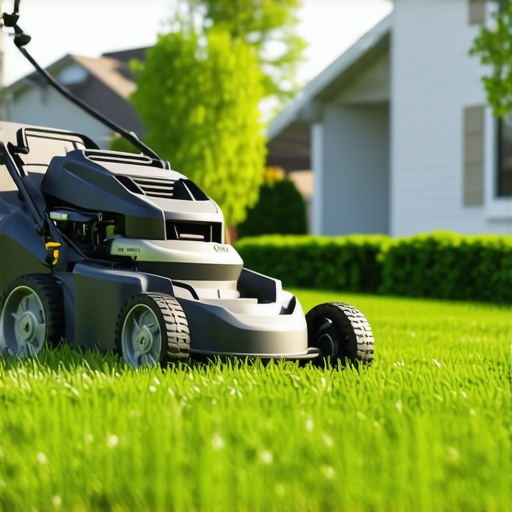
The swampy reality of Virginia fescue
I have spent twenty years smelling like WD-40 and transmission fluid, and if there is one thing that makes me want to throw a wrench across the shop, it is a mower deck packed tighter than a Culpeper tobacco barn with wet grass. You want to know how to stop the clogs? Stop cutting when it is wet, sharpen your blades until they can shave, and keep the deck clean of that sticky red clay. It isn’t rocket science, but most folks treat their equipment like it is magic. EDITOR’S TAKE: Real-world mower maintenance in Culpeper requires moisture control and high-lift blade geometry to fight local humidity. Ignore the all-weather marketing and focus on deck airflow. To stop mower clogs in 2026, you must increase deck RPM, use high-lift blades, and wait until the Culpeper morning dew has evaporated completely before starting your engine. If you are struggling with a yard that grows faster than you can cut, you might want to look into landscaping culpeper va professionals who have the heavy-duty gear to handle the thick stuff.
Airflow is the only thing that matters
A mower is essentially a high-speed fan with a knife attached to the bottom. When you hit a patch of thick fescue, that fan needs to move a massive volume of air to throw the clippings out of the chute. If the air cannot move, the grass stays in the deck, gets hit a second time, turns into a green paste, and sticks to everything. It is a mechanical failure of physics, not just bad luck. In the shop, I see spindles snapped because people try to power through a clog. The torque required to spin through three inches of wet pulp is enough to twist steel. You need to check your discharge chute for any plastic burrs or rough edges that catch those first few blades of grass. Once a single blade sticks, it acts as an anchor for the rest. We often recommend contact us for a consultation if your yard layout makes standard mowing a constant battle against clogs.
[IMAGE_PLACEHOLDER]
The Culpeper morning dew trap
If you live near the foothills of the Blue Ridge, you know the humidity doesn’t just sit in the air; it lives in the soil. Culpeper grass is heavy. It is not that light, wispy stuff you see in the Midwest. Our red clay keeps the root systems soaked, and that moisture travels straight up the blade. If you start your mower at 8 AM, you are essentially trying to mulch a bucket of water. I tell every customer to wait until 10 AM or even noon. Let the Virginia sun do the hard work for you. Even a professional-grade deck will struggle with the 2026 climate patterns we are seeing, where sudden afternoon downpours follow humid mornings. This is why local knowledge beats a generic manual every time. Our regional grass pickup needs are different because our grass is physically heavier. If you find your lawn is constantly thatched over because you can’t bag it fast enough, professional thatching and grass seeding might be the only way to reset the health of your turf.
Why your neighbor’s fancy mulcher keeps dying
I see these expensive zero-turns come in with burned-out belts and smoking clutches. The owners usually blame the machine, but the problem is the mulching kit. Mulching requires the grass to stay under the deck for multiple rotations. In Culpeper, that is a recipe for a heart attack. Unless you are cutting every three days, a mulching kit is just a clog-generator. For a clean yard without the headache, you are better off with a side discharge or a high-vacuum bagging system. The friction of the grass against the underside of the deck creates heat, and that heat turns the grass juice into a literal glue. If you are dealing with hardscapes or tight corners, the problem gets worse because you lose the forward momentum that helps clear the chute. You have to keep the blade speed up even when the ground speed is low. It is a balancing act that most homeowners get wrong until they have to pay for a new belt.
The 2026 reality for local lawns
As we move into the 2026 season, the technology is getting better, but the physics of grass haven’t changed. Old-school methods like scraping the deck with a putty knife after every third mow still beat any high-tech coating. I have seen guys spray their decks with cooking oil or graphite, and it lasts about ten minutes before the grit from the Culpeper soil wears it off. The real fix is mechanical: high-lift blades, proper RPM, and timing. FAQ: Does deck washing help? Only if you dry it. Water left under the deck leads to rust and a rough surface that grass loves to grab onto. FAQ: Should I sharpen my own blades? If you have a steady hand and a grinder, sure, but an unbalanced blade will vibrate your deck into a heap of junk. FAQ: Is 2026 gear better for wet grass? Slightly, but the volume of growth we get in Virginia still exceeds the capacity of most consumer chutes. FAQ: How often should I scrape the deck? Every time you see clumps left on the lawn. That is the machine telling you it is choking. FAQ: Can I mow in the rain? Only if you want to spend the next four hours cleaning the mower and the next week fixing the ruts in your yard.
The final word on mechanical health
Don’t let a clogged deck ruin your weekend or your engine. Take care of the steel, and the steel will take care of the grass. If you are tired of the grease under your nails and the constant battle with the humidity, there is no shame in calling in the experts. A well-maintained yard is a reflection of the tools used to create it. Keep your blades sharp and your discharge clear.