Why Your Boxwoods are Defoliating and How to Stop the Bleeding
Boxwood blight, caused by the fungal pathogen Calonectria pseudonaviculata, is a death sentence for a formal hedge if you don’t understand the biology of the spore. To fix 2026 boxwood blight, you must aggressively thin the interior canopy to increase airflow, sterilize every tool between every single plant, and eliminate overhead irrigation that splashes sticky fungal spores onto healthy tissue. This isn’t just about aesthetics; it is about stopping a biological wildfire that can remain dormant in your soil for up to a decade. I always drill into my new crew members: if you don’t fix the soil grading and airflow first, every plant you put in the ground is just expensive compost. Most of the ‘pros’ you hire are just moving spores from one yard to the next because they don’t clean their shears. I have seen entire $50,000 estates stripped bare because a ‘mow-and-blow’ crew used the same hedge trimmers on a blighted property and then moved down the street. It is negligence, plain and simple. You need to treat your hedge like a surgical patient, not a lawn. If you see black cankers on the stems or circular brown spots with dark borders on the leaves, the clock is already ticking.
“Boxwood blight is caused by the fungus Calonectria pseudonaviculata; the spores are heavy and sticky, often spreading through water splash, contaminated tools, or even animal fur.” – Virginia Tech Agricultural Extension
How do I know if my boxwood has blight or just winter burn?
Winter burn usually affects the outer tips and appears as a uniform tan or bronze color, whereas boxwood blight creates distinct circular lesions with dark rings and causes rapid, total leaf drop. Blight also leaves tell-tale black streaks or ‘cankers’ on the green stems. Check the lower canopy first where humidity is highest. It spreads fast. Don’t wait.
The Pro Pruning Hacks for Blight Remediation
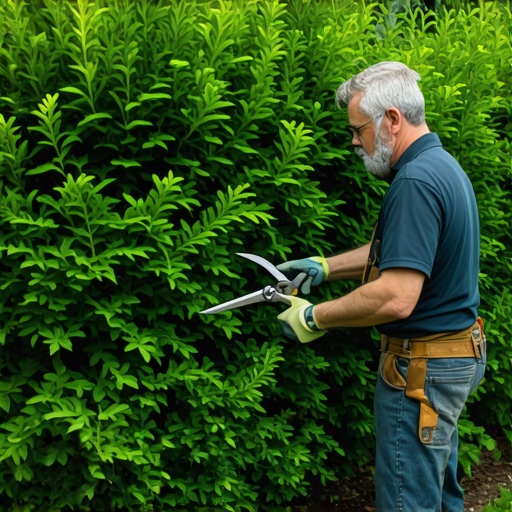
Pruning for blight management requires a ‘Thinning Cut’ strategy where 10 to 15 percent of the interior branches are removed to break the micro-climate of high humidity that the fungus requires to germinate. This is the opposite of the ‘shaving’ or ‘shearing’ technique used by hacks. When you shear the outside of a boxwood, you create a thick shell of foliage that traps moisture inside. That moisture is a petri dish for Calonectria. By reaching into the center of the plant and removing small ‘windows’ of growth, you allow the sun to dry the interior wood and the wind to carry away moisture. Use sharp bypass pruners only. Anvil pruners crush the vascular tissue (the xylem and phloem) and leave a ragged wound that is an open door for infection. Cut back to a lateral branch. Never leave a stub. Stubs rot. Rot invites more fungus.
| Condition | Visual Symptom | Primary Cause | Treatment Action |
|---|---|---|---|
| Boxwood Blight | Black stem cankers, rapid leaf drop | Fungal (C. pseudonaviculata) | Thinning, Sanitation, Mulch |
| Boxwood Leafminer | Puffy, blistered leaves | Monarthropalpus flavus (Larvae) | Systemic Insecticide |
| Winter Burn | Uniform bronze/tan tips | Desiccation from wind/cold | Anti-desiccant spray in late fall |
| Root Rot | General yellowing/wilting | Phytophthora (Poor drainage) | Soil grading and drainage repair |
The Sanitation Protocol: The Bleach Barrier
Sanitation in 2026 requires a 10 percent bleach solution or 70 percent isopropyl alcohol bath for all tools between every single plant to prevent the mechanical transmission of fungal spores. This is the part that most homeowners and cheap contractors skip because it is tedious. It doesn’t matter. If you prune a sick plant and then move to a healthy one, you have just injected the fungus into the healthy tissue. You must also clean your boots. Spores can travel on the mud in your treads. I’ve seen it happen. We use a dedicated spray bottle of Lysol or a 1:9 bleach-to-water ratio. Spray the blades, the handles, and your gloves. If you are doing a major yard cleanup, the debris must be bagged and sent to a landfill. Never, under any circumstances, compost blighted boxwood material. The spores are thermophilic-resistant and will survive the heat of a standard compost pile, only to be spread back onto your landscape later.
Can I spray my way out of boxwood blight?
Fungicides like Chlorothalonil or Fludioxonil are preventative, not curative; they act as a chemical shield but will not ‘kill’ the blight once it has invaded the plant’s vascular system. You must prune out the infection first. Sprays are the backup, not the solution. Proper landscaping starts with cultural practices. Depend on biology first, chemistry second.
Ground-Level Irrigation and Mulch Management
Switching from overhead sprinklers to drip irrigation or soaker hoses is mandatory to prevent the water-splash effect that lofts fungal spores from the soil onto the lower foliage. If you are paying for a high-end irrigation install, make sure they aren’t using pop-up sprays near your Buxus. Water hitting the leaves is the enemy. Furthermore, you need to manage your mulch. A fresh 2-inch layer of pine bark or hardwood mulch acts as a physical barrier, pinning spores to the ground so they can’t splash up. But watch your root flares. Most people pile mulch up against the stem like a ‘mulch volcano.’ This traps moisture against the bark and causes basal rot. Pull the mulch back 3 inches from the trunk. The root flare—the spot where the trunk widens at the soil line—must be visible. This is non-negotiable for plant health.
“A retaining wall doesn’t fail because of the stone; it fails because of the water trapped behind it, much like a plant fails not just from a pathogen, but from the environmental conditions that allow it to thrive.” – Hardscape and Agronomy Axiom
- Step 1: Inspect plants for black cankers and leaf spots during your spring yard cleanup.
- Step 2: Execute thinning cuts to the interior to drop the relative humidity inside the canopy.
- Step 3: Sterilize shears with 70% alcohol between every single plant.
- Step 4: Install drip irrigation to keep foliage dry during the summer months.
- Step 5: Apply a fresh 2-inch layer of mulch, ensuring the root flare is exposed.
If you have massive dead spots, you might be looking at a sod install for the surrounding areas to rebuild the organic matter, but don’t replant boxwoods in the same spot immediately. The soil is ‘hot.’ Wait at least two seasons or switch to a resistant cultivar like ‘NewGen Independence’ or ‘NewGen Freedom.’ These were bred to withstand the pressure of 2026 blight levels. Remember, the goal of a professional landscaper is to create an ecosystem that is hostile to disease. Clean your tools. Watch the water. Thin the canopy. It is that simple.