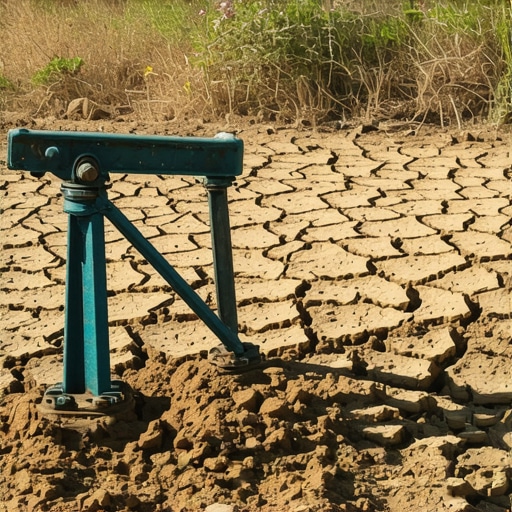
The Diagnostic Reality of Mid-Summer Pump Failure
Losing prime in an irrigation pump during a 100-degree July stretch is not just a minor mechanical hiccup; it is a full-blown landscaping emergency that can torch a $20,000 sod install in under 48 hours. When a pump loses prime, the centrifugal force required to push water through your zones is replaced by a void. The impeller spins in air, friction builds, and the heat generated can warp internal seals or melt the PVC housing itself. I recently got called out to a property to perform a forensic autopsy on a $4,000 irrigation station that had completely seized. The previous contractor had ignored a tiny hairline fracture in the check valve, which allowed a microscopic amount of air to enter the line overnight. By noon the next day, the pump was dry-firing, the motor was screaming, and the homeowner was looking at a dead lawn and a massive repair bill.
Why your 2026 irrigation pump loses prime in mid-summer
The primary reason a 2026 irrigation pump loses prime in mid-summer is atmospheric air infiltration into the suction side of the system, often caused by dropping water tables or thermal expansion of pipe fittings. As the ground heats up, sealants can fail, and if the water source level drops below the intake depth, the pump draws air instead of liquid, breaking the vacuum. This is a physics problem, not just a mechanical one. If the Net Positive Suction Head (NPSH) required by your pump exceeds what is available from your well or pond, cavitation occurs. This creates tiny vapor bubbles that implode against the impeller, eventually causing the pump to drop its prime entirely. It is a slow death for the machinery and a fast death for your landscape.
“A centrifugal pump is designed to move liquids, not gases; once air enters the volute, the pressure differential required to lift water is neutralized, leading to immediate mechanical stress.” – Agricultural Irrigation Standards Manual
How much suction lift can a standard pump handle?
Most centrifugal pumps are limited by the physical laws of atmospheric pressure, typically topping out at 25 feet of vertical lift at sea level. In mid-summer, as your water source recedes, that lift distance increases. If you are pushing the 20-foot mark, your pump is working at its absolute limit. Any slight resistance from a clogged intake screen or a minor air leak will cause a failure. You need to calculate your friction loss based on pipe diameter. A 1.5-inch suction pipe has significantly more resistance than a 2-inch pipe. In my 20 years of doing this, I have seen more pumps fail because of undersized suction lines than almost any other factor.
The critical link between yard cleanup and pump health
Many homeowners overlook how yard cleanup affects irrigation performance. Organic debris like pine needles, grass clippings, and silt migrate into your water source during summer storms. If your intake screen is not cleaned as part of your regular maintenance, the pump has to work twice as hard to pull water. This creates a high-vacuum environment that pulls air through even the tightest joints. I tell my crew that a dirty intake is the same as a clogged artery. It forces the system to redline until it eventually gives out. Professional landscaping requires a holistic approach where the mechanical systems are treated with the same respect as the soil biology.
| Symptom | Probable Cause | Technical Solution |
|---|---|---|
| Rapid pressure drop | Suction leak | Pressure test suction line to 30 PSI |
| Pump housing is hot | Dry running | Install a flow-sensing kill switch |
| Visible air in basket | Worn O-ring | Replace lid seal with silicone lubricant |
| Low flow at heads | Impeller pitting | Dismantle volute and check for cavitation damage |
The impact on new sod install and plant health
If you have just completed a sod install, your irrigation pump is the life support system for your investment. New turf has a root zone of only 1 to 2 inches. In mid-summer, that zone dries out in hours. If your pump loses prime and you are at work, the rhizosphere reaches a permanent wilting point by sunset. You cannot just ‘water it more’ the next day. The cellular structure of the grass blades has already collapsed. This is why I advocate for VFD (Variable Frequency Drive) pumps in 2026. These smart systems can detect a loss of prime and shut down before the motor burns out, sending an alert to your phone. It is the only way to protect a high-end landscape from human or mechanical error.
“Effective irrigation management in drought conditions requires a minimum of 1 inch of water per week, delivered in deep, infrequent cycles to encourage geotropism in root structures.” – Texas A&M Agronomy Extension
How do I find an air leak in my irrigation suction line?
Finding a suction leak is a game of patience. Since the line is under vacuum, water does not leak out; air leaks in. The most effective method is the shaving cream test. Apply thick shaving cream to every joint on the suction side while the pump is running. If the cream is sucked into a fitting, you have found your breach. Alternatively, you can use a plastic wrap method to see where the vacuum is drawing against the film. Do not just slap more PVC glue on the outside. You have to cut out the failing fitting and replumb it. Use Schedule 80 PVC for the suction side if you want it to last. It handles the thermal expansion of a 2026 summer much better than the thin-walled stuff you find at big-box stores.
- Inspect the foot valve: This is the most common failure point. If the internal spring is worn, water drains back into the source, leaving the pump dry.
- Check the O-rings: The pump lid O-ring is a wear item. If it is flat or cracked, it is letting in air.
- Monitor water levels: If your pond or well is dropping, you may need to extend your intake pipe deeper into the water column.
- Verify voltage: Mid-summer brownouts can cause your pump motor to run hot and slow, making it harder to maintain prime.
Professional landscaping and the 2026 weather reality
We are seeing longer, hotter dry spells than we did two decades ago. The old way of just ‘priming the pump and forgetting it’ is over. Your irrigation system needs to be treated like a high-performance engine. This includes regular yard cleanup to prevent intake clogs and professional inspections of all mechanical seals before the June heat hits. If you are doing a new landscaping project, do not skimp on the pump station. A cheap pump is a liability. You want a heavy-duty cast iron or stainless steel housing that can dissipate heat. You want a pump with a high NPSH margin. Most importantly, you want a system that is designed for the specific hydraulics of your property. If your contractor does not talk to you about friction loss and atmospheric pressure, find a new contractor. The math does not lie, and the summer sun is unforgiving. Keep your seals tight and your intake deep. That is the only way your grass stays green when the heat tries to turn it to straw. [{“@context”:”https://schema.org”,”@type”:”Article”,”headline”:”Why Your 2026 Irrigation Pump Loses Prime in Mid-Summer”,”author”:{“@type”:”Person”,”name”:”Veteran Horticulturist”},”datePublished”:”2024-05-20″,”description”:”Expert guide on diagnosing and fixing irrigation pump priming failures during summer heat, focusing on suction leaks and hydraulic engineering.”},{“@context”:”https://schema.org”,”@type”:”FAQPage”,”mainEntity”:[{“@type”:”Question”,”name”:”How do I find an air leak in my irrigation suction line?”,”acceptedAnswer”:{“@type”:”Answer”,”text”:”The most effective method is the shaving cream test. Apply thick shaving cream to every joint on the suction side while the pump is running. If the cream is sucked into a fitting, you have found your breach.”}},{“@type”:”Question”,”name”:”Why is my pump losing prime in the middle of the day?”,”acceptedAnswer”:{“@type”:”Answer”,”text”:”This is often due to thermal expansion of the pipe fittings or a dropping water table that exceeds the pump’s maximum suction lift capacity.”}}]}]