
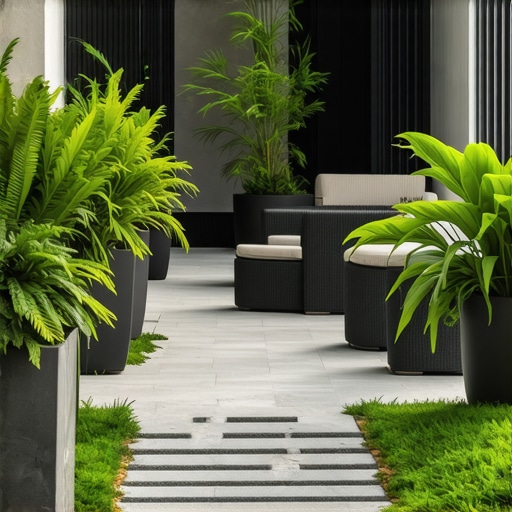
The Foundation of Curb Appeal: Beyond the Surface
I always drill into my new crew members: if you don’t fix the soil grading first, every plant you put in the ground is just expensive compost. Most homeowners see a modern front porch and think about the color of the hydrangeas. I see the 2% slope required to move water away from the foundation and the 95% compaction rate of the sub-base. If your front porch landscaping doesn’t account for hydrostatic pressure and soil microbiology, it’s just a ticking time bomb for your basement and your wallet.
The 2026 Landscape Shift: Adaptive Resiliency
Modern front porch landscaping in 2026 focuses on ecological integration, sustainable water management, and low-maintenance native perennials to create high-performing entryways. The trend has moved away from static, water-hungry turf toward functional hardscapes and bio-retention zones that manage stormwater on-site while providing year-round structural interest.
1. The Bio-Retention Entryway with Permeable Hardscaping
This design replaces traditional concrete walkways with permeable pavers or flagstone set on a multi-layer aggregate base. The goal is to capture 100% of the roof runoff within the front garden bed. Instead of a standard sod install that acts as a waterproof tarp, we use a yard cleanup phase to excavate for a rain garden profile. This involves digging down 18-24 inches and backfilling with a mix of 50% sand, 30% compost, and 20% topsoil. This allows for rapid infiltration. Plants like Carex pennsylvanica or Panicum virgatum are used because their root systems reach depths of 5 feet, creating biological macropores that improve soil structure over time.
“A retaining wall doesn’t fail because of the stone; it fails because of the water trapped behind it.” – Hardscape Engineering Axiom
This principle applies to your front porch too. If you don’t install a 4-inch perforated HDPE pipe wrapped in a filter sock behind your garden walls, the freeze-thaw cycles will heave your masonry within three winters. Don’t skip the drainage.
2. The Integrated Edible Architecture
In 2026, the front porch is no longer just for show. We are seeing a massive surge in “food forests” integrated directly into the landscaping plan. This isn’t your grandmother’s vegetable patch. We use structural elements like powder-coated steel raised beds and dwarf fruit trees (like Amelanchier) as focal points. The key is irrigation precision. We install Netafim tech-line drip tubing under 3 inches of double-shredded hardwood mulch. This delivers water directly to the root flare, preventing fungal pathogens from colonizing the foliage. If you use overhead spray on your front porch ornamentals, you are asking for powdery mildew.
“Soil pH is the master variable that controls the availability of essential nutrients to the plant root system.” – Texas A&M AgriLife Extension
We test the soil before a single plant is purchased. If your pH is 7.5 and you’re trying to grow blueberries or azaleas, you’re fighting a losing battle against iron chlorosis. Amend with elemental sulfur six months before planting.
3. The Low-Profile Pollinator Gallery
This concept eliminates the high-maintenance lawn entirely. We replace it with a matrix of native grasses and flowering perennials designed to thrive in your specific USDA hardiness zone. For a yard cleanup, we use a sod cutter to remove the existing turf and its nutrient-sucking mat of thatch. We then perform a core aeration to a depth of 4 inches to relieve compaction. The design utilizes the “Right Plant, Right Place” methodology. Instead of mass-market annuals, we use Echinacea and Asclepias. These species are drought-tolerant once established because they have evolved to handle local weather patterns. For irrigation, we use smart controllers with local weather station integration. These systems skip watering cycles if rain is detected, preventing the root rot common in over-managed suburban yards.
How much modified gravel do I need for a patio base?
To calculate the modified gravel (21A or 57 stone) needed, multiply the square footage of your area by the depth of the base (minimum 4-6 inches for walkways) and divide by 27 to get cubic yards. A standard 10×10 area at 6 inches deep requires approximately 2 tons of stone. Do not use pea gravel; it acts like ball bearings and will never compact.
What is the best month for a yard cleanup?
The optimal time for a yard cleanup is late March or early April, just before the first flush of spring growth. This allows you to remove dead perennial stalks and winter debris without disturbing the emerging root systems. Avoid working in the soil if it is saturated, as walking on wet soil destroys its structure and creates heavy compaction that takes years to fix.
| Material Choice | Lifespan (Years) | Maintenance Level | Drainage Rating |
|---|---|---|---|
| Permeable Pavers | 30+ | Low (Refill sand) | Excellent |
| Poured Concrete | 15-20 | Medium (Cracks) | Very Poor |
| Natural Stone | 50+ | Low | Good |
| Pressure Treated Wood | 10-12 | High (Stain/Seal) | N/A |
The Professional Front Porch Checklist
- Check soil drainage: Dig a 12-inch hole, fill with water, and ensure it drains within 4 hours.
- Call 811: Never excavate for landscaping without marking underground utilities.
- Verify root flare: Ensure the flare (where the trunk meets the roots) is visible above the soil line.
- Install a filter fabric: Place between the subgrade and the stone base to prevent soil migration.
- Select local nursery stock: Plants grown in your region have a 40% higher survival rate than big-box store plants.