
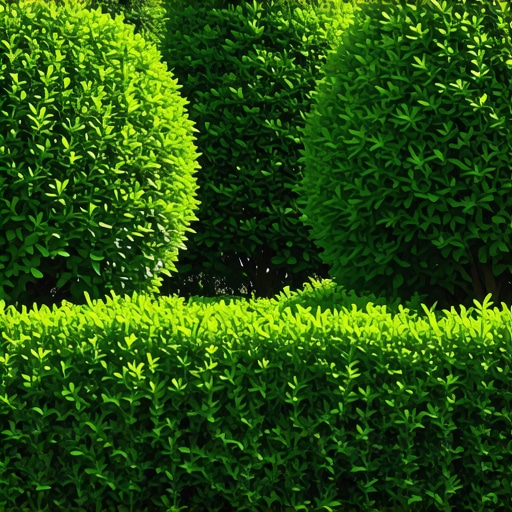
The Forensic Autopsy of a Dying Buxus
I always drill into my new crew members: if you don’t fix the soil grading first, every plant you put in the ground is just expensive compost. I recently stood over a row of English Boxwoods that looked like they had been through a chemical fire. The homeowner was distraught, blaming the nursery, but the autopsy revealed a more technical failure. The shrubs weren’t diseased by nature; they were suffocated by a combination of improper shearing and a complete disregard for the hydrostatic pressure of the surrounding clay soil. Landscaping is not a cosmetic endeavor. It is a biological management system where the wrong cut at the wrong time triggers a cascading failure of the plant’s vascular system. We saw bronzing leaves, brittle interior wood, and a root system that was drowning in four inches of unnecessary mulch. It was a textbook case of how professional-looking yard cleanup can actually be a death sentence for high-value ornamentals.
How to Stop Killing Boxwoods with Correct Pruning
To stop killing boxwoods, avoid shearing the outer canopy exclusively, pruning during late fall frost windows, and neglecting internal thinning. These errors cause light starvation, fungal incubation, and vascular shock. Success requires hand-thinning to ensure 20% light penetration into the inner skeletal structure of the shrub. Many homeowners treat boxwoods like green statues rather than living organisms. When you only use gas-powered hedge trimmers to ‘haircut’ the exterior, you create a photosynthetic shell that blocks all light and air from reaching the interior branches. This leads to a hollowed-out plant that is highly susceptible to Boxwood Blight (Cylindrocladium buxicola) and Volutella stem canker. A healthy boxwood must breathe.
Error 1: The Fatal Outer Shelling Method
When you shear a boxwood into a perfect sphere every month, you are forcing the plant to concentrate all its energy on the terminal buds. This creates a dense ‘carpet’ of foliage on the outside. Underneath that carpet, the lack of UV light causes the interior leaves to drop. You end up with a shell of green over a skeleton of dead, grey wood. If a pest like the boxwood leafminer gets inside, you won’t even see the damage until the entire plant collapses. Stop shearing. Start thinning. You need to take bypass pruners and remove small ‘windows’ of growth—about 10% to 15% of the outer foliage—to let light hit the center. It will look slightly less ‘perfect’ for two weeks, but it will live for twenty years. Do not compromise on this.
“Boxwoods require thinning to improve air circulation and light penetration, which reduces the incidence of fungal diseases like Volutella and Boxwood Blight.” – Virginia Cooperative Extension
Error 2: Pruning During the Late-Season Sap Flow
Timing is everything in arboriculture. If you prune in late summer or early fall, you stimulate a flush of new, tender growth. This growth does not have time to ‘harden off’ before the first hard freeze hits. The water inside these new cells expands when it freezes, literally exploding the cell walls and causing massive dieback. You should prune boxwoods in early spring after the danger of frost has passed but before the heavy summer heat sets in. This aligns with the plant’s natural growth hormone (auxin) production. Pruning at the wrong time is the fastest way to turn a $200 shrub into a brown heap of trash. Don’t do it.
Error 3: Ignoring Tool Sanitation and Fungal Vectors
You wouldn’t want a surgeon to use a dirty scalpel, yet people go from a yard cleanup with diseased plants straight to their prize boxwoods with the same rusty shears. Fungal spores are microscopic and incredibly resilient. If you cut a branch infected with Volutella and then move to a healthy plant, you have just injected the pathogen into the vascular system of the healthy shrub. You must sterilize your tools with a 70% isopropyl alcohol solution between every single plant. It’s tedious. It’s necessary. It’s the difference between a foreman and a hack.
| Heading Back (Shearing) | Increases outer density; causes interior dieback. | Once per season (Spring). | Thinning (Hand Pruning) | Promotes interior health and airflow. | Every 12-18 months. | Rejuvenation Cutting | Forces new growth from old wood. | Only for overgrown specimens. |
How much should I water boxwoods after pruning?
Following pruning, boxwoods require one inch of water per week delivered directly to the root zone via drip irrigation or a slow-soaker hose. Avoid overhead watering, as moisture trapped in the dense canopy after a fresh cut facilitates the germination of fungal pathogens like Volutella spores. Deep, infrequent watering is the standard. Surface sprinkling is useless.
When is the best time to trim boxwoods for winter?
You should never trim boxwoods for winter aesthetics in late autumn; instead, perform your final structural cuts in early to mid-summer. This ensures all new growth is fully lignified—meaning the stems have developed woody bark—to withstand sub-freezing temperatures and heavy snow loads. Late-season cuts invite winter burn and vascular collapse. Protect your investment by leaving them alone after August.
“A retaining wall doesn’t fail because of the stone; it fails because of the water trapped behind it.” – Hardscape Engineering Axiom
While that quote refers to masonry, the logic applies to plants: the failure isn’t the branch, it’s the environment you’ve created around it. If your irrigation system is hitting the leaves rather than the soil, or if your sod install has raised the grade above the root flare, the plant will fail regardless of how well you prune. Boxwoods are architectural anchors. Treat them with the engineering respect they deserve. Keep the mulch two inches away from the trunk. Check your soil pH; they prefer a neutral 6.5 to 7.2. Anything lower and you’re essentially acid-washing the roots. Precision matters.
- Sterilize tools with 70% alcohol before starting.
- Remove any dead or crossing branches first.
- Thin out 10% of the outer canopy to allow light in.
- Check the root flare to ensure it isn’t buried by mulch.
- Apply a slow-release nitrogen fertilizer only in early spring.
Stop looking for a quick fix in a spray bottle. Proper boxwood management is about manual labor and biological understanding. If you follow these protocols, your landscaping will thrive while the neighbor’s yard—maintained by the ‘mow-and-blow’ crew—slowly turns into a graveyard of brown sticks. It’s about the dirt. It’s about the cuts. It’s about the discipline to do it right. Anything less is just yard cleanup, not landscaping.