
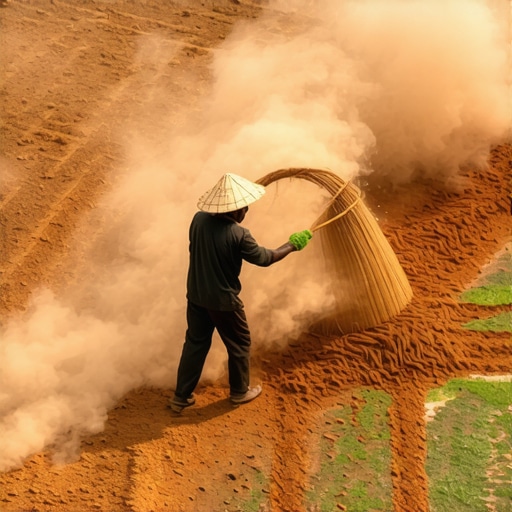
The Hidden Crisis of Acidic Clay Soil
Acidic clay soil management requires the strategic application of calcium carbonate or dolomitic lime to neutralize low pH levels that restrict nutrient uptake in turfgrass. When your soil pH drops below 6.0, phosphorus and nitrogen become chemically locked, rendering your expensive fertilizers useless and inviting opportunistic weeds like moss and sheep sorrel.
I always drill into my new crew members: if you don’t fix the soil grading and the chemistry first, every plant you put in the ground is just expensive compost. Last season, a greenhorn on my team wanted to rush a 5,000-square-foot sod install. The client had spent four grand on premium fescue. I stopped him cold when the probe read 5.2. If we had laid that sod, the roots would have hit that acidic clay and stopped. Within six months, the client would have been looking at a brown, thinning mess. We spent two weeks correcting the chemistry before a single blade of grass touched the dirt. That is the difference between a landscaper and a guy with a truck.
The Science of Soil Acidity and Cation Exchange
Cation Exchange Capacity (CEC) measures the soil’s ability to hold onto essential nutrients like potassium and magnesium, which is significantly hindered in heavy clay soils with high acidity. Clay particles are negatively charged. In acidic environments, hydrogen and aluminum ions crowd out the nutrients. You aren’t just ‘adding lime’; you are performing a chemical displacement of hydrogen ions to open up ‘parking spaces’ for the nutrients your grass actually needs to survive the summer heat.
“Soil acidity is a major constraint to crop and turf productivity, as it limits root growth and reduces the availability of essential plant nutrients while increasing toxicities.” – Penn State Department of Plant Science
How do I know if my clay soil needs lime?
To determine if your yard requires lime, you must perform a professional soil test that measures both the active acidity and the buffer pH of your specific clay composition. Visual cues like stunted growth or persistent moss are indicators, but they are not diagnostic. You need a lab report showing your current pH and the target CCE (Calcium Carbonate Equivalent) needed to reach 6.5. Don’t guess. I’ve seen too many DIYers ‘sweeten’ the soil into a state of alkaline chlorosis because they didn’t have the data.
The 2026 Lime Strategy: Pelletized vs. Pulverized
The choice between pelletized lime and pulverized agricultural lime depends on your equipment, the required speed of reaction, and the specific landscaping goals for the property. While pulverized lime is cheaper and reacts faster due to its massive surface area, it is a nightmare to spread evenly in a residential setting. In 2026, we lean heavily on high-quality pelletized products for precision application and dust control.
| Lime Type | Reaction Speed | Ease of Application | Cost per 1,000 sq ft |
|---|---|---|---|
| Pulverized Ag Lime | Fast (2-4 weeks) | Difficult (Dusty) | Low |
| Pelletized Lime | Moderate (6-12 weeks) | High (Broadcast Spreader) | Moderate |
| Dolomitic Lime | Slow | High | Moderate |
| Liquid Lime | Very Fast | Professional Only | High |
Liquid lime is a temporary fix. It’s a shot in the arm. For long-term yard cleanup and stability, you need the slow-release power of solids. If your soil test shows a magnesium deficiency, use dolomitic lime. If magnesium is high, stick to calcitic lime. Adding magnesium to already high-magnesium clay will turn your yard into a concrete slab. It will ruin the soil structure. Pay attention to the labels.
When is the best time to apply lime to clay soil?
The most effective window for lime application is during the fall or early spring when the freeze-thaw cycle helps pull the calcium carbonate deeper into the compacted clay layers. Fall is superior because the lime has months to react with the soil moisture before the spring growing surge. Avoid applying lime to wilted, drought-stressed grass. You will burn it. Wait for a steady rain or follow up with your irrigation system.
The Logic of Mechanical Aeration and Incorporation
Core aeration is the mandatory precursor to spreading lime on clay because it creates direct physical pathways for the lime to reach the root zone and bypass the thatch layer. If you just throw lime on top of hard-packed clay, it will sit there. It will wash away in the first heavy rain. You need to pull 3-inch plugs to open the soil’s ‘pores’ so the calcium can actually do its job down where the roots live.
“Surface application of lime without incorporation results in very slow movement of the neutralizing agents through the soil profile, often taking years to affect pH at a 6-inch depth.” – Texas A&M Agrilife Extension
I tell my clients: ‘Do it right or do it twice.’ If we aren’t aerating before the lime, we are wasting 40% of the product’s potential. We use heavy-duty hydraulic aerators that pull at least 20-40 holes per square foot. This isn’t a suggestion. It is a requirement for a professional-grade landscaping result. The soil needs to breathe before it can heal.
The Mandatory pH Correction Checklist
- Conduct a Soil Test: Sample 6 inches deep in at least ten different spots across the yard.
- Calculate the CCE: Match the lab’s recommendation to the Calcium Carbonate Equivalent on the bag.
- Clear the Surface: Perform a thorough yard cleanup to remove leaves and debris that block soil contact.
- Aerate the Clay: Use a core aerator to breach the surface tension of the clay.
- Calibrate the Spreader: Ensure you are dropping the exact poundage per 1,000 sq ft; never double-pass.
- Water it In: Use your irrigation system to provide roughly 0.5 inches of water immediately after application.
Irrigation and the Activation Phase
Proper irrigation management after a lime application ensures that the calcium carbonate particles dissolve and begin the chemical reaction required to neutralize acidic soil ions. Lime is not mobile. It stays where it lands unless moved by water or mechanical means. If you have an automated system, run a full cycle. If you’re relying on the weather, wait for a forecast of steady, light rain—not a gully washer that will send your investment into the storm drain.
Check your irrigation heads. If they are clogged or misaligned, you’ll get uneven pH zones. One part of the yard will be lush, the other will stay acidic and thin. It looks amateur. In 2026, we utilize smart controllers to ensure the moisture levels remain consistent for the 60-day reaction period following the sod install or overseeding process. Precision matters. One inch of water per week is the gold standard, but for lime activation, a deep initial soak is the priority.
Final Professional Assessment
Don’t be the homeowner who buys ten bags of ‘whatever’ at the big-box store and hopes for the best. Clay is a stubborn medium. It fights change. But once you balance the pH, that same clay holds nutrients better than any sandy loam ever could. It becomes a reservoir. It becomes the foundation of a high-performance lawn. Do the work. Test the dirt. Fix the chemistry. Your grass will thank you by not dying in August. It is that simple.