
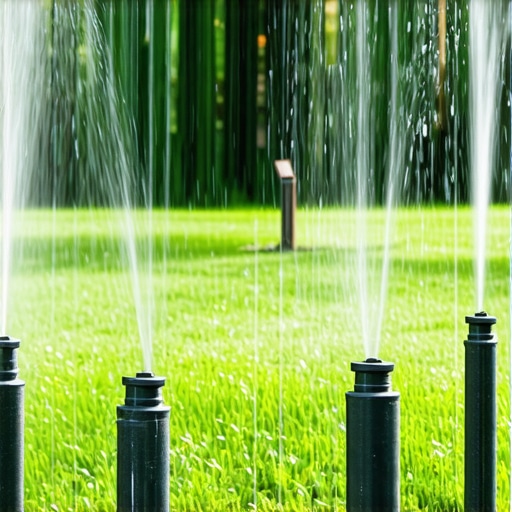
Retrofitting 2026 Drip Lines into Old Sprinkler Zones: Engineering High-Efficiency Irrigation
The transition from legacy spray systems to modern drip irrigation is not a simple swap of hardware; it is a fundamental shift in hydraulic logic. Most homeowners view irrigation as a set-it-and-forget-it convenience, but in my 20 years in the field, I’ve seen more plants killed by poorly designed drip retrofits than by drought itself. We are moving toward 2026 standards where water conservation isn’t optional—it’s a regulatory requirement in many jurisdictions. To do this right, you have to understand the math of the manifold and the biology of the root zone.
The Critical Failure of Surface Logic
Retrofitting 2026 drip lines involves converting high-pressure sprinkler zones into low-flow irrigation networks using pressure regulators, filters, and emitters. This engineering process ensures that landscaping receives precise water application directly at the root zone, eliminating evaporation and wind drift common in old spray heads.
I always drill into my new crew members: if you don’t fix the soil grading first, every plant you put in the ground is just expensive compost. I remember a job last July where a client had spent thousands on a sod install and a massive yard cleanup, only to have the entire perimeter rot within three weeks. Why? Because the previous contractor slapped drip lines over a low-lying area with heavy clay soil and no grade correction. The water didn’t infiltrate; it sat. The root flares choked. Before we even talk about polyethylene tubing or GPH (gallons per hour), we talk about where that water goes once it leaves the emitter. If your landscaping doesn’t have a 2% slope away from the foundation, your new high-tech drip system is just a slow-motion flood machine.
“A retaining wall doesn’t fail because of the stone; it fails because of the water trapped behind it.” – Hardscape Engineering Axiom
The Physics of Pressure Regulation and Filtration
A standard sprinkler zone operates at 30 to 50 PSI (pounds per square inch). If you pipe that directly into a 17mm drip line, you will blow the emitters straight out of the tubing. Drip systems are designed for 20 to 25 PSI. This requires a dedicated pressure regulator installed at the valve. Furthermore, you cannot skip the filtration. While a spray head can pass a grain of sand, a 0.6 GPH emitter will clog with a single microscopic particle of silt. We use 155-mesh filters as a minimum standard for all irrigation retrofits. Without it, your system will be dead in a single season. It will fail. Don’t skip this.
How much pressure do I need for a drip irrigation system?
Most landscaping drip systems require a constant 25 PSI to operate pressure-compensating (PC) emitters effectively. If the pressure is too low, the emitters at the end of the run won’t open. If it is too high, the fittings will leak or fail, leading to subsurface erosion and sod damage.
| System Component | Standard Spray Zone | 2026 Drip Retrofit |
|---|---|---|
| Operating Pressure | 30 – 55 PSI | 20 – 30 PSI |
| Filtration Requirement | Optional / Coarse | Mandatory / 155 Mesh |
| Water Delivery Rate | 1.5 – 4.0 GPM | 0.5 – 2.0 GPH |
| Evaporation Loss | 25% – 40% | < 5% |
| Soil Infiltration | High Impact/Runoff | Low Impact/Capillary Action |
Soil Capillary Action and Emitter Spacing
In landscaping, we don’t water the plant; we water the soil. Different soil textures require different emitter spacing. In heavy clay, water moves horizontally more than vertically. You can space emitters 18 inches apart. In sandy soil, water drops like a stone. You need 12-inch spacing to ensure the root zones actually connect. When we perform a yard cleanup and prepare for a sod install, we map the soil texture across the entire property. One zone might be sandy loam, while the backyard is compacted clay. You cannot treat them the same. You must adjust your precipitation rates accordingly. This is where most “mow-and-blow” hacks get it wrong—they use a one-size-fits-all approach that leaves half the yard parched and the other half a swamp.
“Irrigation efficiency is defined not by how much water is applied, but by the percentage of that water that remains in the root zone for plant uptake.” – Texas A&M Agrilife Extension
The Step-by-Step Retrofit Process
The execution of a drip line retrofit must be surgical. We start by identifying the lateral lines. We excavate the old spray head bodies and cap all but one. That final head becomes our point of connection (POC). We install a swivel tee and a pressure-regulating filter. From there, we lay the 17mm blank tubing or inline emitter tubing. Every connection must be secured with direct-to-fit or brown barb fittings. Finger-tight isn’t enough; we use ratcheting clamps on every high-stress junction. Once the grid is laid, we flush the system. This is non-negotiable. You must run the water through the open ends of the tubing to clear any dirt that entered during construction before you install the final flush valves. Check the gauge. Ensure the PSI is holding steady.
The 2026 Irrigation Retrofit Audit Checklist
- Identify and cap all unnecessary spray head bodies using 1/2-inch PVC caps.
- Install a 25 PSI pressure regulator and a 150-mesh filter at the zone valve or POC.
- Select 0.6 GPH or 0.9 GPH emitters based on soil percolation rates.
- Staple tubing every 3 feet with 6-inch metal sod staples to prevent