
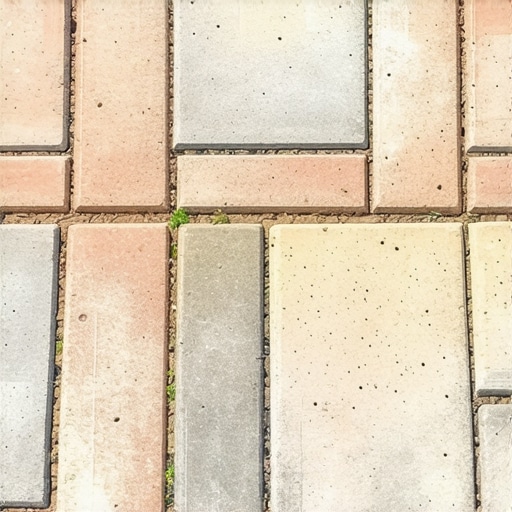
The Engineering Reality of Paver Joints and Structural Integrity
To stop weeds and ensure hardscape longevity, you must use polymeric sand or joint stabilizers that create a semi-rigid, water-resistant barrier. This process prevents organic matter from settling in joints and blocks sunlight from reaching dormant seeds, effectively neutralizing weed germination while maintaining interlocking pavement flexibility.
I recently got called out to tear up a $30,000 patio that was sinking because the previous contractor thought play sand was an acceptable jointing material. Within two seasons, the rainwater had washed the sand into the sub-base, the joints were filled with dandelion roots acting like crowbars, and the entire structural interlock had vanished. The homeowner was looking at a total loss because of a $200 shortcut. It was a forensic disaster. The base-layer had shifted because water was allowed to penetrate the joints freely, saturating the modified stone and turning the subgrade into a slurry. When I see a yard cleanup that involves pulling weeds from a patio, I don’t see a maintenance issue; I see a construction failure. Landscaping isn’t about the flowers you see; it’s about the civil engineering you don’t. If you want a surface that lasts until 2026 and beyond, you stop thinking about aesthetics and start thinking about compaction and chemistry.
“A retaining wall doesn’t fail because of the stone; it fails because of the water trapped behind it.” – Hardscape Engineering Axiom
The Science of Polymeric Sand and Joint Stabilization
Modern **joint stabilization** relies on **high-tech polymers** mixed with **graded silica sand** to create a bond that is both hydrophobic and flexible. When activated by water, these polymers cross-link to form a matrix that resists **erosion**, prevents **insect infestation**, and creates a sterile environment where **weed seeds** cannot take root or survive.
Most people think weeds grow from the bottom up. They don’t. Weeds grow from the top down. Wind blows dirt and seeds into the tiny crevices of your patio. If those joints are open or filled with common sand, you have created a perfect micro-nursery. Polymeric sand, specifically products meeting ASTM C144 standards, fills these voids completely. The silica grains are sized to wedge together, while the polymer glue binds them. This isn’t just about stopping weeds; it’s about the vertical interlock. In a properly installed paver system, the sand transfers the load horizontally. If the sand is gone, the pavers act as individual units, leading to tipping and lippage. We measure joint success in PSI resistance and shear strength. If your sand can be washed out with a garden hose, it’s not doing its job. You need a material that can withstand the 2026 weather patterns, which include higher intensity rainfall and rapid freeze-thaw cycles that can heave a poorly bound patio in a single night.
How much modified gravel do I need for a patio base?
For a standard residential patio, you need a minimum of 4 to 6 inches of **well-compacted modified gravel** (2A or CR-6) topped with 1 inch of **bedding sand**. For driveways or areas with **heavy clay soil**, this base depth must increase to 8 or 12 inches to prevent settling and ensure proper **hydrostatic drainage**.
The Installation Blueprint: From Excavation to Curing
Successful **hardscape installation** requires a rigorous adherence to **moisture management** and **compaction ratios** to ensure the final surface remains level and weed-free. Every step, from the initial **yard cleanup** to the final misting of the polymers, must be executed with precision to avoid the common pitfalls of DIY attempts.
First, we talk about the yard cleanup. This isn’t just raking leaves. This is the removal of all organic material. If you leave a single root of a perennial weed under your pavers, it will eventually find a way through. After excavation, we focus on the subgrade. If you have 100% heavy clay, we’re looking at a different drainage strategy than if you have sandy loam. We use a plate compactor that delivers at least 4,000 lbs of centrifugal force. You run that compactor until the soil screams. Then comes the geotextile fabric. This is the barrier that prevents your expensive gravel from migrating into the dirt. Don’t skip it. It’s the cheapest insurance policy you’ll ever buy. When we lay the pavers, the joints must be bone dry before the sand goes in. If there is even a hint of dew, the polymers will activate on the surface of the paver, leaving a white haze (efflorescence) that is a nightmare to remove. You sweep the sand in, then you vibrate the pavers again to shake the sand down to the bottom of the joint. Most hacks skip this. They just sweep and go. That leaves air pockets. Those pockets collapse later, the joint fails, and the weeds move in. We top off the sand, blow off the excess with a leaf blower, and then mist it. Not soak it. Mist it. You want the water to penetrate the full depth of the joint without washing the polymer out of the sand.
| Material Type | Longevity | Weed Resistance | Maintenance Level |
|---|---|---|---|
| Play/Mason Sand | 1-2 Years | Low (0%) | High (Constant weeding) |
| Stone Dust | 2-3 Years | Moderate (20%) | High (Frequent topping) |
| Standard Polymeric | 5-8 Years | High (90%) | Low (Annual inspection) |
| High-Performance Resin | 10+ Years | Extreme (99%) | Minimal |
Does irrigation affect paver joint longevity?
Yes, improperly aimed **irrigation heads** or **over-watering** can cause **hydrostatic pressure** that force-washes sand out of paver joints over time. You must calibrate your **sprinkler system** to ensure it doesn’t create standing water on the hardscape surface, which can soften the **polymer bonds** and lead to joint erosion.
Long-Term Maintenance and Environmental Variables
Maintaining a **weed-free patio** involves more than just the initial seal; it requires managing the **micro-climate** of your yard, including **drainage patterns** and **organic debris accumulation**. Neglecting the surface for a year can lead to the breakdown of even the best **jointing materials**.
I see it every spring. A homeowner spends thousands on a new **sod install** and a patio, then they let their trees drop seeds all over the stone. If you don’t blow off your patio, that organic matter decomposes into a thin layer of compost on top of your polymeric sand. Weeds will grow in that compost. They aren’t growing from the dirt below; they’re growing in the dirt you left on top. Keep it clean. Also, watch your drainage. If your downspouts are dumping water directly onto your pavers, no sand in the world will hold. You need to pipe that water away. We use 4-inch NDS pipe buried and sloped at a 2% grade to daylight. This keeps the patio base dry and the joints intact. If the base gets saturated, the freeze-thaw cycle will pop those pavers like a champagne cork. You’ll see the joints crack, and once they crack, the seal is gone. It will rot. Don’t let it. A quick inspection every spring and a light power wash (keep the nozzle at an angle!) will keep that 2026 goal realistic. If you see a gap, fill it immediately with matching sand.
“Compaction is the foundation of all successful civil works; without it, you are merely decorating a failure.” – ICPI Manual of Standards
- Check joint depth: Sand should be 1/8 inch below the paver chamfer.
- Remove organic debris weekly to prevent compost formation.
- Inspect for ants; they can excavate sand from beneath.
- Ensure irrigation heads don’t spray directly onto the joints.
- Monitor for moss in shaded areas; it indicates high moisture.