
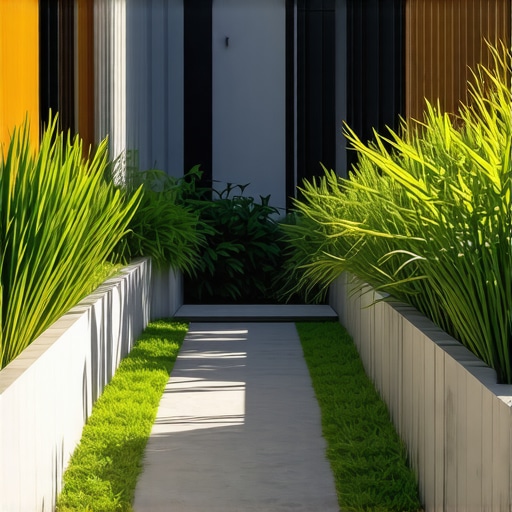
Why Most Narrow Side Yard Landscaping Fails Before Year Three
Narrow side yards fail because they are treated as afterthoughts rather than the high-traffic utility corridors they actually are, leading to soil compaction, poor drainage, and plant death. Effective 2026 landscaping for these spaces requires permeable hardscaping, sub-surface irrigation, and engineered soil amendments to handle restricted airflow and limited sunlight.
I recently got called out to tear up a $30,000 patio that was sinking because the previous contractor ignored the basic laws of physics. It was a narrow alley between two modern builds. They had dumped six inches of crushed stone over raw clay, skipped the geotextile fabric, and assumed the water would just find its way out. It didn’t. Within two seasons, the hydrostatic pressure from the neighboring downspouts turned that entire side yard into a subterranean lake. The pavers were heaving, the gate wouldn’t close, and the homeowner was looking at a total loss. I had to excavate the entire mess, install a dedicated French drain system tied to the municipal line, and rebuild the base with a 98% Proctor density compaction. If you don’t respect the soil, the soil will eventually humiliate your bank account. Stop thinking about aesthetics for a moment and start thinking about civil engineering.
The Ground-Up Blueprint: Planning for Restricted Biomes
Planning for a narrow side yard requires an assessment of micro-climates, wind tunnels, and utility access points to prevent future infrastructure failure. You must map the sun for exactly 14 days to understand the DLI (Daily Light Integral) before selecting a single species of vegetation.
“A retaining wall doesn’t fail because of the stone; it fails because of the water trapped behind it.” – Hardscape Engineering Axiom
In narrow corridors, the venturi effect can accelerate wind speed, drying out foliage faster than in an open lawn. You also deal with the reflection of heat off the foundation walls. This creates a high-stress environment for plants and a high-wear environment for hardscapes. We start with the 811 call. You cannot design a side yard without knowing where the gas, water, and fiber optic lines sit. Many of these lines are buried shallow in side yards. If you hit a line while trenching for irrigation, your low-maintenance project just became a high-cost disaster.
How much modified gravel do I need for a patio base?
To calculate gravel needs for a side yard path, multiply the total square footage by the depth of the base (minimum 4 to 6 inches for walkways) and divide by 324 to get the cubic yardage required. Always add a 10% waste factor for compaction density losses during the tamping process.
Material Selection: Beyond the Big-Box Store Mentality
Choosing materials for 2026 side yards means prioritizing permeability and structural stability over the cheap aesthetics found in consumer-grade garden centers. For narrow spaces, you want a material that allows the soil to breathe while providing a stable walking surface for foot traffic and trash bin drag.
| Material Type | Permeability Rating | Maintenance Level | Expected Lifespan |
|---|---|---|---|
| Permeable Pavers | High | Low (Annual Sweeping) | 25+ Years |
| Decomposed Granite | Medium | Moderate (Top-dressing) | 5-7 Years |
| River Rock (3-5 inch) | High | Low (Leaf Blowing) | Unlimited |
| Stepping Stones + Moss | Low | High (Moisture Control) | 10-15 Years |
Avoid pea gravel. It is round, it doesn’t lock together, and it will migrate into your house on the bottom of your boots. It is the amateur’s choice. If you want a gravel look, go with a crushed angular stone like #57 or #8. The jagged edges lock together under pressure, creating a firm surface that still allows water to infiltrate the sub-grade. This is critical for preventing runoff that erodes your foundation. [image_placeholder]
The Irrigation and Sod Install Protocol
Side yard irrigation must be designed with head-to-head coverage or sub-surface drip lines to eliminate overspray on house siding and prevent fungal pathogens in low-airflow zones. Standard pop-up sprays are often too wide for a 5-foot side yard, leading to rotted sills and wasted water.
If you insist on a sod install in a narrow space, you are signing up for a battle against biology. Most turfgrasses need 6 to 8 hours of direct sun. In a narrow alley, you might get 2 hours. If you don’t use a shade-tolerant cultivar like a high-end fescue or certain St. Augustine varieties, the grass will thin out within months. This leads to a mud pit. A yard cleanup in these areas often involves removing dead sod and replacing it with something that actually lives in the dark. If you do go with sod, you must address soil pH. Most side yards are acidic because of the concrete leaching from the foundation. You need to apply lime to bring that pH back to the 6.5 range where nutrients actually become bioavailable to the roots.
What is the best irrigation for narrow side yards?
The best irrigation for narrow side yards is a pressure-compensated drip system or low-trajectory stream bubblers that deliver water directly to the root zone. This prevents evaporative loss and eliminates water damage to the home’s exterior cladding and foundation windows.
The Installation Process: Precision over Speed
Installation in tight quarters is a logistical nightmare that requires a linear workflow to avoid re-compacting already prepared areas. You start at the furthest point from the access gate and work your way out. No exceptions.
- Excavation: Remove 8 inches of organic material to reach the mineral soil.
- Sub-grade Preparation: Grade the soil at a 2% slope away from the foundation.
- Geotextile Layer: Lay a non-woven 4oz fabric to separate the sub-grade from your base.
- Base Material: Install 4 inches of 3/4-inch minus crushed stone in 2-inch lifts.
- Compaction: Use a plate compactor until the tamper literally bounces off the surface.
- Edge Restraints: Install professional-grade aluminum or heavy-duty plastic edging to prevent lateral shift.
Don’t skip the compaction. If the base isn’t solid, your pavers will shift. If your pavers shift, your drainage fails. It is a domino effect. I tell my crew every morning: we aren’t builders; we are water managers. If you control the water, the project lasts. If you don’t, the water will destroy your work. It will rot. It will heave. It will fail. Every single time.
“Soil health is the foundation of all terrestrial life; in the landscape, it is the difference between a sustainable system and a cycle of constant replacement.” – Agronomy Manual v4.2
Planting for 2026: The Vertical and the Hardy
In narrow spaces, we think vertically. We use columnar trees and shrubs that have a narrow spread but provide the necessary height for privacy. Avoid invasive species. Use native plants that have evolved to handle your specific local climate. If you are in a heavy clay region, don’t plant something that needs sandy drainage unless you are prepared to build a raised bed. My preference for side yards often includes plants like Sky Pencil Hollies or various ferns for the deep shade sections. These plants don’t require heavy pruning and they won’t outgrow the space in three years, forcing another expensive yard cleanup. Check your root flares. Most people plant too deep. The flare must be visible at the soil line or the tree will eventually suffocate. Mulch volcanoes are for hacks. Keep the mulch away from the trunk.