
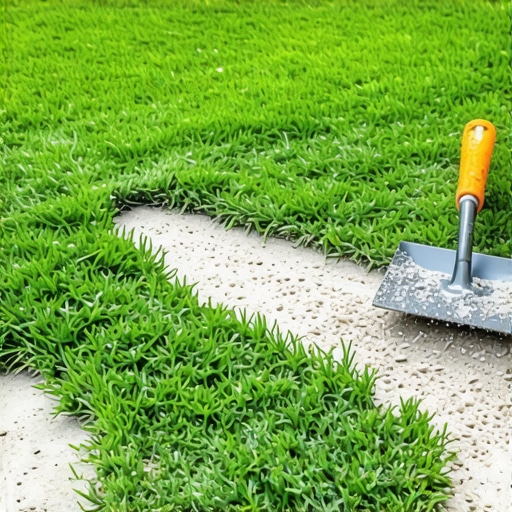
The Forensic Autopsy of a Failed Lawn Installation
Walking across a newly installed lawn shouldn’t feel like navigating a minefield. When you step on your turf and feel those micro-depressions or high spots, you are witnessing the physical manifestation of poor sub-grade preparation or uneven soil settling. It is a structural failure of the landscape. Most homeowners assume the grass will eventually level itself out through some magical biological process. It won’t. If your 2026 sod is lumpy, the root cause is almost always found in the two inches of medium directly beneath the root zone or the uneven decomposition of organic matter trapped under the rolls.
I remember a call I took last spring from a client in a panic. He had spent nearly twenty thousand dollars on a premium Zoysia install. Within six months, the yard looked like a topographical map of the Appalachian Mountains. He had tried to fix it by dumping bags of cheap big-box store ‘garden soil’ into the holes. This was a catastrophic mistake. The high organic content in that bagged soil decomposed rapidly, creating new voids, while the wood chips in the mix promoted fungal growth that nearly wiped out his root system. We had to perform a full chemical and physical intervention, stripping back the damaged areas and beginning a multi-stage sand leveling process. If you don’t understand the physics of soil compaction and particle size, you’re just throwing money into a hole.
Why is my new sod uneven and lumpy?
Lumpy sod is caused by uneven sub-grade compaction, decomposition of organic debris left under the turf, or improper site grading during the sod install. When the underlying soil settles at different rates due to varying moisture levels or air pockets, the grass surface mirrors these subterranean shifts, creating a trip hazard.
“Soil compaction and the resulting loss of macropores are the primary drivers of poor turf performance and surface irregularity in residential landscapes.” – USDA NRCS Soil Quality Technical Manual
How much sand do I need for a lumpy lawn?
Calculating your material needs is a matter of volume and surface area. For a standard leveling job where you are filling minor depressions, you should plan for 1 cubic yard of mason sand per 1,000 square feet of turf. This provides a roughly 0.25-inch layer. Never exceed 0.5 inches in a single application, as you risk smothering the crown of the grass and cutting off oxygen to the rhizosphere. If your depressions are deeper than an inch, you must address them over multiple seasons or lift the sod entirely to repair the base layer.
The Engineering Logic of Sand Leveling
Why do we use sand instead of soil or compost? The answer lies in particle stability and drainage. Sand particles do not compress. Once a grain of mason sand finds its home in a low spot, it stays there. Topsoil and compost contain organic matter that continues to break down over time. If you use organic-heavy mixes to level a lawn, your ‘fix’ will literally disappear within twelve months as the microbes eat the carbon. Sand provides a permanent, inorganic skeleton for your lawn surface.
| Material Type | Compaction Rate | Drainage Rating | Primary Use Case |
|---|---|---|---|
| Mason Sand | Near Zero | Excellent | Surface leveling and thatch management |
| Play Sand | Moderate | Poor | Not recommended (particles are too round) |
| Topsoil Mix | High (15-30%) | Variable | Filling deep holes (over 3 inches) |
| USGA Rootzone | Zero | Superior | Professional golf greens and high-end turf |
Furthermore, sand leveling improves the physical structure of the thatch layer. By introducing sharp sand into the organic mat of the grass, you increase the surface area for beneficial bacteria to colonize. These bacteria are responsible for breaking down dead plant material. This is why golf courses topdress with sand regularly; it manages the thatch and keeps the surface fast and firm. In a residential setting, it stops that ‘spongy’ feeling that leads to scalping during your weekly yard cleanup.
Will sand leveling kill my irrigation system?
A common concern is whether topdressing will bury sprinkler heads. If you are applying the correct 0.25-inch depth, it will not. However, you must mark your heads before you begin the drag process. If you find that you need to add more than an inch of material to level a significant grade failure, you must physically raise the irrigation risers. Failure to do so will result in ‘donuting,’ where the grass around the buried head stays green while the rest of the zone dies because the spray pattern is blocked by the new soil height.
The Step-by-Step Sand Leveling Protocol
- Scalp the Lawn: Lower your mower to the lowest setting possible without hitting dirt. This allows the sand to reach the soil surface instead of getting caught in the leaf blades.
- Core Aeration: Use a machine to pull 3-inch plugs. This relieves compaction and creates ‘pockets’ for the sand to integrate into the root zone.
- Dry Sand Application: Only apply sand when the lawn and the material are bone dry. Wet sand clumps and is impossible to spread evenly.
- The Drag: Use a specialized leveling rake or a section of chain-link fence to drag the sand across the surface until it disappears into the canopy.
- Deep Irrigation: Water the lawn immediately after with at least 0.5 inches of water to settle the particles.
“Topdressing with sand is the most effective cultural practice for maintaining a smooth, firm playing surface and managing the accumulation of organic matter in the turfgrass canopy.” – Penn State Center for Turfgrass Science
Is sand leveling better than total sod replacement?
If your yard is 70% weeds or has major drainage issues like standing water, sand leveling is a waste of time. You need a full yard cleanup and a total sod install with proper grading. But if you have healthy grass that just feels ‘bumpy’ underfoot, sand leveling is the surgical solution. It preserves the existing root system while fixing the surface geometry. It’s about working with the biology you have rather than starting from scratch. Be precise. Measure your square footage. Don’t guess on the yardage. This is engineering, not gardening.
Long-Term Maintenance and the Nitrogen Cycle
After you level with sand, your grass will need a boost. The sand itself provides zero nutrients. This is where your NPK ratios become critical. You want a high-nitrogen fertilizer to push leaf growth through the new sand layer. Aim for a 24-0-4 or similar ratio. This rapid growth ensures the grass recovers before weeds can colonize the newly disturbed surface. Remember: deep, infrequent watering is the law. You want the roots to chase moisture down into the new sand-enriched soil, creating a drought-resistant lawn that stays level for years to come.