
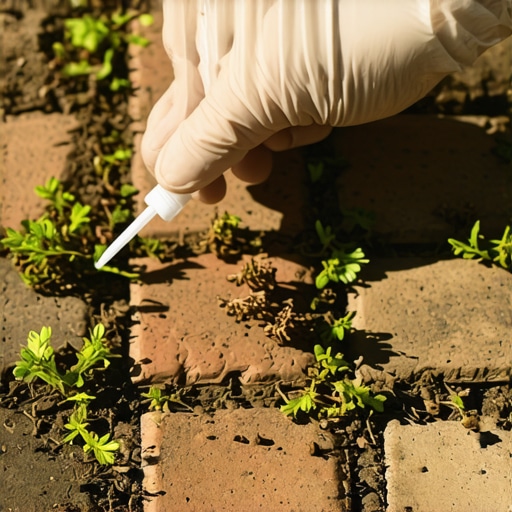
Why Weed Growth in Pavers Signals a Failing Hardscape
Paver weed growth occurs when the structural integrity of the jointing material fails, allowing organic debris to accumulate and serve as a germination bed for wind-blown seeds. This process, if left unchecked, leads to hydrostatic pressure build-up and the eventual failure of the modified gravel base beneath your patio or walkway.
I recently got called out to tear up a $30,000 patio that was sinking because the previous contractor thought he could skip the joint stabilization phase. The client was pulling handfuls of crabgrass and dandelions out of the gaps every weekend. By the time I arrived, the roots had penetrated the bedding sand and were actually wicking water down into the sub-base. The entire 800-square-foot install was heaving like a frozen lake. It was a total loss. This is what happens when you treat hardscaping like interior decorating instead of civil engineering. If you don’t secure those joints, you aren’t building a patio; you’re building a very expensive planter box.
“A retaining wall doesn’t fail because of the stone; it fails because of the water trapped behind it. Similarly, a paver system fails when the joints allow moisture to compromise the sub-grade compaction.” – Hardscape Engineering Axiom
The Science of Joint Failure and the 2026 Prevention Strategy
Weeds do not actually grow ‘up’ from the dirt under your patio. That is a myth peddled by people who want to sell you cheap landscape fabric. Most weeds grow ‘down’ from seeds that land in the dust and organic silt that settles into empty paver joints. When you use standard play sand or mason sand, it washes away in the first heavy rain. This leaves a void. That void fills with dirt. Then comes the rain, then comes the weeds. To stop 2026 weed growth, you need to implement a ‘glue hack’—the professional application of liquid joint stabilizers or high-performance polymeric resins that chemically bond the sand particles together.
Comparison of Joint Stabilization Methods
| Material Type | Permeability | Durability | Weed Resistance |
|---|---|---|---|
| Standard Mason Sand | High | 6 Months | None |
| Polymeric Sand | Low | 3-5 Years | High |
| Liquid Joint Stabilizer (The Glue Hack) | Medium | 5-7 Years | Maximum |
| Epoxy Grout | Zero | 10+ Years | Total |
How to Apply the ‘Glue Hack’ to Existing Brickwork
The remediation process for a weed-infested patio is grueling but necessary. You cannot simply pour ‘glue’ over the mess. You must perform a full yard cleanup of the hardscape area first. This involves pressure washing the joints to a depth of at least 1.5 inches. Do not scalp the bedding sand. Let it dry completely. If there is even a hint of moisture, the stabilizer will cloud and fail to bond.
How much modified gravel do I need for a patio base?
A standard residential patio requires a minimum of 4 to 6 inches of compacted modified gravel (typically 2A or 3/4-minus) topped with 1 inch of bedding sand to ensure proper drainage and load distribution. For clay-heavy soils, you must increase the base depth to 8 inches to account for the lack of natural percolation. Don’t guess. Measure the depth with a laser level. If the base isn’t right, the ‘glue’ won’t save you.
The Technical Checklist for a Weed-Free Install
- Excavation: Remove soil to a depth of 7-9 inches depending on the paver thickness.
- Compaction: Use a plate compactor with a minimum of 3,000 lbs of centrifugal force. Run it in three directions.
- Geotextile: Use a woven stabilization fabric between the sub-grade and the gravel.
- Sand Choice: Use an angular sand, never rounded play sand. Angular edges lock together.
- The Seal: Apply a high-solids acrylic or water-based stabilizer once the sand is swept and vibrated into the joints.
Addressing the Irrigation Factor
Many homeowners sabotage their own hardscaping with poorly aimed irrigation heads. If your sprinklers are hitting your brick walkway every morning at 5:00 AM, you are effectively pressure washing your joints daily. This constant saturation softens the stabilizer and encourages moss growth. Adjust your zones. Hardscapes should stay dry. Water the lawn, not the stones. Excess water leads to sod install failure near the edges of the patio as well, as the heat from the pavers and the constant moisture create a fungal breeding ground.
“Jointing sand stabilization is critical in preventing the ingress of water to the bedding layer, which can lead to pumping and loss of structural capacity in segmental pavements.” – ICPI Tech Spec No. 5
Why ‘Mow-and-Blow’ Tactics Fail Hardscapes
I see it every day. A ‘landscaping’ crew comes in, blows the grass clippings into the paver joints, and calls it a day. Those clippings are high in nitrogen. They rot. They create the perfect compost. If you want to stop 2026 weed growth, you need to treat your patio like a clean room. Blow the debris AWAY from the joints. Use a leaf vacuum if you have to. If you leave organic matter in those gaps, no amount of chemical glue will stop the biology of growth. Biology always wins if you give it an opening. Don’t give it an opening.