
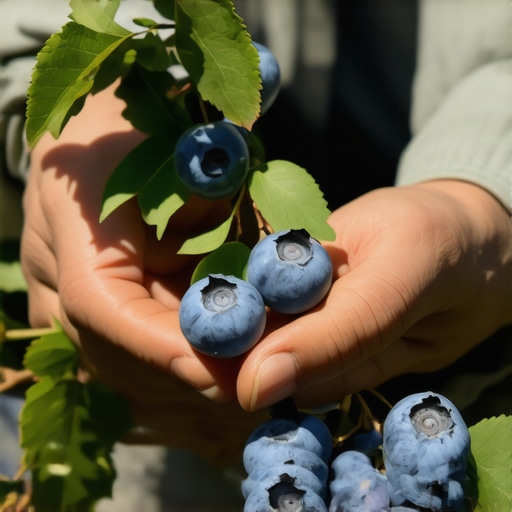
The 2026 Blueberry Pruning Blueprint: Why Preparation Starts at the Soil Level
Pruning blueberries for the 2026 season requires a strategic removal of non-productive canes to redirect plant carbohydrates into high-quality fruit buds. By targeting five-year-old wood and spindly lateral growth during the dormant season, you ensure the Vaccinium corymbosum maintains a balance between vegetative vigor and reproductive yield for the following summer. I always drill into my new crew members: if you don’t fix the soil grading and acidity first, every plant you put in the ground is just expensive compost. You cannot prune your way out of bad chemistry. Last year, I saw a client who spent $4,000 on nursery-grade bushes but ignored the 6.5 pH of their clay soil; despite perfect pruning cuts, the plants were stunted and chlorotic because the nitrogen was locked out. We had to excavate, incorporate elemental sulfur, and reset the irrigation lines before the plants could even think about producing a crop. If your soil isn’t between 4.5 and 5.2 pH, your 2026 harvest is already dead in the dirt.
“Blueberries require acidic soil conditions, ideally between pH 4.5 and 5.5, to allow for the uptake of essential micronutrients like iron.” – MSU Extension Agronomy Manual
The Anatomy of a High-Yield Pruning Cut
Maximizing blueberry production depends on identifying one-year-old wood, which is characterized by its smooth, reddish-brown bark and prominent fruit buds. Professional landscaping requires an understanding that fruit is only produced on these younger canes; wood older than six years becomes a nutrient sink that offers diminishing returns. When you go into the field in late February 2026, your goal is to remove the ‘Three Ds’: dead, diseased, and damaged wood, followed by the strategic thinning of the center to allow 300-400 PSI of airflow to penetrate the canopy. This reduces fungal pressure and ensures that sunlight hits the interior irrigation zones, ripening fruit evenly across the entire bush rather than just the crown.
How much should I cut back my blueberry bushes for the best yield?
To achieve maximum yield, you should remove approximately 20% of the oldest canes each year to ensure the plant is never more than six years old in its entirety. This ‘renewal pruning’ involves cutting canes back to the ground or to a strong new lateral branch. Avoid ‘heading back’ every branch, as this leads to a dense foliage mass that chokes out sunlight and reduces berry size. Use sharp bypass pruners to ensure a clean 45-degree cut that sheds water, preventing the entry of Botryosphaeria canker.
| Cane Age | Visual Identifier | Action Required | Production Potential |
|---|---|---|---|
| 1 Year | Red/Green smooth bark | Keep 6-8 strong ones | High (Future crop) |
| 2-4 Years | Brown, sturdy bark | Thin lateral twigs | Peak Production |
| 5-6 Years | Gray, peeling bark | Monitor for vigor | Declining |
| 7+ Years | Lichens, heavy wood | Remove at base | Zero / Nutrient Sink |
Integrating Yard Cleanup and Pest Mitigation
A thorough yard cleanup is the most overlooked aspect of blueberry health, as it eliminates the primary overwintering sites for pests like the cranberry fruitworm. Removing mummified berries from the soil surface and replacing old mulch with 3 inches of fresh pine bark or acidic compost is non-negotiable for 2026 production. If you leave fallen debris, you are inviting fungal spores to splash up onto your fresh cuts during the spring rains. This is where sod install projects often fail near berry patches; contractors bring in high-pH sod or fertilizers that leach into the blueberry beds, spiking the pH and killing the mycorrhizal fungi that these plants depend on for water uptake.
“Fruit is produced on one-year-old wood. The most productive wood is 1/4 to 1/2 inch in diameter at the base.” – Oregon State University Extension Service
What is the best fertilizer for high-yield blueberries?
High-yield blueberries require ammonium sulfate or urea-based fertilizers rather than nitrate-based products, which can be toxic to the plants. Apply a 12-4-8 or 10-10-10 acid-loving plant food in early spring 2026, just as the buds begin to swell. Do not over-fertilize; 1 ounce per year of plant age (up to 8 ounces total) is the limit. Excessive nitrogen late in the season will force new growth that won’t harden off before the first frost, leading to winter kill and a ruined 2027 season.
The Critical Role of Irrigation in Berry Sizing
Proper irrigation management ensures that the metabolic energy saved by pruning is converted into fruit mass rather than survival-based root searching. Blueberries have a shallow, fibrous root system that lacks root hairs, making them incredibly sensitive to drought during the fruit-swell stage in May and June. Your 2026 plan must include a drip system capable of delivering 1 to 1.5 inches of water per week. We use pressure-compensating emitters to ensure every bush receives the exact same volume of water, regardless of the slope of the landscaping. Surface watering with a hose is a fool’s errand; it evaporates before it hits the root zone and promotes leaf spot. Ensure the moisture reaches a depth of 12 inches. If the soil is dry at 4 inches down, your berries will be small, tart, and prone to dropping before they are ripe.
- Test soil pH every October; adjust with elemental sulfur if it rises above 5.5.
- Sharpen bypass pruners every 500 cuts to prevent crushing the vascular tissue.
- Remove any ‘twiggy’ growth at the base of the plant—this is just a highway for ants and aphids.
- Maintain a 4-foot weed-free circle around each bush to prevent nutrient competition.
- Sterilize tools with 70% isopropyl alcohol between different plants to prevent disease spread.
Precision pruning is not a suggestion; it is a mechanical necessity for anyone serious about harvest weight. If you leave the bush unmanaged, it will become a tangled mess of non-productive wood that produces tiny, sour fruit. You have to be aggressive. You have to be clinical. Cut the old wood, feed the soil, and manage the water. That is how you dominate the 2026 season. Don’t let a ‘mow-and-blow’ contractor touch your bushes with hedge trimmers. If they don’t know the difference between a fruit bud and a vegetative bud, keep them away from your investment.