
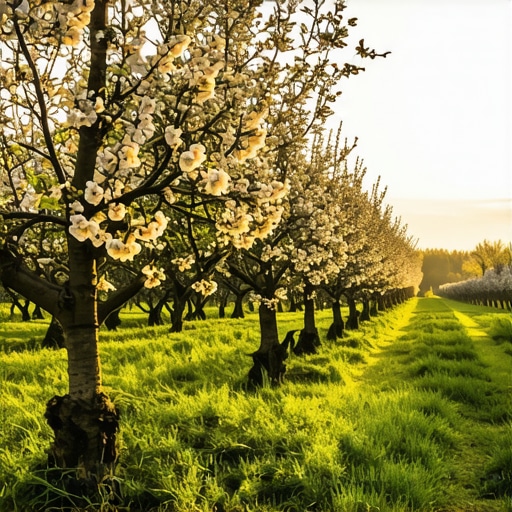
The Science of Dormancy and the 2026 Peach Outlook
Protecting 2026 peach trees from early spring frosts requires a multi-layered strategy involving site selection, thermal mass management, and active frost mitigation techniques like overhead irrigation or frost blankets. Success depends on understanding the specific phenological stage of the bud and the critical temperature thresholds for tissue death.
I always drill into my new crew members: if you don’t fix the soil grading first, every plant you put in the ground is just expensive compost. I’ve seen guys spend five figures on high-end Prunus persica specimens only to watch them die because they planted them in a low-lying frost pocket where cold air settles like water in a bowl. In the landscaping world, elevation is life. If your property has even a three-degree slope, that is where the peaches go. Cold air is denser than warm air; it flows downhill. If your orchard is at the bottom of that hill, you are fighting a losing battle against physics from day one.
The Planning Phase: Why 80% of Success Happens Before Planting
Professional orcharding is not about luck; it is about calculated risk management. We look at the USDA Hardiness Zones, but we also look at micro-climates. A brick wall facing south acts as a massive thermal battery, absorbing BTU levels during the day and radiating that heat back to the trees at night. This isn’t just landscaping; it is thermodynamics. When we design a layout, we aren’t looking for what looks pretty. We are looking for where the windbreaks are and where the sun hits the soil first in the morning to break the frost glaze.
“Critical temperatures for peach blossoms vary by developmental stage; while a dormant bud can withstand 0°F, a post-bloom fruitlet can be destroyed at 30°F.” – Clemson University Cooperative Extension
Thermodynamics of the Orchard Floor
Most homeowners think a thick layer of mulch is good for everything. They are wrong. In early spring, a heavily mulched floor acts as an insulator, preventing the sun from warming the soil. We want bare, moist soil under those trees during frost alerts. Moist soil conducts more heat than dry soil and radiates it upward into the canopy. This is why irrigation management is critical. Running your system the night before a freeze can actually raise the temperature around the buds by a crucial two or three degrees through the latent heat of fusion.
| Method | Temperature Gain | Labor Intensity | Best Use Case |
|---|---|---|---|
| Frost Blankets | 4-8 Degrees | High | Small orchards/Homeowners |
| Overhead Irrigation | 2-3 Degrees | Medium | Commercial frost protection |
| Site Elevation | 3-5 Degrees | Zero (Passive) | Initial orchard design |
| Thermal Mass (Walls) | 2-4 Degrees | Zero (Passive) | Residential landscaping |
The Role of Yard Cleanup and Soil Prep
Cleanliness isn’t about aesthetics; it’s about airflow. A cluttered yard with tall weeds and debris traps cold air near the ground. Professional yard cleanup in late winter involves removing any competition that might shade the soil or block the movement of air. We want the ground to be a heat sink. If you are planning a sod install, do not do it right up to the trunk of the peach tree. Grass is a competitor for nutrients and a thermal insulator that keeps the ground cold. Maintain a five-foot diameter of clear, managed soil or very thin organic matter around the root flare.
How do I keep peach blossoms from freezing?
To keep peach blossoms from freezing, you must utilize radiant heat and physical barriers. Using professional-grade frost cloths (not plastic) that extend all the way to the ground traps the earth’s natural heat. Secure the edges with sod staples or bricks to prevent heat escape. Avoid touching the foliage with the cloth, as contact points can transfer cold and cause localized tissue death.
At what temperature do peach buds die?
The death point for peach buds depends on their growth stage. In the ‘tight bud’ stage, they can often handle 20°F-25°F. However, once you see ‘pink bud’ or full bloom, 27°F can result in a 10% loss, and 24°F can cause a 90% kill rate. Monitoring the phenological stage of your trees daily during March and April is mandatory for survival. Get a digital thermometer with an alarm set for 34°F to give yourself a lead time for mitigation.
- Check local 811 services before installing any permanent irrigation lines.
- Calibrate your moisture sensors to ensure 70% field capacity before a frost event.
- Prune for an open-center shape to allow sunlight to penetrate the interior wood.
- Avoid high-nitrogen fertilizers in late winter, which force tender new growth.
“The most effective frost protection is site selection; avoiding low-lying areas can provide 3 to 10 degrees of natural protection compared to valley floors.” – Texas A&M Agrilife Extension
The Installation Process: Root Flares and Grading
When we do the actual landscaping install, the depth of the tree is non-negotiable. I see hacks bury the root flare every single day. If that flare is underground, the tree is stressed. A stressed tree is the first one to succumb to frost damage. We set our trees high, ensuring the transition from trunk to root is visible. We then grade the surrounding area to ensure water moves away from the trunk but stays within the drip line. It has to be precise. One inch too deep and you’ve shortened the tree’s lifespan by a decade. The soil must be compacted enough to remove air pockets but loose enough for capillary action to move moisture. If you don’t feel the tamper bounce off the earth, keep working. It won’t hold the heat otherwise. It will fail.
Maintenance and the 2026 Outlook
By the time 2026 rolls around, these trees should have established root systems capable of supporting a full crop load. Your job is to manage the transition from winter to spring with hyper-vigilance. Do not trust the 10-day forecast. Spring weather is volatile. Keep your frost blankets staged and your irrigation lines pressurized. One night of laziness will erase three years of growth. It is that simple. Watch the dew point. If the dew point is low, the temperature will drop faster and harder. Be ready to move. Don’t skip the details. It’s the difference between a harvest and a heap of dead wood.