
Why Site Preparation Beats Brute Force Every Time
I always drill into my new crew members: if you don’t fix the soil grading first, every plant you put in the ground is just expensive compost. I remember a kid named Jake who thought he could clear a two-acre lot with just a brush hog and a dream. He ignored the underground drainage patterns and the heavy compaction from years of neglect. Three months later, the entire field was a boggy mess of invasive horsetail and rotting root mass. Clearing a field is not about the visible debris; it is about reclaiming the biological and structural integrity of the land for future landscaping or sod install. If you skip the prep, the land will reclaim your work within one season.
[IMAGE_PLACEHOLDER]
The 2026 Heavy-Duty Forestry Mulcher Revolution
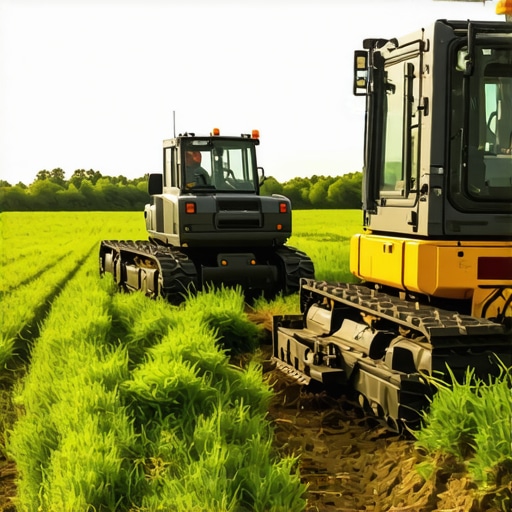
The Best 2026 Tools for Clearing Overgrown Fields utilize high-flow hydraulic systems and tungsten-carbide teeth to pulverize woody vegetation into nutrient-dense mulch. These professional-grade attachments for skid steers allow for site reclamation without the destructive soil disturbance caused by traditional bulldozing or root raking.
The Physics of Mastication and Soil Health
When we talk about clearing in 2026, we are talking about mastication. Old-school clearing involved dragging a heavy blade through the dirt, which destroyed the soil horizons and left the earth vulnerable to erosion. Today, we use drum mulchers that spin at 2,500 RPM. This speed creates a localized vacuum that pulls the vegetation into the cutting chamber. The result is a fine mulch that acts as an immediate erosion control measure. However, you must be careful. Putting down four inches of fresh wood mulch will lock up the nitrogen in your soil. As the carbon-heavy wood breaks down, microbes pull nitrogen out of the dirt, leaving your future sod install yellow and stunted. You must counter this with a high-nitrogen starter fertilizer, typically a 24-0-4 ratio, to maintain the chemical balance required for healthy turf.
“A retaining wall doesn’t fail because of the stone; it fails because of the water trapped behind it.” – Hardscape Engineering Axiom
How much modified gravel do I need for a patio base?
While clearing a field for a future patio, remember that your base dictates your longevity. You need a minimum of 6 inches of DGA (Dense Graded Aggregate) or 21A modified stone, compacted in 2-inch lifts with a plate compactor producing at least 4,000 lbs of centrifugal force. Do not trust the soil to hold weight. Soil is a living, shifting medium; stone is an engineering tool.
Comparison of Professional Clearing Equipment for 2026
Selecting the right tool depends on the stem diameter of the brush and the intended final use of the land. Use this table to match your site requirements with the correct technology.
| Tool Category | Max Material Diameter | Primary Advantage | Best Future Use |
|---|---|---|---|
| Forestry Mulcher | 8-10 inches | No debris hauling required | Woodland conversion |
| Flail Mower | 2 inches | Leaves a finish-ready surface | Pasture reclamation |
| Autonomous Slope Mower | 1.5 inches | Safety on 45-degree grades | Retention pond banks |
| High-Torque Stump Grinder | 36 inches | Deep root removal | Sod install preparation |
The Biological Seed Bank: Why the Green Comes Back
Yard cleanup is a temporary victory unless you address the seed bank. Beneath the surface of an overgrown field lie millions of dormant seeds from invasive species like thistle, knapweed, and buckthorn. When you clear the canopy, you expose these seeds to sunlight and oxygen. This triggers a massive germination event. If you do not have an irrigation plan or a pre-emergent strategy in place within 14 days of clearing, you will lose the lot to weeds again. Professional landscaping requires a three-phase approach: mechanical removal, chemical suppression, and biological competition (planting the grass you actually want).
“The key to successful vegetation management is the establishment of a competitive cover crop that out-competes pioneer weed species for light and nutrients.” – Penn State Agricultural Extension
How do I stop brush from growing back after clearing?
To prevent regrowth, you must apply a selective systemic herbicide such as Triclopyr to any fresh-cut stumps within 15 minutes of the cut. This ensures the chemical is pulled into the cambium layer and down to the root system. For broad-scale suppression, a pre-emergent like Prodiamine applied before soil temperatures reach 55 degrees Fahrenheit is the only way to stop the seed bank from exploding. Stop the weeds before they have a vascular system.
The Critical Path to a Successful Sod Install
Once the field is clear, you cannot simply roll out grass. Most overgrown fields have a bulk density that is too high for root penetration. You need to perform a deep core aeration or a subsoil rip. Use a penetrometer to check your soil; if it reads over 300 PSI, your grass roots will grow sideways instead of down. This leads to drought stress and total lawn failure. A successful sod install requires a minimum of 4 inches of loosened topsoil with an organic matter content of at least 5 percent. Check your pH. If you are below 6.0, your irrigation water is just washing away nutrients that the plant cannot chemically process.
Professional Reclamation Checklist
- Identify utility lines by calling 811 before any subsoil work.
- Test soil pH and NPK levels before applying any amendments.
- Select equipment based on the thickest stem diameter on site.
- Establish a drainage plan to prevent hydrostatic pressure buildup.
- Install a temporary irrigation system to support new growth.
- Schedule a follow-up chemical application for the 6-month mark.
Infrastructure First: Irrigation and Grading
Before the final aesthetic work begins, the irrigation mains must be buried. In 2026, we use HDPE piping for its superior resistance to freeze-thaw cycles and root intrusion. Do not settle for thin-walled PVC. It will crack. When grading the field, ensure a 2 percent slope away from any existing structures. This prevents the number one cause of foundation failure: saturated soils. Water is the enemy of engineering. Control the water, and you control the landscape. The tools of 2026 make the work faster, but they do not replace the fundamental laws of soil science and civil engineering. Do the work right the first time. Or do not do it at all.