
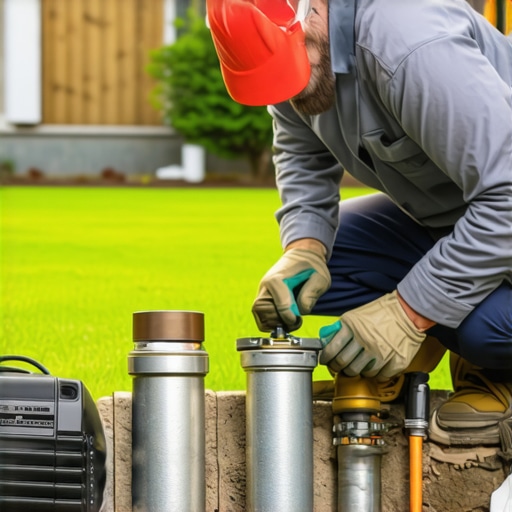
The Violent Reality of Hydraulic Shock in Modern Irrigation
The sound usually starts as a dull thud before evolving into a foundation-shaking crack that echoes through your crawlspace or basement walls. This is water hammer, or hydraulic shock, and it is not just a noise: it is a physical assault on your plumbing infrastructure. In my twenty years as a landscape contractor, I have seen water hammer literally shear the bolts off a brass gate valve and shatter PVC manifolds buried under three feet of compacted earth. When water moving at high velocity is stopped instantly by a solenoid valve, that kinetic energy has to go somewhere. It turns into a pressure wave that travels back through the pipe at over 4,000 feet per second. If your 2026 irrigation system sounds like a sledgehammer hitting a radiator, you are on a countdown to a catastrophic pipe failure that will likely require a full yard cleanup and expensive sod install once the water migrates to the surface.
The Valve Box Autopsy: A Lesson in High-Pressure Failure
I recently got called out to tear up a $30,000 patio that was sinking because the previous contractor failed to address a massive hammer issue in the irrigation manifold buried beneath the pavers. The homeowner thought the ‘thump’ was normal until the constant vibration loosened a compression fitting on the main line. By the time I arrived, the sub-base had been washed out into the yard, leaving the expensive travertine tiles suspended over a muddy void. We had to excavate the entire area, re-compact the modified gravel base, and install a pressure-regulated master valve to stop the cycle of destruction. It was a $12,000 repair for a problem that a $60 pressure regulator would have prevented. This is why we treat irrigation as civil engineering, not just yard work. If the engineering of the water flow is ignored, the landscaping is destined to fail.
“Water hammer occurs when the flow of water is suddenly stopped. The pressure surge can reach levels ten times the normal operating pressure, leading to pipe fatigue and eventual rupture.” – Irrigation Association Technical Standards
Step 1: Implement Dynamic Pressure Regulation
To stop irrigation hammer, you must first install a master pressure regulating valve (PRV) to maintain static pressure below 60 PSI. High static pressure is the primary driver of hydraulic shock, as it increases the force of the pressure wave when a zone valve closes abruptly. Most residential irrigation systems operate best at 30 to 50 PSI at the head, yet many municipal lines deliver water at 80 to 100 PSI. This excess pressure does nothing but wear out your internal diaphragms and cause ‘misting’ at the rotors. I always install a PRV at the backflow preventer to ensure the entire system is shielded from city surges. If you are dealing with a 2026 smart system, integrated pressure sensors can alert you to spikes, but they cannot physically stop the wave; you need a mechanical regulator to do the heavy lifting. Checking the PSI with a simple gauge at the hose bib is the first step in any professional irrigation audit. Do not guess. Measure it.
Why do my pipes bang when the sprinklers turn off?
The bang is caused by the sudden closure of the solenoid valve, which stops the forward momentum of the water column instantly. This creates a shockwave that bounces back and forth between the valve and the water source, causing the pipes to vibrate against their supports or the building structure. Without a dampening mechanism or proper pressure regulation, this force can exceed the burst rating of Class 200 PVC pipe. Over time, these micro-fractures lead to weeping leaks that rot out your turf from below. If you have just finished a new sod install, the last thing you want is a high-pressure leak turning your yard into a swamp. Proper valve selection, specifically those with slow-closing diaphragms, can mitigate this effect by bleeding off the pressure over a few seconds rather than milliseconds.
Step 2: Optimize Flow Velocity and Pipe Sizing
Maintaining a water velocity of less than 5 feet per second is critical to preventing irrigation hammer and ensuring the longevity of your PVC or HDPE lines. When contractors use undersized 3/4-inch pipe for high-flow zones, the water must travel faster to deliver the required GPM (gallons per minute). This high velocity creates massive friction loss and increases the intensity of any hammer event. In my firm, we never use less than 1-inch Schedule 40 PVC for lateral lines on zones exceeding 12 GPM. The larger diameter lowers the velocity, which directly reduces the energy of the shockwave according to the laws of fluid dynamics. It is basic physics: a heavy object moving fast is harder to stop than a heavy object moving slowly. By upsizing the pipe, you effectively slow the water down without reducing the volume delivered to your rotors.
| Pipe Diameter (Sch 40) | Max Flow for 5 FPS Velocity | Common Application |
|---|---|---|
| 3/4 Inch | 8 GPM | Small flower bed drip lines | 13 GPM | Standard residential turf zones |
| 1.25 Inch | 23 GPM | Main lines and high-output rotors |
| 1.5 Inch | 32 GPM | Large estate or commercial zones |
How much modified gravel do I need for a patio base near irrigation?
You need a minimum of 4 to 6 inches of compacted modified gravel (2A or 21A) to provide a stable foundation for any hardscape near irrigation lines. This base should be separated from the soil by a heavy-duty geotextile fabric to prevent sediment migration. If your irrigation pipes are running under this base, they should be sleeved in a larger diameter pipe to protect them from the compaction force of a plate tamper. If a leak occurs due to water hammer under a patio, the gravel base will eventually settle, causing the pavers to tip or crack. I recommend relocating irrigation lines outside the patio footprint whenever possible to avoid this forensic nightmare. If you must run them beneath, use Schedule 80 PVC and ensure every joint is primed and glued with heavy-body cement. Do not cut corners here.
Step 3: Install Mechanical Water Hammer Arrestors
Mechanical water hammer arrestors provide a localized cushion by using a gas-filled chamber to absorb the kinetic energy of the pressure surge. These devices are essentially shock absorbers for your plumbing. When the valve slams shut, the spike in pressure pushes against a piston or bladder inside the arrestor, compressing the air and dissipating the energy before it can rattle your house. I install these at the end of long pipe runs or right before the manifold in systems with high-speed valves. While the internet suggests building ‘air chambers’ out of vertical pipe stubs, these eventually fill with water and lose their effectiveness. A true mechanical arrestor is a permanent fix. In 2026, we are seeing more systems integrated with these at the factory level, but for retrofits, they are the most effective way to quiet a noisy system. It is a small investment that protects thousands of dollars in plumbing and landscaping.
“A retaining wall doesn’t fail because of the stone; it fails because of the water trapped behind it, often exacerbated by undetected irrigation leaks.” – Hardscape Engineering Axiom
The 5-Point Irrigation Audit Checklist
- Test static pressure at the main source using a calibrated PSI gauge.
- Check flow rates at each zone to ensure velocity is under 5 feet per second.
- Inspect valve boxes for slow-closing solenoid function and weeping seals.
- Verify that all main lines are buried at least 12-18 inches to provide natural dampening.
- Ensure air release valves are installed at the high points of the system to prevent air pockets.
If you ignore the warnings of a banging pipe, you are inviting a total system failure. I have seen entire hillsides wash away because a 2-inch main line burst in the middle of the night due to repeated hammer cycles. This leads to a massive yard cleanup that often costs more than the original installation. Professional irrigation is about managing energy and friction. When you control the pressure and the velocity, the silence of your pipes is the sound of a job done right. Don’t let a ‘mow-and-blow’ hack tell you that the noise is normal. It isn’t. It is the sound of your plumbing trying to tear itself apart. Fix the physics, and the pipes will stay quiet for decades. It is as simple as that.