
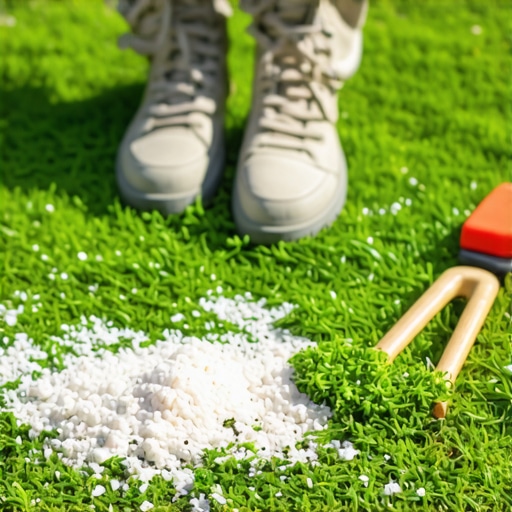
The Forensic Autopsy of a Moss-Ridden Lawn
Answer Capsule: To stop 2026 lawn moss, you must aggressively raise soil pH using pelletized calcitic lime to neutralize acidity that favors bryophytes over turfgrass. Moss is a biological indicator of low pH, poor drainage, or high compaction, rather than a weed that can be simply sprayed away with chemicals.
I see it every spring: a homeowner walks out onto a lawn that feels like a wet sponge. It looks like a green carpet from the street, but upon closer inspection, it is a suffocating mat of Bryophyta. The grass is gone. The soil is sour. Last year, I walked onto a property where the owner had spent $4,000 on high-end sod install packages, only to watch it wither in six months because they ignored the underlying chemistry. They thought irrigation was the answer. It was not. It actually made the moss stronger. The soil was so acidic that the grass roots could not even take up the nitrogen they were feeding it. It was a chemical nightmare where the homeowner was essentially pouring money into a literal sinkhole of low-pH clay. To fix it, we had to perform a total soil reset. If you do not fix the soil grading and chemistry first, every plant you put in the ground is just expensive compost.
“Soil pH is a fundamental property that affects the availability of nutrients to plants. When pH drops below 6.0, phosphorus and potassium become chemically locked, making them unavailable to turf.” – Penn State Center for Turfgrass Science
Why Traditional Yard Cleanup Fails to Stop Moss
Answer Capsule: Standard yard cleanup often removes the visible moss but fails to address the environmental stressors like acidic soil and low light. Without correcting the calcium-to-magnesium ratio and soil structure, moss spores will germinate immediately after the next heavy rain cycle occurs in your yard.
Soil is not just dirt; it is a living reactor. Most moss problems stem from a pH reading between 4.5 and 5.5. Turfgrass, specifically Kentucky Bluegrass or Tall Fescue, requires a pH of 6.2 to 7.0 to thrive. When the soil is too acidic, the grass roots suffer from aluminum toxicity and nutrient starvation. This is where the 2026 strategy begins. You cannot just rake the moss away and expect it to stay gone. You are fighting biology. Moss does not have a traditional root system; it has rhizoids. It survives in environments where grass fails. To win, you must make the environment hostile to moss. This means increasing the Cation Exchange Capacity (CEC) of your soil so it can actually hold onto the minerals your lawn needs to compete.
The 2026 Lime Strategy: More Than Just Dusting
The secret is not just putting down lime. It is the type of lime and the timing. Most big-box stores sell cheap, dusty dolomitic lime. It takes 6 to 12 months to break down because the particle size is too large. If you want results for the 2026 growing season, you need to apply Fast-Acting Calcitic Lime in the late fall or early winter of 2025. This allows the freeze-thaw cycle to pull the calcium carbonate into the root zone through micro-fissures in the soil profile. Calcitic lime contains high concentrations of calcium without the high magnesium found in dolomitic lime. High magnesium in heavy clay soil makes the ground tighter and harder, which actually encourages moss growth by reducing drainage. You want calcium to flocculate the soil, opening up pore space for oxygen and water movement.
“Applying lime without a soil test is like performing surgery in the dark. You must know the Buffer pH to determine the exact calcium carbonate equivalent required.” – Texas A&M Agrilife Extension
How much lime do I need per square foot?
Answer Capsule: For most lawns with a pH of 5.5, you need approximately 40 to 50 pounds of pelletized lime per 1,000 square feet to move the needle. Heavy clay soils require even higher rates due to their high cation exchange capacity (CEC) compared to sandy loam soil types.
Comparing Lime Sources for Moss Control
| Lime Type | Action Speed | Best Use Case | Application Rate |
|---|---|---|---|
| Dolomitic Lime | Slow (6-12 months) | Maintenance / High Mag Soil | 50 lbs per 1,000 sq ft |
| Calcitic Lime | Fast (2-4 months) | Correcting Moss Issues | 30 lbs per 1,000 sq ft |
| Liquid Lime | Immediate | Temporary pH Spike | Varies by brand |
The Step-by-Step Remediation Process
First, you must core aerate. Do not use those spike shoes; you need 3-inch deep hollow tines. This breaks the surface tension and allows the lime to penetrate the thatch layer. If you skip aeration, the lime just sits on top. It will not work. Second, apply the lime at a calibrated rate. Use a rotary spreader, not a drop spreader. You need even coverage to avoid hot spots. Third, address the moisture levels. If your irrigation system is running 20 minutes every day, you are growing moss. Switch to 60 minutes once or twice a week. Deep and infrequent. That is the rule. The roots must chase the water down into the soil. This strengthens the grass and dries out the surface where moss likes to live. Don’t skip this. If you keep the surface wet, the lime cannot overcome the environmental advantage you are giving the moss.
The 2026 Lawn Moss Prevention Checklist
- Perform a professional soil test (not a cheap DIY probe) to find your base pH.
- Core aerate to a depth of at least 3 inches in the fall to alleviate compaction.
- Apply Calcitic Lime at the rate dictated by your Buffer pH results.
- Reduce shade by thinning the lower canopy of overhanging trees to increase UV exposure.
- Adjust irrigation controllers to Deep and Infrequent cycles to dry the soil surface.
- Overseed with shade-tolerant fescue varieties that can compete in marginal areas.
When is the best time to apply lime to my lawn?
Answer Capsule: The optimal time to apply lime is during the late fall or early spring when the soil is moist but not saturated. This timing utilizes the natural precipitation cycles to transport the lime into the soil profile without the risk of runoff or heat stress on the turf.
If you wait until you see the moss in July, it is too late for the current year. You are playing the long game here. 2026 success is built in the winter of 2025. This is civil engineering at a microscopic level. We are changing the chemical environment to make it inhospitable for moss and a paradise for grass. Remember that 811 is your friend if you are doing deep aeration or drainage work. Do not hit a gas line trying to fix a moss patch. Stay consistent with your pH management. Soil naturally trends back toward acidity as nitrogen fertilizers are applied and rain leaches calcium away. It is a constant battle. Check your levels every two years. It will rot if you leave it wet. It will thrive if you give it air and the right chemistry.”,