
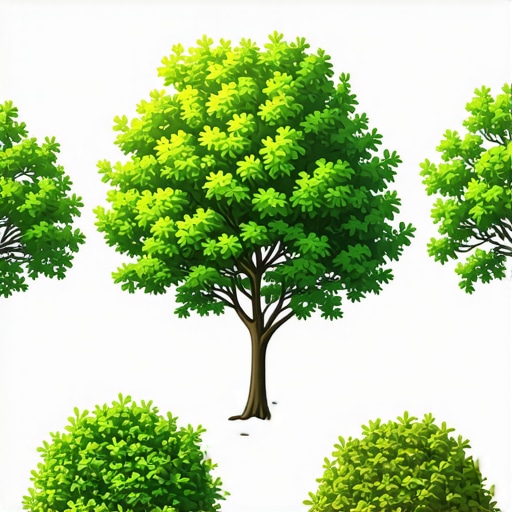
Why Native Species Win the Small Yard Battle
Small yards require site-specific native trees like Amelanchier or Cercis canadensis that offer high ecosystem services without compromising foundation integrity or utility lines. Choosing the right species prevents future hardscape heaving and reduces long-term irrigation demands through localized genetic adaptation. I always drill into my new crew members: if you don’t fix the soil grading first, every plant you put in the ground is just expensive compost. You can buy a tree with a three-inch caliper and a perfectly pruned canopy, but if you drop it into a hole of compacted red clay without checking the drainage, you are just performing an expensive burial. This technical wisdom is what separates a professional landscaping firm from the neighborhood kid with a shovel. Most people think yard cleanup is just about raking leaves, but in a small-scale forest, it is about managing the organic matter to ensure the soil pH remains stable for these specific cultivars.
The Engineering of a Micro-Forest: Planning the Sub-Surface
Successful landscaping in confined spaces depends on sub-surface engineering including soil bulk density, moisture-holding capacity, and the strategic placement of irrigation lines to avoid root-zone interference. Most failures occur because the contractor ignores the 10-foot radial spread of the mature root system.
“Proper planting depth is the single most important factor in the long-term health of a landscape tree; burying the root flare leads to stem-girdling roots and premature decline.” – International Society of Arboriculture (ISA)
How much space do I need for a native tree?
In a small yard, you must maintain a minimum distance of 8 to 10 feet from any rigid structure or utility line to prevent hydrostatic pressure issues or root intrusion. This measurement ensures that the root flare, the area where the trunk expands into roots, has 40% of its volume in the upper 12 inches of soil for gas exchange.
The Top 3 2026 Native Trees for High-Performance Yards
The 2026 selection focuses on Amelanchier laevis, Cercis canadensis ‘Don Egolf’, and Carpinus caroliniana because these species demonstrate high drought resistance and manageable growth rates in urban soil profiles. Each selection is vetted for its ability to thrive in soil with a pH between 5.5 and 7.2.
| Species Name | Max Height (ft) | Root Pattern | Soil Preference |
|---|---|---|---|
| Amelanchier laevis | 20-25 | Deep/Fibrous | Acidic Loam |
| Cercis canadensis | 15-20 | Spreading | Well-Drained |
| Carpinus caroliniana | 20-30 | Taproot/Lateral | Heavy Clay/Moist |
1. Allegheny Serviceberry (Amelanchier laevis)
The Allegheny Serviceberry is a structural powerhouse that stays under 25 feet, making it perfect for understory planting or tight corners where irrigation must be precise. It handles the freeze-thaw cycles of the north and the humidity of the south without the fungal issues of non-native ornamentals. When we perform a yard cleanup, we leave the leaf litter from this tree because it breaks down into a high-nitrogen mulch that feeds the soil microbiology. It does not tolerate salt spray or high-alkaline soil. Check your pH. If it is over 7.5, skip this tree.
2. Eastern Redbud ‘Don Egolf’ (Cercis canadensis)
This specific cultivar is the king of the small yard because it is sterile and grows into a compact, vase-like shape that does not interfere with a sod install or nearby hardscaping. It is a slow-growing specimen. You won’t see more than 6 to 12 inches of growth per year. This is a benefit. It means less pruning and less stress on the 1/2-inch poly tubing of your irrigation system. It thrives in USDA hardiness zones 5 through 9. Unlike the standard species, ‘Don Egolf’ is highly resistant to botryosphaeria canker, a common killer of redbuds in poorly drained yards.
3. American Hornbeam (Carpinus caroliniana)
Also known as Musclewood due to its dense, fluted bark, this tree is the engineer’s choice for yards with heavy clay or poor drainage. It is one of the few native trees that can survive the hydrostatic pressure of a low-lying area.
“Urban soils are often devoid of the structural pore space required for gas exchange, making species like Carpinus caroliniana essential for heavy-soil environments.” – Cornell Urban Horticulture Institute
The Installation Protocol: Step-by-Step
The installation of a native tree is a mechanical process that requires precise measurements of the root ball and the excavation of a hole three times as wide as the root mass. Follow this checklist to ensure 95% survival rates:
- Measure the distance from the bottom of the root ball to the root flare.
- Excavate the hole to a depth of 2 inches less than the root ball height.
- Scarify the side walls of the hole to prevent glazing in clay soils.
- Install 2-GPH pressure-compensating emitters for targeted hydration.
- Backfill with native soil; do not use 100% bagged potting mix.
- Apply a 3-inch layer of hardwood mulch, keeping it 4 inches away from the trunk.
What is the best time of year for a sod install near new trees?
The optimal window for a sod install near new native trees is early autumn or late spring, when soil temperatures are between 55 and 65 degrees Fahrenheit. This allows the turf and the tree roots to establish simultaneously without the high evapotranspiration rates of mid-summer which can suck the soil dry and kill a sapling in 48 hours.
Long-Term Maintenance and Irrigation Logic
Native trees are not maintenance-free; they require deep, infrequent watering (exactly 1 inch per week) to force the roots to chase the water table downward. Over-watering is the primary cause of root rot in small yards. If you see yellowing leaves in July, don’t just grab the hose. Stick a probe 6 inches into the ground. If it is wet, your roots are suffocating. Stop watering. Let the soil breathe. This is basic biology. If you treat your yard like a lab, you get results. If you treat it like a hobby, you get compost.