
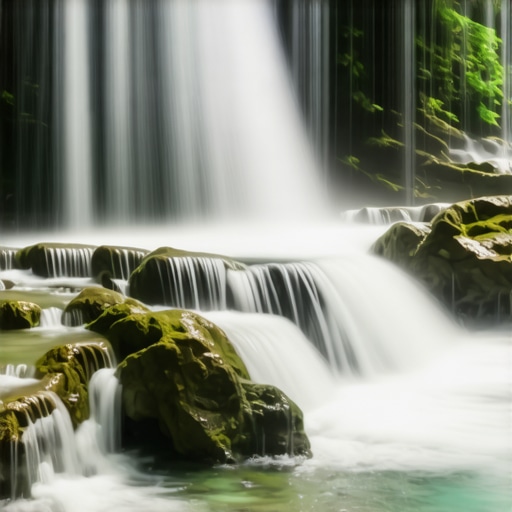
The Forensic Autopsy of a Green Waterfall
Removing algae from waterfalls without chemicals requires achieving a state of biological equilibrium through mechanical filtration, nutrient management, and ultraviolet clarification rather than reactive poisoning. When a homeowner sees green slime coating their stone, they are seeing a failure of the pond’s nitrogen cycle and a surplus of dissolved phosphates. It is a biological alarm bell. The water turns to pea soup because the system cannot process the organic load entering it. It is not a cosmetic issue; it is a structural failure of the ecosystem.
I always drill into my new crew members: if you don’t fix the biological balance first, every cleaning job you do is just an expensive temporary fix. I recently walked onto a job site where the client had spent thousands on ‘quick-fix’ algaecides. The water was clear for three days, then the algae came back twice as thick. Why? Because the chemicals killed the algae, which then rotted at the bottom, releasing a massive spike of ammonia and nitrates that fed the next generation of spores. You cannot kill your way to a clean pond. You have to out-engineer the biology. If the soil grading is off and you have irrigation runoff hitting the water, or if your landscaping mulch is leaching tannins and nitrogen into the basin, the algae wins every time. You have to look at the yard as a single, connected hydraulic system.
The Root Cause of Algae Proliferation in 2026 Systems
Algae thrives in waterfalls due to excessive nitrate levels, stagnant pockets in the plumbing, and high phosphate concentrations often introduced by local yard cleanup debris or fertilizer runoff. To stop the growth, you must understand the Redfield Ratio. Algae requires light, carbon dioxide, and nutrients (Nitrogen and Phosphorus). In the 2026 season, we are seeing higher temperatures, which speed up the metabolic rate of single-celled organisms. If your waterfall is not moving at least 1500 gallons per hour for every foot of width, you are creating a nursery for string algae. High-end landscaping often ignores the hydraulic head pressure of the pump, leading to low oxygen levels that favor anaerobic bacteria and algae blooms.
“A water feature is a living organism that requires consistent aerobic conditions to maintain clarity and prevent the accumulation of toxic nitrogenous waste.” – Nursery and Landscape Association Technical Standards
How does irrigation runoff affect pond algae?
Irrigation systems that spray directly into or near a water feature introduce high-nitrogen city water or well water into the basin. This constant ‘topping off’ provides a fresh buffet of nutrients for algae, bypassing the pond’s natural filtration capacity and triggering immediate blooms after every watering cycle.
The Biological Engineering Strategy
To fix a green waterfall, you start with the mechanicals. You need a skimmer to pull debris before it sinks and a bio-falls unit packed with high-surface-area media. This media is where your beneficial bacteria (Nitrosomonas and Nitrobacter) live. They are your unpaid labor force. They eat the ammonia from fish waste and decaying plant matter and turn it into nitrates. From there, you need aquatic plants to consume those nitrates. If you don’t have plants, the algae will happily take that job. It is a simple competition for resources. Don’t skip the aeration. A venturi valve or a dedicated air stone in the deep zone increases dissolved oxygen, which supports the bacteria that outcompete the algae.
| Problem Factor | Impact Level | Mechanical Solution |
|---|---|---|
| Excess Phosphates | High | Phosphate Binders / Lanthanum sulfate |
| Low Flow Rate | Critical | Increase GPH Pump Capacity |
| Sunlight Exposure | Moderate | Floating Plants / UV Clarifiers |
| Organic Debris | High | Heavy Duty Skimmer Baskets |
How much modified gravel do I need for a pond edge?
For a standard pond edge or waterfall transition, you need a 6 inch deep layer of #57 washed stone or 1-to-3 inch river rock. This prevents soil erosion and acts as a coarse pre-filter for runoff. Never use limestone, as it will spike the pH and encourage massive algae growth.
The Maintenance Checklist for Chemical-Free Clarity
Your goal is a closed-loop system where the output of one process is the input for another. This requires a strict operational schedule. Most homeowners fail because they think a pond is a static object like a patio. It is not. It is a slow-motion chemical reaction. Use this checklist to ensure your system stays in the clear zone:
- Weekly: Empty skimmer baskets and remove any visible string algae by hand or with a brush.
- Monthly: Test pH and Nitrate levels. Keep nitrates below 20ppm.
- Seasonally: Perform a yard cleanup to ensure no leaf litter or landscaping mulch is washing into the stream.
- Yearly: Inspect the pump impeller and clean the UV-C quartz sleeve to ensure maximum light penetration.
“The efficiency of a biological filter is directly proportional to the dissolved oxygen content and the surface area of the filter media available for bacterial colonization.” – Agricultural Extension Service Manual
Remediation Steps for a Failing Waterfall
If your waterfall is already a mess, stop the chemicals. First, perform a 25 percent water change. This dilutes the nutrient load. Second, scrub the rocks with a stiff brush and vacuum the debris out. Do not let the loosened algae flow back into the pond. Third, install a UV-C clarifier sized for your total volume. A 25-watt UV lamp is usually sufficient for a 2000-gallon system. The UV light damages the DNA of single-celled algae, preventing them from reproducing. It is a physical intervention, not a chemical one. Finally, introduce ‘Beneficial Bacteria’ spores every day for two weeks. You are essentially ‘over-seeding’ the water with the good guys to starve out the bad guys. It takes patience. It will not happen overnight. The system needs to reset. If you just did a new sod install nearby, check your grading. If water is running off that new sod and into your pond, you are essentially pouring liquid fertilizer directly into the algae’s mouth. Fix the grade or the algae stays.