
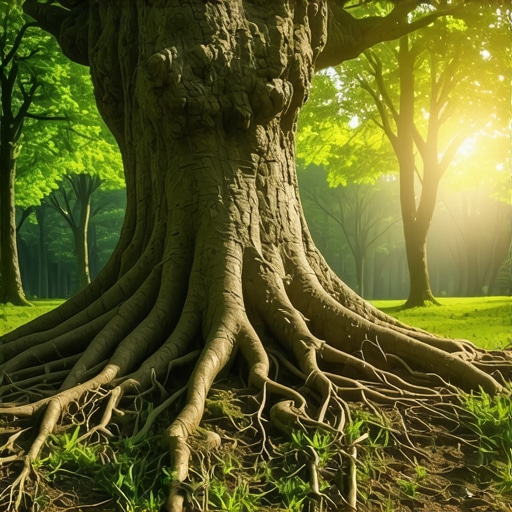
Stop Tree Girdling: Fix Your 2026 Roots Early
I always drill into my new crew members: if you don’t fix the soil grading first, every plant you put in the ground is just expensive compost. Most landscapers are eager to dump a load of mulch and call it a day, but I have seen $50,000 landscapes die within three years because the installer didn’t understand root flare biology. We are currently looking at a massive failure rate for trees planted in the last decade. If you do not address the root structure now, your investment will be dead by 2026. This is not about aesthetics. This is about the fundamental civil engineering of a living organism.
The Biological Clock of a Choking Tree
Tree girdling occurs when lateral roots encircle the main trunk, eventually compressing the vascular cambium and cutting off the flow of nutrients. To prevent tree death by 2026, you must perform root flare excavation and corrective pruning during the dormant season to ensure the xylem and phloem remain functional. When these vascular tissues are compressed, the tree cannot move water to the canopy or sugars to the root system. It is a slow, agonizing process of starvation. Most homeowners do not notice the decline until the upper canopy starts flagging. By then, it is often too late.
“A tree’s long-term survival is dictated by the depth of the root flare relative to the finished soil grade, as gas exchange in the top 12 inches of soil is critical for root respiration.” – ISA Arboriculture Guidelines
How do I fix girdling roots on an old tree?
To fix girdling roots on an established tree, you must first locate the root flare using an air-spade or hand tools to avoid damaging the bark. Once the problematic roots are exposed, use sterilized pruning shears or a root saw to remove the encircling roots that are pressing against the trunk. This process, known as root collar excavation, requires precision. If you cut too much, you destabilize the tree. If you cut too little, the constriction continues. You need to aim for a clean cut that allows the tree to compartmentalize the wound without introducing pathogens.
The Engineering of Soil Compaction and Sod Install
When a new sod install occurs, the site is often heavily compacted by machinery. Soil bulk density should ideally be below 1.5 grams per cubic centimeter for root penetration. Most new builds have a density closer to 1.8. This creates a ‘teacup effect’ where roots hit the hard-packed clay and begin to circle the planting hole rather than moving outward. This is the primary driver of girdling. Your landscaping is only as good as the soil porosity. If the roots cannot breathe, they will seek the surface, often wrapping around the trunk in a desperate search for oxygen. This is why we use vertical mulching and liquid aeration to break up the subsoil without destroying the existing lawn.
| Soil Density (g/cm3) | Root Penetration Capability | Risk of Girdling |
|---|---|---|
| 1.1 to 1.3 | Optimal | Low |
| 1.4 to 1.6 | Moderate Resistance | Medium |
| 1.7 plus | Severe Restriction | High |
Does sod install cause tree root rot?
A sod install can cause tree root rot if the new turf is layered directly over the existing root flare or if the irrigation schedule is tuned for grass rather than trees. Turf grass requires frequent, shallow watering, whereas trees need deep, infrequent saturation to encourage downward root growth. When you keep the surface soil perpetually wet for new sod, you create an anaerobic environment at the tree’s base. This leads to Phytophthora and other fungal pathogens that rot the root collar before the tree even has a chance to girdle itself. You must maintain a clear mulch ring around the tree that is separate from the sod zone.
The Yard Cleanup Checklist: Root Health Edition
Stop doing ‘mulch volcanoes’. This is the single most destructive practice in modern landscaping. When you pile mulch against the trunk, you trap moisture against the bark, which is not designed to be buried. This moisture causes the bark to soften and rot, inviting insects and disease. More importantly, the tree will often sprout adventitious roots into the mulch layer. These roots eventually grow large enough to girdle the main stem. Proper yard cleanup means pulling mulch back 3 to 5 inches from the trunk to expose the flare.
- Inspect the base: Ensure you can see the flare where the trunk widens at the soil line.
- Check irrigation heads: Ensure no sprinkler is spraying directly against the tree trunk.
- Remove wire baskets: If the tree was recently planted, ensure all burlap and cages were removed.
- Test soil pH: Roots struggle in alkaline environments; aim for 6.0 to 7.0 for most hardwoods.
- De-compact the zone: Use a pitchfork to gently aerate the soil within the drip line.
“Root systems that are restricted by physical barriers or high soil bulk density will inevitably fail to provide the structural support required during high-wind events.” – Journal of Agricultural Extension
Irrigation Logic and Hydraulic Conductivity
Your irrigation system is likely killing your trees. Most residential systems run for 20 minutes three times a week. This barely wets the top two inches of soil. For a tree to thrive and avoid the circling roots that lead to girdling, you need water to reach a depth of 12 to 18 inches. This requires a low-flow drip system or a dedicated tree bubbler that delivers 10 to 15 gallons of water over several hours. This forces the roots to chase the moisture deep into the ground. It will rot if you keep the surface saturated and the subsoil dry. Don’t skip the deep watering cycle during the hot summer months. Deep roots are stable roots.
The Long-Term Maintenance Cycle
By the time 2026 rolls around, the trees we plant today will either be established or failing. The difference lies in the first 24 months of care. You must monitor the growth rate. If you see stunted leaf size or early fall color, the tree is stressed. This is often the first sign of a girdling root. Check the trunk for a ‘flat side’. A healthy tree should be round at the base. A flat side usually indicates a root is pressing against the trunk underground. Dig it out. Fix it now. The cost of a 15-minute root pruning today is thousands of dollars less than a crane-assisted tree removal in three years. Landscaping is a game of inches and precise measurements. Treat it like the engineering project it is.