
The Slow Suffocation of the Suburban Lawn
Every October, I witness a massive biological heist. Homeowners across the country spend hours raking, blowing, and bagging the most valuable asset their soil will ever receive: organic carbon and nitrogen. They pay for plastic bags, pay for municipal leaf pickup, and then pay me next spring to fix their nutrient-starved, compacted clay. It is a cycle of horticultural insanity. Most people think they are being tidy. In reality, they are stripping the soil of its natural immune system. I have seen yards that look like a manicured golf course in September turn into a thin, yellowed mess by April simply because the owner refused to let the turf feed itself. Leaf litter is not trash. It is a slow-release fertilizer factory that you are currently throwing in a dumpster. Stop it.
Why Mulching Leaves Beats Bagging Every Single Season
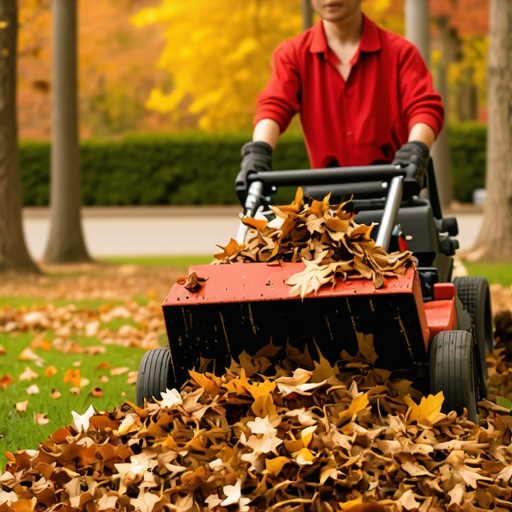
Mulching leaves into your turf provides a free, high-quality 13-1-4 NPK fertilizer equivalent, improves soil moisture retention, and suppresses weed seed germination. By pulverizing leaf blades into dime-sized particles, you allow them to sift down to the soil surface where microbes can rapidly convert carbon into bioavailable nutrients. This process builds soil structure and prevents the need for synthetic additives. I recently consulted for a homeowner who had spent nearly $8,000 on a high-end sod install only to watch it fail within two years. They were obsessive about yard cleanup, removing every single leaf and clipping. When I pulled a soil core, it was like trying to drill into concrete. No microbial life, no organic matter, and zero pore space for irrigation to penetrate. They had effectively sterilized their property. I told them straight: if you do not stop bagging your leaves, you might as well just pave the whole yard. You cannot fight biology and win.
“Research from Michigan State University has shown that you can mulch up to 6 inches of leaves into your lawn with no detrimental effects on turf quality, provided you use a sharp mulching blade.” – MSU Extension Turfgrass Science
The Engineering of the C:N Ratio
Success in fall landscaping is a game of chemistry, specifically the Carbon-to-Nitrogen (C:N) ratio. Green grass clippings are high in nitrogen (approx 12:1 to 20:1), while dried leaves are carbon-heavy (approx 40:1 to 80:1). When you mulch them together, you create the perfect balanced diet for the soil microbiome. If you leave whole leaves on the lawn, they create a mat. This mat creates an anaerobic environment. It traps moisture against the crown of the grass, inviting Pythium and Rhizoctonia (brown patch). But when you mulch, you increase the surface area for bacteria. The smaller the piece, the faster the feast. Use a high-lift mulching blade. If the leaf bits are still visible on top of the grass blades, go over it again. You want those particles down in the thatch layer, not sitting on the sun-exposed canopy. It will rot. That is the goal.
| Nutrient Profile | Bagging/Removal Strategy | Mulching/Recycling Strategy |
|---|---|---|
| Nitrogen Input | 0 lbs/1000 sq ft | 0.5 – 0.7 lbs/1000 sq ft |
| Soil Organic Matter | Declining | Increasing (0.1% per year) |
| Microbial Activity | Dormant/Low | High/Endothermic |
| Weed Suppression | None | Natural pre-emergent barrier |
How many leaves are too many to mulch?
The limit is rarely the leaves; it is your equipment. A standard 22-inch push mower can handle about 4 inches of leaf cover in a single pass. If you have a foot of oak leaves, you need to break it down in stages. Do not wait until the last leaf falls. Start when the lawn is 30% covered. Keep the deck height at 3 inches. If you see “windrows” or clumps, you are going too fast. Double-cut the area. If you can see the grass peeking through the leaf dust, you are in the green zone. If the turf is completely buried under a brown paste, you have created a smothering layer. At that point, you must blow the excess into your planting beds as a 2-inch mulch layer. Never bag.
Does mulching leaves cause thatch buildup?
This is the most common myth I hear from “mow-and-blow” contractors who just want to charge for leaf removal. Mulched leaves do not cause thatch. Thatch is a layer of undecomposed stems and roots, usually caused by over-fertilization and over-watering. In fact, leaf mulching encourages the growth of the very microbes that eat thatch. By adding carbon to the system, you are fueling the engines that keep the soil floor clean. It is a self-regulating system if you stop interfering with it. Use a soil thermometer. As long as your soil is above 45 degrees Fahrenheit, those microbes are working. When it drops below that, the leaves will sit, but they will provide insulation for the root flares of your turf during the freeze-thaw cycles of January.
“A retaining wall doesn’t fail because of the stone; it fails because of the water trapped behind it, and a lawn doesn’t fail because of the leaves; it fails because of the lack of oxygen caused by those leaves being left whole.” – Hardscape Engineering Axiom (Adapted)
- Check your blades: Dull blades shred; sharp blades atomize. Sharpen them every 10 hours of use during fall.
- Dry leaves only: Mulching wet leaves is like trying to blend a wet sweater. It clumps and creates fungal pockets.
- Lower the deck: For your final mow of the season, drop the deck to 2.5 inches to prevent snow mold.
- Irrigation check: Turn off your irrigation system before the first hard freeze, but make sure the soil has 1 inch of moisture after your final mulch to kickstart decomposition.
The Forensic Autopsy of a Failed Winterization
When I am called out in March to diagnose a lawn that has turned into a slimy, grey mat of snow mold, the cause is always the same: leaf matting. Whole leaves create a waterproof, airproof seal. The grass underneath literally drowns in its own respiratory byproducts. This is why the “I’ll rake it next month” strategy is a death sentence. You have to be proactive. If you have heavy clay, this is even more critical. Clay lacks the pore space to handle the lack of oxygen. Mulching breaks that cycle. It introduces fungal hyphae that physically tunnel through the clay, creating micro-channels for air and water. This is civil engineering at a microscopic level. Do not skip this. Your soil is a living organism. Feed it properly or watch it die. It is that simple. There are no shortcuts in arboriculture or turf management. You either pay in labor now, or you pay in replacement costs later. Choose wisely.