
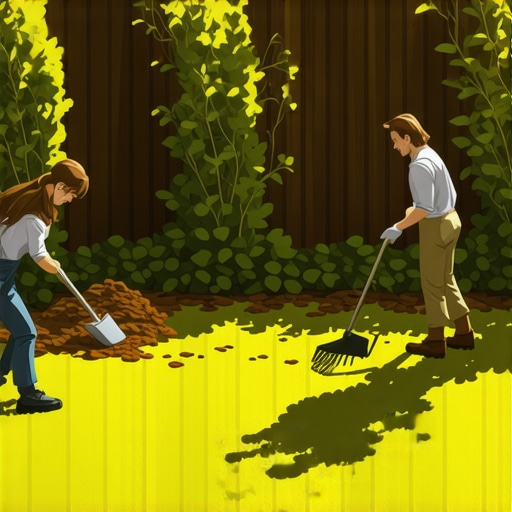
The Hard Truth About Fast Backyard Reclamation
I always drill into my new crew members: if you don’t fix the soil grading first, every plant you put in the ground is just expensive compost. You see a jungle of waist-high weeds and invasive brush; I see a structural failure waiting to happen. Most homeowners think they can just mow their way out of a mess. They are wrong. When a yard has been neglected for years, the biology of the soil changes. The compaction levels skyrocket, and the seed bank of invasive species becomes a ticking time bomb. Reclaiming a yard in a single weekend is not a weekend project for a hobbyist with a rake; it is a tactical operation requiring specific machinery and an understanding of soil physics.
The Systematic Strategy for 48-Hour Yard Restoration
To reclaim an overgrown backyard in one weekend, you must execute a **phased removal of biomass**, perform **mechanical soil aeration**, and install **high-quality turf or seed** with appropriate soil-to-root contact. This process demands a **skid-steer loader**, a **heavy-duty brush hog**, and a **precise understanding of site-specific drainage requirements** to prevent future stagnancy.
“Successful turf establishment depends entirely on the physical properties of the top 6 inches of soil, specifically the balance between macro-pores for drainage and micro-pores for water retention.” – Agronomy Extension Standards
The first twelve hours are strictly about extraction. You are not just cutting; you are excavating. If you leave the root crowns of woody invasives like multiflora rose or buckthorn in the ground, they will punch through your new sod in three weeks. We use a brush hog for the top layer, then a power rake to pull the thatch and root mass out of the top three inches of soil. This is where the amateurs fail. They leave the debris. Debris creates air pockets. Air pockets kill roots. You need clean, mineral soil exposed before you even think about the next step.
How much modified gravel do I need for a patio base?
Calculations for sub-base materials must account for a 20 percent compaction factor. For a standard 4-inch base, you typically need 1 ton of modified 2A gravel for every 50 square feet of area. Skipping this calculation leads to the settling and heaving that destroys hardscapes within two seasons.
Engineering the Sub-Grade and Drainage Layers
The second phase of the weekend involves civil engineering on a micro-scale. You must address the hydrostatic pressure and surface runoff. Most overgrown yards have developed high spots where organic matter has accumulated, often directing water toward the foundation of the house. We use a rotating laser level to establish a minimum 2 percent slope away from all structures. If the soil is heavy clay, we don’t just add topsoil on top of it. That creates a perched water table. We incorporate calcined clay or coarse sand to break up the molecular bonds of the clay particles and improve the Cation Exchange Capacity (CEC).
| Material / Phase | Technical Requirement | Critical Metric |
|---|---|---|
| Brush Removal | Ground Clearance | <1 inch stubble |
| Soil Grading | Positive Pitch | 2% Minimum Slope |
| Soil Prep | Bulk Density | <1.4 g/cm3 |
| Sod Install | Soil Contact | 100% Surface Bond |
Once the grade is set, we address the irrigation. If you are installing sod, an automated system is not a luxury; it is a life-support system. We install high-efficiency rotary nozzles that deliver water at a rate slower than the soil’s infiltration rate. This prevents runoff and ensures the water reaches the root zone. We set our trenches at 12 inches deep to stay below the frost line and use schedule 40 PVC. Thin-wall pipe is for hacks who want to come back and fix leaks in six months.
The Professional Sod Installation Protocol
By Sunday morning, the soil should be prepped and the irrigation tested. Sod is a living, respiring organism. It has a shelf life of about 24 hours once it is cut at the farm. If it sits on the pallet too long, the internal temperature rises due to anaerobic respiration, and the grass dies from the inside out. We lay the sod in a staggered brick pattern to eliminate long seams where the soil can dry out. Each piece is hand-tucked against its neighbor. No gaps. No overlaps.
“A retaining wall doesn’t fail because of the stone; it fails because of the water trapped behind it.” – Hardscape Engineering Axiom
After the sod is down, we use a 300-pound water-filled roller to press the turf into the soil. This is the most skipped step in DIY jobs. If there is an air gap between the sod and the dirt, the roots will desiccate and die. The roller eliminates those gaps and forces the roots to engage with the moisture in the subsoil. It is the difference between a lawn that survives and one that thrives. Don’t skip it. It’s non-negotiable.
What is the best irrigation schedule for new sod?
New sod requires frequent, shallow watering for the first 14 days to keep the root zone saturated. You should run your zones for 10 to 15 minutes, three times per day, ideally at 6 AM, 11 AM, and 3 PM. Avoid evening watering to prevent fungal pathogens like Pythium blight from taking hold in the standing water.
Post-Reclamation Maintenance Checklist
- Monitor for localized dry spots where the soil may have settled.
- Keep foot traffic off the new turf for at least 21 days to allow root anchoring.
- Perform the first mow when the grass reaches 4 inches, but only take off the top 0.5 inches.
- Apply a high-phosphorus starter fertilizer to encourage rapid root elongation.
The weekend ends when the equipment is cleaned and the site is stabilized. A total reclamation is an exercise in discipline. You are fighting against the natural tendency of the land to return to a wild state. By installing professional-grade irrigation and structural turf, you are resetting the biological clock of the property. This isn’t just a yard cleanup; it is a restoration of asset value. Do it right the first time. The soil never lies. It will show your mistakes within a month if you cut corners on the physics of the install. Stay off the new grass. Let the biology work. The work is hard, but the result is a permanent change in the landscape’s trajectory. That is the mark of a professional.