
The Forensic Autopsy of a Failing Irrigation System
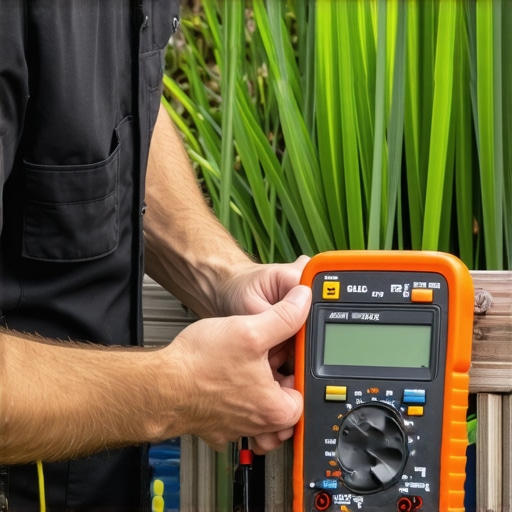
Nothing grinds a project to a halt faster than a controller display flashing a ‘Zone Fault’ or ‘Short’ error. It usually happens right after a massive sod install or a comprehensive yard cleanup when a rogue shovel or an over-zealous edger nicks a direct-burial wire. I recently got called out to tear up a $30,000 patio that was sinking because the previous contractor failed to properly sleeve the irrigation lines. During the excavation, we found three distinct wire shorts where the copper had completely oxidized due to improper splicing. This wasn’t just a failure of materials; it was a failure of engineering. Most ‘landscapers’ will just start digging random holes, hoping to find the break. We don’t do that. We use physics and a digital multimeter to pinpoint the failure before a single shovel hits the dirt.
How to Fix Irrigation Wire Shorts with a Digital Multimeter
To identify an irrigation wire short, you must set your digital multimeter to the Ohms (Ω) setting and measure the resistance between the common wire and the specific zone wire at the controller. A reading between 20 and 60 Ohms is generally considered healthy, while a reading near zero indicates a direct short circuit where two wires are touching. High-end landscaping requires precision, and chasing ghosts in a 24-volt system is a waste of billable hours. If the reading is ‘Open’ or ‘OL’, you have a complete break. If it’s 2 Ohms, you have a short. It is that simple. Don’t guess; measure.
“Electrical troubleshooting in irrigation is 90% logic and 10% tool usage. Without a baseline resistance reading, you are literally flying blind in the mud.” – ASIC Standards for Irrigation Professionals
The Physics of 24VAC Systems
Irrigation controllers operate on 24-volt alternating current. This low voltage is safe for humans but extremely sensitive to soil moisture and copper exposure. When a wire’s insulation is compromised during irrigation maintenance or yard cleanup, the copper reacts with the minerals in the soil. This creates a bridge of resistance. Over time, the controller’s internal fuse or circuit breaker detects this excess current draw and shuts down the zone to prevent the transformer from melting. We call this a hard short. A soft short, which is much harder to find, occurs when the insulation is just thin enough to leak current into the earth when the soil is saturated.
Technical Resistance Reference Chart
| Multimeter Reading (Ohms) | Circuit Condition | Required Action |
|---|---|---|
| 0 – 10 Ω | Direct Short Circuit | Locate wire nick or failed solenoid coil. |
| 20 – 60 Ω | Normal Operation | System is healthy; check for hydraulic issues. |
| 60 – 100 Ω | High Resistance / Corrosion | Check for old wire nuts or corroded splices. |
| Over 100 Ω (or OL) | Open Circuit / Broken Wire | Locate physical break or disconnected common. |
How do I know if my irrigation wire is shorted?
Identify a short by checking the resistance at the controller terminal strip using a digital multimeter. If the zone shows a reading significantly lower than 20 Ohms, you have a short. You should also check for a ‘FAULT’ message on your digital controller display, which is the first indicator that the electrical load has exceeded the manufacturer’s safety threshold. Never replace a fuse with a higher amperage rating to ‘bypass’ a short; you will fry the motherboard.
What should a multimeter read on a 24V sprinkler valve?
A standard sprinkler valve solenoid should read between 20 and 60 Ohms. If you measure the solenoid directly at the valve box and it reads 0-10 Ohms, the solenoid itself is internally shorted and must be replaced. If the solenoid reads 40 Ohms at the valve but 2 Ohms at the controller, the short is located in the direct-burial wire somewhere in the yard. This is where the forensic work begins.
“Voltage drop is the silent killer of solenoid longevity in long-run residential systems, often caused by undersized 18-gauge wire over distances exceeding 500 feet.” – University of Florida IFAS Extension
Step-by-Step Diagnostic Protocol
- Isolate the Controller: Disconnect the zone wire and the common wire from the terminal strip. This ensures you are measuring the field wires, not the controller’s internal circuitry.
- Check the Solenoid: Go to the valve box. Cut the splices and measure the solenoid wires alone. If the solenoid is dead, the repair is easy. If not, the wire is the enemy.
- The ‘Half-Way’ Method: If you have multiple valve boxes, find the one in the middle of the run. Disconnect the wires there and test back toward the controller. This narrows the search area by 50% instantly.
- Check for Mechanical Damage: Look for recent sod install stakes, new fence posts, or areas where the yard cleanup crew used a power edger too aggressively.
- Verify the Splice: 99% of failures occur at the splice. If you aren’t using waterproof, grease-filled wire nuts (like 3M DBR/Y-6), you aren’t doing landscaping; you’re doing a temporary favor.
Local Soil Impact on Troubleshooting
In regions with heavy clay soil, a nicked wire will short out much faster than in sandy loam. Clay holds moisture against the copper, accelerating electrolysis. If you are working in a freeze/thaw climate, ground heaving can actually pull splices apart if there isn’t enough slack in the wire. Always leave a ‘service loop’ of wire in the valve box. It’s a professional signature. Don’t be the guy who leaves a straight, tight wire that snaps the first time the ground temperature drops below 32 degrees.
Professional Repair Standards
Once you locate the short, do not just twist the wires together and wrap them in electrical tape. Electrical tape is for indoor use. In the dirt, it’s useless. Use a professional-grade irrigation splice kit. Strip the wires back until you see shiny copper. If the copper is black or green, the corrosion has traveled up the wire (wicking). You must cut back further until you reach clean metal, or the resistance will remain high and the ‘Short’ error will return within a month. This is the difference between a veteran foreman and a hack with a truck. Fix it once. Fix it right. The soil is unforgiving.