
The Hardscape Autopsy: Why Surface Water Isn’t Soil Moisture
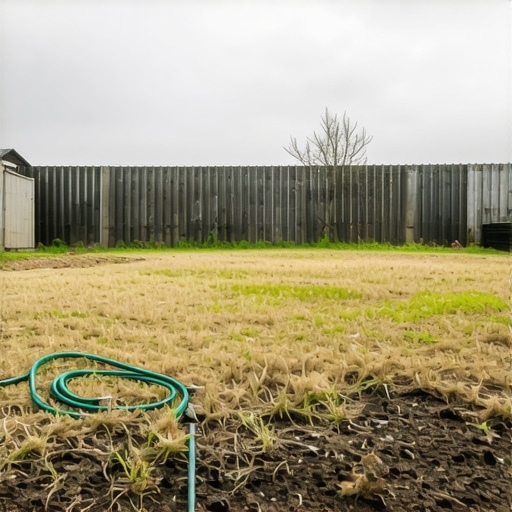
If your grass stays brown after heavy rain, you likely have soil compaction or hydrostatic saturation preventing oxygen from reaching the root zone. This creates an anaerobic environment where roots rot rather than hydrate. Proper yard cleanup and sod install require addressing the underlying irrigation and drainage mechanics first. I recently got called out to tear up a $30,000 patio that was sinking because the previous contractor failed to account for a perched water table. The homeowners thought the brown grass around the edges was from a lack of water. In reality, it was drowning. They kept watering a dying system, compounding the failure. I had to use a skid steer to rip out four tons of wet, fouled aggregate. It was a mess. A total loss. This is what happens when you ignore soil physics.
“A retaining wall doesn’t fail because of the stone; it fails because of the water trapped behind it.” – Hardscape Engineering Axiom
Soil Compaction: The Invisible Barrier
Soil compaction occurs when the pore spaces between soil particles are crushed, preventing the exchange of gases and the downward movement of water. This is common in high-traffic areas or yards with high clay content where the bulk density exceeds 1.6 grams per cubic centimeter. When it rains, the water cannot penetrate. It sits on the surface or runs off. Your grass stays brown because the roots are gasping for air, not water. This is the difference between a functional ecosystem and a stagnant mud pit.
| Soil Type | Infiltration Rate (inches/hour) | Compaction Risk |
|---|---|---|
| Sand | 2.0 to 20.0 | Low |
| Loam | 0.5 to 2.0 | Medium |
| Clay | 0.01 to 0.1 | Extreme |
I see it every day. Homeowners buy a sod install package from a guy with a truck and no transit level. They lay fescue over hard-packed red clay. The roots hit that clay like it is concrete. Within six months, the yard is a checkerboard of brown patches. You cannot fix this with a sprinkler. You fix this with a mechanical aerator or a complete soil amendment process. Irrigation without infiltration is just a recipe for fungal growth.
Why is my grass brown if the soil is wet?
Your grass is brown because the roots have undergone hypoxia. When water occupies all the pore space in the soil for more than 24 to 48 hours, the oxygen is depleted. Roots need oxygen for respiration. Without it, the root hairs die off, and the plant can no longer take up nutrients or water, even when surrounded by it. It is a biological irony. The plant dies of thirst in a flood. You will notice a foul, sulfurous smell if you dig a small plug. That is the smell of anaerobic bacteria. It is the smell of failure.
[IMAGE_PLACEHOLDER]
The Hydrostatic Trap: How Water Drowns Roots
Hydrostatic pressure is the force exerted by a fluid at rest due to the force of gravity. In a poorly graded yard, water accumulates in the subsoil, creating a localized water table that sits inches below the surface. This happens frequently after a yard cleanup where the debris was removed but the grading was ignored. The water has nowhere to go. It sits against your foundation or under your turf, saturating the root zone until the grass turns into a brown, mushy pulp. Stop watering. Check your grade.
“Soil compaction reduces the amount of air and water available to plants and increases the mechanical resistance to root growth.” – Penn State Extension
The Remediation Process: A Professional Checklist
Fixing a brown lawn in a wet climate requires engineering, not just gardening. You need to move the water or open the soil. I tell my crew: if you don’t fix the soil grading first, every plant you put in the ground is just expensive compost. It is the truth. Most landscaping companies won’t tell you that because they want the repeat business when your plants die. I want the job done right once.
- Perform a Perc Test: Dig a hole 12 inches deep, fill it with water, and time how long it takes to drain. If it takes more than 4 hours, you have a drainage crisis.
- Mechanical Core Aeration: Use a machine that pulls 3-inch plugs. Don’t use those spike shoes; they just compact the soil further.
- Top-Dressing: Spread a thin layer of compost or sand after aeration to fill the holes and improve the soil structure.
- Sub-Surface Drainage: Install a French drain using 4-inch perforated NDS pipe and 1-inch clean washed stone.
- Check Irrigation Head Placement: Ensure you aren’t overlapping zones and creating artificial bogs in low spots.
How do I fix standing water in my yard?
Fixing standing water requires identifying the lowest point of your property and creating a path for gravity to do its work. This usually involves installing a catch basin or a French drain system. The pipe must be sloped at a minimum of 1 percent grade (1 foot of drop for every 100 feet of run). If you have heavy clay, you must use a filter fabric (non-woven geotextile) to prevent the fines from clogging your drainage stone. Skip the fabric, and your drain will fail in two years. Guaranteed.
Fungal Pathogens and the False Brown Phenomenon
Sometimes the brown isn’t from the water itself, but what the water brings. Pythium blight and Rhizoctonia (Brown Patch) thrive in warm, wet conditions. If you have standing water and high humidity, these fungi can devastate an entire sod install in 72 hours. The grass will look greasy or slimy before it turns brown. This is often caused by irrigation systems that run too late in the evening. Water early. Let the sun dry the leaf blade. Night watering is a death wish for southern lawns. Use a preventative fungicide only if you have corrected the drainage issues first. Applying chemicals to a swamp is a waste of money.