
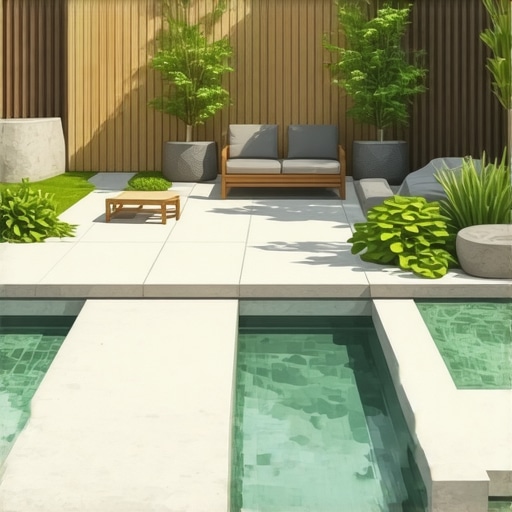
The Foundation of Small Yard Engineering
Small backyard layouts that make the space look doubled rely on structural physics rather than simple decoration. I always drill into my new crew members: if you don’t fix the soil grading first, every plant you put in the ground is just expensive compost. In a tight space, every inch of slope matters. If your yard has a 2 percent grade toward the foundation, your fancy new patio is just a $20,000 basin for a future flooded basement. You cannot ignore the hydraulics of your land. When we talk about landscaping in a small footprint, we are talking about managing moisture, light, and soil compaction to create a functional ecosystem that doesn’t feel like a cage.
Why Most Small Yards Fail Before the First Shovel Hit
Success in a small lot requires site-specific engineering that accounts for drainage, structural integrity, and plant physiology. Most homeowners make the mistake of buying plants at a big-box store and sticking them in the ground without checking the soil pH or the compaction levels. You need to understand that a small yard is an intensified environment. Heat reflects off fences, air circulation is often poor, and soil is frequently dead clay left over from the original construction. Before you even think about sod install or choosing pavers, you must perform a yard cleanup that goes deeper than just raking leaves. You need to excavate the debris, test for heavy metals or nutrient deficiencies, and map out your utility lines via 811. Don’t skip this. It will save your life and your wallet.
“A retaining wall doesn’t fail because of the stone; it fails because of the water trapped behind it.” – Hardscape Engineering Axiom
The Physics of Hardscape and Sightlines
To make a space feel larger, you must manipulate the way the human eye processes depth and distance. Hardscaping is the most effective tool for this. Using larger pavers, specifically 24 by 24 inch slabs, reduces the number of joint lines. Fewer joints mean less visual noise. If you use small bricks, the yard looks like a cluttered grid. By laying pavers on a 45-degree angle relative to the house, you force the eye to follow the longest possible diagonal line in the yard. This is a basic geometric trick that works every time. However, the pretty stones mean nothing if the base is trash. You need 4 to 6 inches of 21A modified gravel, compacted in 2-inch lifts with a vibrating plate tamper. The tamper should literally bounce off the ground when you are done. If it sinks, you aren’t ready for sand.
How much modified gravel do I need for a patio base?
Calculating your base material is a matter of volume and density, requiring a minimum of 4 inches for pedestrian traffic and up to 8 inches for heavy clay soils. For a 200 square foot patio at a 4-inch depth, you need roughly 2.5 cubic yards of crushed stone. Factor in a 20 percent compaction rate. You are moving tons of material, not pounds. If you under-calculate, you will end up with a sinking mess within two seasons. This isn’t a suggestion; it is a structural requirement for any landscaping project that involves weight-bearing surfaces.
| Material Choice | Visual Impact | Maintenance Load | Engineering Benefit |
|---|---|---|---|
| Large Format Pavers | Expansive | Low | High Structural Stability |
| Natural Turf (Sod) | Cooling / Softening | High | High Water Infiltration |
| Vertical Gardens | Adds Depth | Medium | Maximizes Footprint |
| Built-in Benches | Reduces Clutter | Low | Defines Perimeter |
Optimizing Turf and Irrigation in Tight Quarters
A sod install in a small yard is often an afterthought, but it should be a surgical strike. In small spaces, turf often struggles with shade and high foot traffic. You cannot just throw down Kentucky Bluegrass and pray. You need a species that handles the micro-climate of your specific yard. If you have 4 hours of sun, you are looking at Fine Fescue or a specialized shade-tolerant Zoysia. Furthermore, your irrigation must be precise. Overhead sprays in a small yard are a waste of water and a recipe for fungal rot on your fences. Use subsurface drip lines. They deliver water directly to the root zone, reducing evaporation and preventing the