
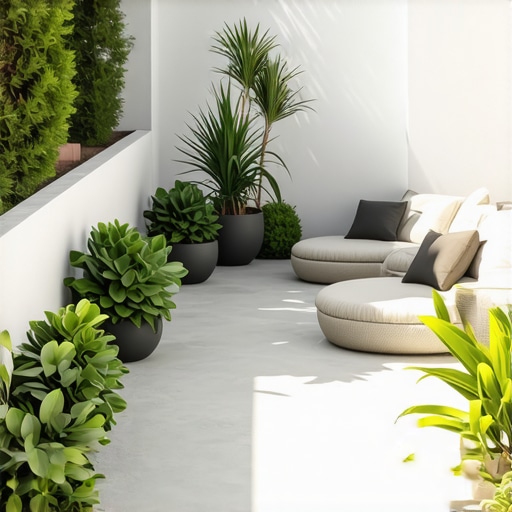
The Engineering Reality of Small-Scale Backyard Design
Modern 2026 backyard layouts for small concrete spaces prioritize hydrostatic pressure management, permeable surfacing, and vertical biomass integration to maximize utility in tight footprints. Success depends on a 4-inch minimum sub-base and integrated French drains to prevent water logging and foundation salt-efflorescence. Forget the aesthetics for a second. If you don’t understand the civil engineering behind a 15×15 foot concrete slab, you are building a heat sink that will eventually crack and flood your crawlspace.
I recently got called out to tear up a $30,000 patio that was sinking because the previous contractor thought they could skip the sub-base compaction. They laid expensive pavers directly over 2 inches of stone dust on top of uncompacted clay. Within two seasons, the freeze-thaw cycle turned that ‘luxury retreat’ into a series of dangerous trip hazards. The homeowner was furious, and rightly so. I had to excavate the entire mess, haul away 15 tons of ruined material, and start from the dirt up. This is why I tell my crew: we aren’t just laying stone; we are managing gravity and water. If you get those two wrong, the rest is just expensive trash.
The Planning Phase: Why 80% of the Work Happens Before the Pour
Before you even think about yard cleanup or ordering sod install materials, you need a site survey. In a small concrete space, every inch of grade matters. You need a minimum 2% slope away from the primary structure. That is a 1/4-inch drop for every foot of horizontal run. If your yard is dead level, you are in trouble. You’ll need to install a trench drain or a catch basin system tied into 4-inch PVC—never that cheap corrugated black pipe that clogs the moment a root touches it.
“A retaining wall doesn’t fail because of the stone; it fails because of the water trapped behind it.” – Hardscape Engineering Axiom
In 2026, we are seeing a shift toward ‘Hybrid Hardscaping.’ This involves breaking up solid concrete masses with permeable joints filled with No. 8 or No. 9 aggregate. This reduces the heat island effect and allows for subsurface irrigation lines to reach planting pockets without cutting through 4 inches of 4000 PSI concrete later.
Material Comparison for Small-Scale Urban Footprints
| Material Type | Load Bearing (PSI) | Permeability (%) | Life Expectancy (Years) |
|---|---|---|---|
| Poured Concrete (Standard) | 3,500 – 4,000 | 0% | 20-25 |
| Permeable Pavers | 8,000+ | 15-25% | 40-50 |
| Engineered Decking (Steel Frame) | N/A | 100% | 25-30 |
| Interlocking Concrete Blocks | 5,000 | 5-10% | 30 |
The table above shows why we are moving away from solid slabs. Permeable pavers offer double the PSI of standard concrete. In a small space, you need that durability because the traffic is concentrated on a smaller surface area. It will last. Don’t go cheap here.
How much modified gravel do I need for a patio base?
To calculate modified gravel needs, multiply the total square footage by the desired depth in feet (usually 0.5 feet for 6 inches), then divide by 27 to get cubic yards. For a 200-square-foot patio with a 6-inch base, you need 3.7 cubic yards of 2A modified stone. Always order 10% extra for compaction loss. You must compact this in 2-inch lifts. If you throw 6 inches of stone in a hole and run a plate tamper over the top, the bottom 4 inches will stay loose. The patio will settle. Your project will fail. Use a vibratory rammer or a heavy plate compactor and hit 95% Proctor density before the first paver touches the sand.
What is the best irrigation for a small concrete yard?
The best irrigation for small concrete spaces is a pressure-compensated drip system (0.6 or 0.9 GPH emitters) installed under a 3-inch layer of hardwood mulch or within raised planters. Avoid spray heads in tight quarters; they mostly just water the concrete and cause calcium staining on your masonry. Modern 2026 systems use smart controllers with local weather station integration to skip cycles during high humidity. This prevents the soil-borne pathogens common in small, poorly ventilated urban yards.
The Installation Process: Precision over Speed
When we move to the sod install phase after the hardscape is set, soil prep is non-negotiable. Most ‘mow-and-blow’ guys just throw sod on top of compacted construction debris. That grass will be dead in six months. You need to rototill 4 inches of organic compost into the existing soil to break up the compaction caused by the heavy machinery used during the concrete pour. I check the soil pH—if it’s below 6.0, I’m adding lime; if it’s above 7.2, I’m adding elemental sulfur. We are looking for that 6.5 sweet spot where nutrient uptake is maximized.
“Soil compaction is the single greatest barrier to urban plant health, restricting oxygen exchange and root elongation.” – Penn State Agricultural Extension
- Clearance: Remove all debris, old roots, and ‘dead’ soil.
- Grading: Verify the 2% slope with a laser level.
- Amending: Incorporate 3 cubic yards of compost per 1,000 sq ft.
- Compaction: Use a water roller to firm the soil without over-compacting.
- Sodding: Stagger joints like bricks and use a sod roller to ensure root-to-soil contact.
Once the sod is down, the first 14 days are critical. You need to maintain a ‘damp-not-saturated’ profile. In 2026, we utilize soil moisture sensors buried 4 inches deep to trigger the irrigation only when the volumetric water content drops below 20%. This forces the roots to chase the water down, creating a resilient turf that can handle the reflected heat from the nearby concrete. Stop watering every day after the second week. Deep, infrequent watering is the only way to build a root system that survives a July heatwave.
The Long-Term Maintenance Cycle
A small yard requires a precise yard cleanup schedule. In small concrete spaces, leaf litter and organic debris can quickly clog drainage grates, leading to standing water. Every spring, inspect the polymeric sand in your paver joints. If it has washed away, replace it immediately to prevent weed seeds from germinating and to maintain the interlock. This isn’t just about looks; it is about structural integrity. The sand transfers the load between the pavers. Without it, the system fails. Keep the concrete clean, the drains clear, and the soil biology active. That is how you manage a modern high-end landscape.