
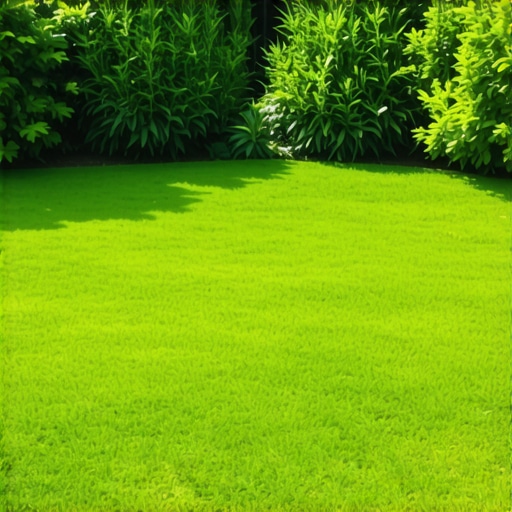
The Secret to Growing a Perfectly Level Green Lawn: Grade Engineering and Soil Science
Achieving a golf-course finish on a residential property is not a matter of luck or more fertilizer. It is a matter of civil engineering and soil biology. Most homeowners and ‘mow-and-blow’ contractors think that dumping a few bags of big-box store seed and watering daily will result in a flat, healthy yard. They are wrong. A professional-grade lawn is built from the subgrade up. If you ignore the structural integrity of your soil and the precision of your grade, your lawn will eventually settle into a lumpy, drainage-challenged mess. 80 percent of the work happens before a single blade of grass exists. You must treat your yard like a construction site, not a garden bed. This is the reality of professional landscaping.
The Critical Narrative: Lessons from the Field
I always drill into my new crew members: if you don’t fix the soil grading first, every plant you put in the ground is just expensive compost. Last season, I was called to a property where the owner had spent six thousand dollars on premium sod only to lay it over an uncompacted, debris-filled subsoil. Within four months, the organic matter underneath began to rot, and the entire lawn settled unevenly. It looked like a topographical map of a mountain range. We had to rip the entire thing out, excavate the trash, and start from the dirt. Don’t skip the prep. It will cost you twice as much in the long run. Do it right the first time.
Why Most Level Lawns Fail Within Three Years
Soil compaction, organic decomposition, and hydrostatic pressure are the primary reasons lawns lose their level over time. A truly level lawn requires a compacted subgrade, a consistent topsoil depth, and a 1 to 2 percent slope for drainage to prevent saturation and soil shifting. Without these engineering fundamentals, the ground will heave during freeze-thaw cycles or sink as air pockets collapse. [IMAGE_PLACEHOLDER]
The Physics of the Subgrade
Before you even think about sod install or yard cleanup, you have to look at the subgrade. This is the native soil sitting beneath your topsoil layer. If this layer contains construction debris, rotting wood, or uncompacted clay, it will move. I use a transit level or a laser level to establish a consistent pitch away from the home’s foundation. You need a minimum of 1 inch of drop for every 10 feet of run. This prevents hydrostatic pressure from building up and turning your yard into a marsh. We use a vibrating plate compactor or a water-filled roller to ensure the subgrade is firm. If your foot sinks in, the lawn will sink too. Firmness is non-negotiable.
“A lawn is only as stable as the substrate it sits upon. Failure to address subsoil density leads to inevitable surface undulations regardless of turf species selection.” – Agronomy Manual of Turfgrass Standards
Soil Chemistry: The NPK and pH Connection
You cannot grow a professional lawn in dead dirt. We test for Cation Exchange Capacity (CEC) and pH levels. Most turfgrasses thrive in a pH range of 6.5 to 7.0. If your soil is too acidic, the nutrients are chemically locked away from the roots. You can dump all the 20-20-20 fertilizer you want on it, but the grass will starve. We use pelletized lime to raise pH or elemental sulfur to lower it. This is not guesswork; it is chemistry. We also look at the nitrogen cycle. Nitrogen is highly mobile and leaches through the soil quickly. This is why irrigation management is vital. Too much water flushes your expensive nutrients into the groundwater before the roots can grab them.
The Professional Material Breakdown
| Material Type | Best Use Case | Compaction Rating | Nutrient Retention |
|---|---|---|---|
| Screened Sandy Loam | Standard Leveling | High | Moderate |
| River Sand | Golf-Style Top Dressing | Excellent | Low |
| Compost-Peat Mix | Organic Amendment | Poor | High |
| Heavy Clay | Foundation Sloping | Maximum | Low |
As the table shows, Screened Sandy Loam is the gold standard for most landscaping projects. It provides the drainage of sand with the nutrient-holding capacity of silt and clay. Avoid ‘fill dirt’ from construction sites. It is usually full of weed seeds and heavy metals that will kill your microbial life. You want a material that is consistent. If you use different soil types in different areas, they will expand and contract at different rates, leading to an uneven surface. Consistency is the secret to a flat yard.
How do you level an existing bumpy lawn?
To level an existing lawn without a full sod install, you must use a process called top-dressing. This involves applying a 70/30 mix of masonry sand and high-quality compost in thin layers of no more than 1/4 inch at a time. This allows the grass blades to grow through the material while filling in the low spots. If you go thicker, you will smother the crown of the plant. It takes time. You might need three or four applications over two growing seasons to reach a true level. It is a marathon, not a sprint. Use a lawn leveling rake, not a standard garden rake, to ensure the material finds the lowest points in the yard.
The Professional Sod Install Checklist
- Eradication: Use a non-selective herbicide to kill all existing weeds and old turf.
- Excavation: Remove the top 2-3 inches of debris and old root systems.
- Grading: Use a laser level to establish a 1-2% pitch away from structures.
- Amendment: Till in 1 inch of organic compost to improve microbial activity.
- Compaction: Roll the bare soil to ensure no soft spots remain.
- Hydration: Pre-wet the soil before laying the first piece of sod.
- Staggering: Lay sod in a brick-work pattern to minimize visible seams.
What is the best soil for a level lawn base?
The best soil for a level lawn base is a screened sandy loam with less than 15% clay content. This mixture resists soil compaction while maintaining enough pore space for oxygen to reach the roots. Oxygen is the most overlooked nutrient in landscaping. If the soil is too dense, the roots will suffocate. If it is too loose, the grade will collapse. You need a structural balance that only a high-quality loam can provide.
“Optimal turfgrass performance is directly correlated to the volumetric water content and oxygen diffusion rate within the top six inches of the soil profile.” – Penn State Agricultural Extension
Irrigation Mechanics and Water Management
Most people drown their lawns. They water for ten minutes every day. This is a recipe for shallow roots and fungal diseases like Pythium blight. You want deep, infrequent watering. You should aim for exactly 1 inch of water per week, delivered in one or two heavy sessions. This forces the roots to grow deep into the soil profile to find moisture, making the lawn drought-resistant. We use head-to-head coverage in our irrigation designs. This means the spray from one sprinkler head must reach the base of the next one. Anything less results in ‘donuts’ or dry spots that lead to soil shrinkage and unevenness. Check your precipitation rates with the ‘tuna can’ test. It doesn’t lie.
The Maintenance Gauntlet: Year One
Once the sod is down, the work begins. During the first two weeks, you must keep the soil consistently moist to encourage root establishment. Do not walk on it. After the first month, you can start your mowing schedule. Never remove more than one-third of the grass blade at once. If you scalp the lawn, you stop root growth for up to two weeks. A tall lawn has deep roots. A short, scalped lawn has shallow, weak roots. Keep your mower blades sharp. Dull blades tear the grass, leaving it open to pathogens. You didn’t spend all this money to let a dull blade ruin the finish. Pay attention to the details. A level lawn is a living engine. Keep it tuned. Avoid mulch volcanoes near trees or edges, and keep the thatch layer under control with annual core aeration. This is the only way to maintain the grade you worked so hard to build.