
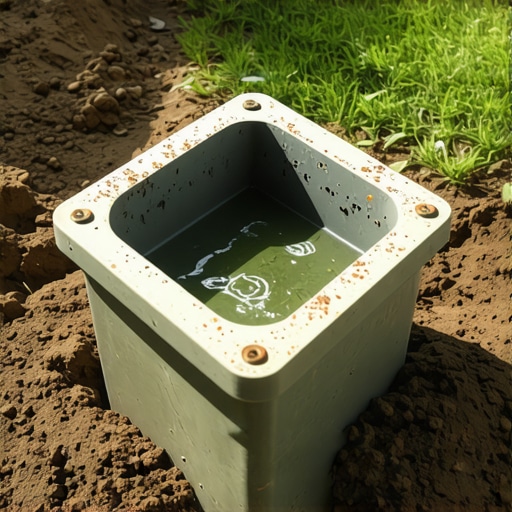
Identifying the Source of Standing Water in Irrigation Valve Boxes
Standing water in an irrigation valve box is typically caused by leaking manifold fittings, weeping valves, or poor site drainage that allows surface runoff to collect in the subterranean housing. Determining if the water is clean (system leak) or muddy (groundwater) is the first step in professional remediation. If the box remains full long after the rain stops, you are likely dealing with a mechanical failure within the pressurized line or a high water table that requires structural intervention.
The Hardscape Autopsy: A Lesson in Hydrostatic Pressure
I recently got called out to a property where the homeowner had just finished a twenty thousand dollar sod install and a massive yard cleanup. Within two weeks, their main irrigation valve box was a soup of stagnant water and mosquito larvae. The previous contractor had simply dropped the plastic box into a hole in the heavy clay soil without a lick of drainage. No gravel. No sump. No exit strategy for the water. Because the yard was graded toward the house, every gallon of surface runoff was funneling directly into that plastic vault. We had to excavate the entire manifold and install a proper French drain system just to keep the solenoids from shorting out. It was a classic case of ignoring the civil engineering side of landscaping. If you do not account for where the water goes, physics will decide for you. It will rot your components and saturate your root zones until the grass dies from lack of oxygen.
The Mechanics of Valve Box Flooding
There are three primary reasons your valve box looks like a miniature pond. First, you have a mechanical leak. This could be a cracked manifold, a loose union, or a failed O-ring in the solenoid. Even a pinhole leak under 60 PSI of static pressure will fill a standard 12 inch box in less than an hour. Second, you have surface water infiltration. If the lid of the box is lower than the surrounding grade, it acts as a catch basin. Third, you have a high water table or poor soil percolation. In areas with heavy clay, water cannot move vertically through the soil profile. Instead, it sits in the excavated cavity of the valve box because it is the path of least resistance. You must understand the difference between these to fix the problem correctly.
“Irrigation systems must be designed to minimize the risk of water hammer and hydrostatic surge, which are the leading causes of fitting failure in residential manifolds.” – Irrigation Association Technical Manual
Why is there water in my sprinkler box when the system is off?
If you see water accumulating when the controllers are inactive, the issue is almost certainly on the constant pressure side of the manifold or a weeping valve diaphragm. A weeping valve occurs when a small piece of debris (sand, PVC shavings, or a pebble) gets trapped in the diaphragm, preventing it from sealing completely. This allows a slow, constant trickle of water to pass through the valve and out into the box or down the lateral line. Over time, this saturation leads to fungal growth in your turf and the eventual failure of the valve solenoid due to constant moisture exposure.
Diagnostic Matrix for Flooded Valve Boxes
| Symptom | Likely Cause | Diagnostic Action |
|---|---|---|
| Clear water, fills quickly | Pressurized leak | Check manifold fittings and O-rings |
| Muddy water after rain | Surface runoff | Inspect box grade and lid height |
| Water remains for days | Poor percolation | Perform a soil ribbon test for clay content |
| Wet soil around box only | Lateral line leak | Pressure test individual zones |
How do I know if my irrigation valve is leaking?
The most effective way to test for a leak is to shut off all water usage inside the home and check your main water meter. If the low flow indicator or the triangular dial is spinning, you have a leak. Next, close the isolation valve for the irrigation system. If the meter stops, the leak is in your sprinklers. Reopen the isolation valve and observe the valve box. If you see bubbling or swirling water around the fittings, you have found the breach. Most leaks occur at the threaded connections where the valve meets the manifold. These are high stress points that often fail if the box is stepped on or if the soil settles unevenly.
The Engineering Protocol: Building a Dry Valve Vault
To prevent future flooding, you must follow a strict installation protocol. Do not just dig a hole and drop the box in. Excavate the area 6 inches deeper and 6 inches wider than the box itself. Fill this extra space with 3/4 inch washed crushed stone. This creates a sump area that allows small amounts of water to drain away before they ever reach the level of the valves. If you are working in heavy clay, you may need to run a 1 inch PVC bleed line from the bottom of the box to a lower point on the property. This is a mini French drain. It ensures the box stays dry even during a monsoon. Use Schedule 40 PVC for all manifold components. Never use Class 200 thin-wall pipe for the constant pressure side of the system. It will fail. That is a fact.
“The longevity of a subterranean utility enclosure is directly proportional to the drainage capacity of the sub-base material.” – ASABE Standards for Landscape Irrigation
The Irrigation Maintenance Checklist
- Clean out silt and debris from the box floor every spring.
- Ensure the lid is at least 1 inch above the soil grade to prevent runoff entry.
- Inspect solenoids for corrosion or moisture intrusion in the wire nuts.
- Use waterproof grease-filled wire connectors for all splices.
- Check the manifold for stress cracks caused by soil heaving.
Professional Remediation Steps
If you have identified a leak, do not just slap some epoxy on it. You have to cut it out. Use a PVC pipe cutter for a clean, square edge. Deburr the pipe. Use a high-quality purple primer and a heavy-duty solvent cement. Ensure you have at least 30 seconds of set time before putting any stress on the joint. If the issue is grading, you may need to lift the box. This involves disconnecting the valves, adding a gravel base, and re-leveling. It is tedious work. It is also the only way to do it right. A flooded box is not just a nuisance. It is a breeding ground for pests and a shortcut to a dead lawn. Fix the grade. Fix the leak. Protect your investment.