
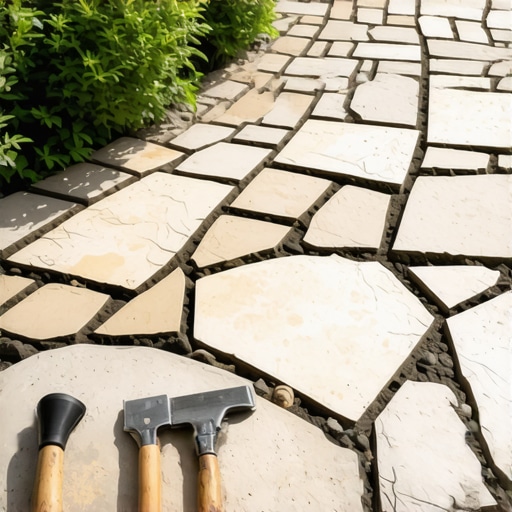
The Forensic Anatomy of a Failed Flagstone Path
A cracked flagstone path typically signals a failure in the sub-base compaction or hydrostatic pressure management rather than a defect in the stone itself. To repair these failures, one must address the soil plasticity, ensure a minimum 6-inch 2A modified stone base, and implement polymeric sand or M-type mortar to handle thermal expansion and moisture ingress.
I recently got called out to tear up a $30,000 patio that was sinking because the previous contractor thought he could get away with three inches of stone dust over uncompacted clay. Within two seasons, the freeze-thaw cycle turned that expensive Pennsylvania Bluestone into a jagged, tripping hazard. The client was furious, and rightly so. Most of the ‘landscaping’ crews you see today are just laborers with a truck who don’t understand the difference between proctor density and simple dirt. If you don’t respect the physics of the ground, the ground will reclaim your work. I see it every week: beautiful stone laid on top of what is essentially a sponge. When we tore it up, the geotextile fabric was nonexistent, and the stones were literally swimming in saturated silt. This isn’t just bad luck; it is a failure of engineering. If you are planning a sod install or a major yard cleanup, you have to look beneath the surface before you worry about the aesthetics.
The Science of Soil Heave and Base Failure
Why do stones crack? In 90 percent of cases, it is the movement of the earth. Soil is not a static platform; it is a dynamic, breathing medium that expands and contracts based on moisture content and temperature. Clay soils are particularly treacherous. They hold water like a reservoir. When that water freezes, it expands by roughly 9 percent, exerting thousands of pounds of pressure per square inch. This is frost heave. Without a proper drainage layer of clean angular stone, that pressure has nowhere to go but up, snapping a 1.5-inch thick piece of flagstone like a dry cracker. You also have to consider hydrostatic pressure. If your irrigation system is dumping 1 inch of water on your landscaping three times a week, and you have no French drain or swale to divert it, that water saturates the base. A saturated base loses its shear strength, causing the ‘pumping’ effect where stones wobble and eventually crack under foot traffic.
“A retaining wall doesn’t fail because of the stone; it fails because of the water trapped behind it.” – Hardscape Engineering Axiom
How much modified gravel do I need for a patio base?
For a residential flagstone path, you need a minimum of 4 to 6 inches of compacted 2A modified stone plus a 1-inch setting bed of washed concrete sand. This structural section must be calculated based on the California Bearing Ratio (CBR) of the native soil, ensuring the load-bearing capacity exceeds the expected foot traffic and equipment weight. Don’t let anyone tell you ‘stone dust’ is a base. It’s not. It’s a setting bed. If you use 4 inches of stone dust, you’re building on a foundation that will eventually shift because it doesn’t drain. You need angular gravel that locks together. When we run a vibratory plate compactor over the stone, we are looking for a specific bounce. If the machine sinks, the soil is too wet or too loose. You keep adding stone and compacting in 2-inch ‘lifts’ until that base is as hard as a highway. Anything less is a shortcut to failure.
| Material Type | Compaction Rating | Drainage Capability | Recommended Use |
|---|---|---|---|
| 2A Modified Stone | Excellent | Good | Primary structural base |
| Clean #57 Stone | Moderate | Superior | Drainage layers / French drains |
| Concrete Sand | High | Moderate | Leveling/Setting bed (1-inch) |
| Stone Dust/Screenings | Poor | Very Poor | Do not use for structural base |
The Step-by-Step Remediation Process
Repairing a cracked path is more about excavation than masonry. First, remove the damaged stones and the surrounding jointing material. You must dig out the failed base material until you hit virgin subgrade. It is a messy, back-breaking job, but skipping it means you’ll be doing this again in two years. Once excavated, lay down a non-woven geotextile fabric. This acts as a ‘bridge’ between the dirt and your new stone, preventing the gravel from migrating down into the mud. Fill with crushed angular aggregate and hit it with a compactor. For the stone itself, ensure you are using a consistent thickness. If you have variations, you adjust the sand bed, not the gravel base. Finally, use polymeric sand. This is a mix of fine sand and polymers that hardens when misted with water. It stays flexible enough to handle minor shifts but is hard enough to prevent weed growth and ant hills.
“Soil stabilization and moisture control are the primary factors in preventing the structural failure of non-reinforced masonry units in outdoor environments.” – USDA Agricultural Engineering Manual
Can I lay flagstone directly on dirt?
No, laying flagstone directly on native soil is the fastest way to ensure a failed project, as the stone will sink, tilt, and crack within a single season. The lack of a capillary break allows moisture to wick into the stone, leading to efflorescence and spalling during freeze cycles. If you’re doing a yard cleanup and find old stones laid in the mud, pull them up. They are a liability. Even if you aren’t doing a full sod install, taking the time to excavate 8 inches and put in a proper base will save you thousands in the long run. Real landscaping is about longevity, not just how it looks on the day the check clears. I tell my apprentices: the most important part of the job is the part the homeowner will never see.
- Excavation: Minimum 8-10 inches deep for the total profile.
- Fabric: Use 4oz non-woven geotextile to prevent soil mixing.
- Compaction: Compact base material in 2-inch lifts to 95 percent proctor density.
- Pitch: Ensure a 1/4-inch per foot slope away from foundations.
- Joints: Use high-quality polymeric sand with a minimum 1-inch depth.
- Irrigation: Adjust spray heads to prevent constant saturation of the path edges.
Maintaining the Integrity of the Path
Once the repair is done, your work isn’t over. You need to manage the micro-climate around the path. If your irrigation system is hitting the stones directly, you’re inviting trouble. Over time, the constant water will erode the jointing sand and find its way into the base. Check your drainage swales. After a heavy rain, there should be no standing water within 3 feet of the path. If there is, you have a grading issue that needs to be solved with more than just a shovel. You might need to integrate a sod install with a specific pitch to move that water away. Proper yard cleanup also involves keeping organic debris off the stones. Rotting leaves create organic acids that can etch the surface of natural flagstone, making it more porous and susceptible to water damage. It is a system. The stone, the sand, the gravel, and the dirt all have to work together. Treat your yard like the piece of engineering it is, and those flagstones will outlast you.