
The Forensic Autopsy of an Ivy-Strangled Landscape
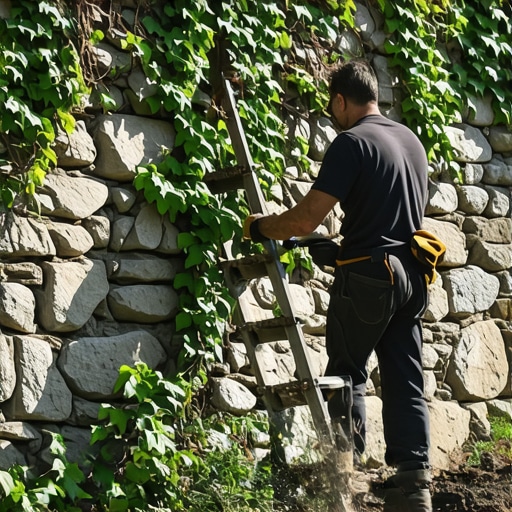
You see a green wall; I see a structural failure in progress. When English ivy (Hedera helix) takes over a yard, it is not just an aesthetic nuisance; it is a biological parasite that traps moisture against siding, rot-proofs the cambium of your hardwoods, and destroys soil pH. To clear overgrown ivy in one afternoon, you must sever the main vines at the root crown, peel the ground-level carpet in manageable strips using a heavy-duty garden rake or mattock, and immediately treat the cut stumps with a concentrated systemic herbicide to kill the underground rhizome network. This is not a task for the faint of heart. It requires heavy gloves and a blunt understanding of plant physiology. I always drill into my new crew members: if you don’t fix the soil grading and clear the invasive load first, every plant you put in the ground is just expensive compost. I have seen guys throw $5,000 of premium sod over a site that still had ivy runners six inches deep. Within two seasons, the ivy punched through the sod like a scene from a horror movie. We had to rip the whole thing out. It was a waste of labor and a waste of the client’s money. Don’t skip the prep work. Ivy is relentless. You have to be more relentless.
“English ivy (Hedera helix) is a vigorous evergreen climbing vine that can cause significant damage to trees and structures by trapping moisture and blocking sunlight.” – Penn State Extension
The Biology of the Kill: Why Ivy Wins
Ivy survives because of its adventitious rootlets. These tiny, glue-like hairs secrete a substance that bonds to masonry and bark at a molecular level. When you pull ivy off a brick wall, you are often pulling the mortar with it. In a yard cleanup scenario, the goal is to stop the nutrient flow. Ivy is a carbohydrate storage machine. If you only cut the leaves, the roots just laugh at you. You have to hit the energy source. This requires a landscaping approach that combines mechanical force with chemical precision. It will rot if left alone. But it takes years. We do not have years. We have one afternoon. Most homeowners fail because they try to pull the ivy down from the trees. Never do this. You will pull heavy deadwood down on your head. Cut it at the base. Let the high stuff die and fall on its own. It is safer. It is smarter.
How do you kill ivy without killing the tree?
To kill ivy without harming the host tree, you must use the ‘Girdle Method’: cut a two-inch gap in every ivy vine circling the trunk at chest height, then carefully pry the lower section away from the bark to create a ‘dead zone’ that prevents the roots from feeding the upper canopy. Do not nick the tree’s bark. The bark is the tree’s skin. If you cut the cambium, you kill the tree. Use a small hand saw or bypass loppers. Be surgical. Once the connection is severed, the ivy above will turn brown within two weeks. It will look ugly for a month. Then it will become brittle and wind will clear it for you. This is the only way to handle a massive landscaping overhaul without risking the health of your mature oaks or maples.
The Arsenal: Tools for Rapid Clearance
Speed requires the right gear. A standard rake will snap. You need a forged steel mattock and a pair of 18-inch loppers. If the ivy is thick enough to hide a small dog, you need a brush cutter with a tri-blade attachment. Do not use a string trimmer. Ivy vines will wrap around the head and smoke your clutch in six minutes. I have seen it happen to rookies a dozen times. Here is your checklist for the afternoon:
- Forged Steel Mattock: For prying the root crowns out of compacted soil.
- Bypass Loppers: For vines thicker than one inch.
- Triclopyr Herbicide: Specifically formulated for woody vines (glyphosate is often too weak for old-growth ivy).
- Disposable Paintbrush: To apply herbicide directly to cut stems.
- Heavy Leather Gauntlets: Ivy hides spiders, snakes, and sharp debris.
| Method | Labor Intensity | Success Rate | Recommended For |
|---|---|---|---|
| Hand Pulling | Extreme | 60% | Small garden beds only. |
| Mechanical (Brush Cutter) | Medium | 40% | Clearing the top mass only. |
| Girdle and Treat | Low | 95% | Trees and vertical structures. |
| Solarization | Low | 80% | Flat ground with 6+ months of time. |
Does vinegar kill English ivy?
While 30% industrial vinegar can burn the foliage of young ivy, it rarely kills the deep, woody root systems of established plants, making it an ineffective solution for a permanent yard cleanup. Household vinegar is only 5% acetic acid. It is useless here. Do not waste your time with DIY kitchen remedies when dealing with an invasive species that has a ten-year head start. You need a systemic killer. Systemic means the plant drinks the poison and carries it down to the roots. That is the only way to ensure it doesn’t come back next spring. If you are worried about the soil, use a targeted application. Don’t spray. Paint the stumps. This minimizes overspray and protects your surrounding landscaping.
The Hardscape and Irrigation Factor
Ivy is a magnet for moisture. If you have ivy growing near your foundation, you likely have hydrostatic pressure issues. The roots find cracks in your basement walls and expand them. They also love irrigation lines. I have excavated irrigation systems where ivy roots had completely crushed 1-inch PVC pipe. They find the moisture and squeeze. When we do a yard cleanup, we always pressure-test the lines afterward. If the ivy was thick, the lines are likely compromised. Check your zones. Look for puddling. If the ivy was near your valves, check for root intrusion. It is easier to fix the irrigation now, while the ground is already disturbed from the pull.
“A successful invasive species management requires the exhaustion of the plant’s carbohydrate reserves through repeated mechanical stress or systemic chemical disruption.” – Agronomy Manual
Preparing for the Sod Install
Once the ivy is cleared, the soil will be a mess. It will be depleted of nitrogen and likely very acidic. You cannot move straight to a sod install. You must remediate. First, check the compaction. Ivy matting keeps the soil underneath tight and anaerobic. You need to till the top four inches. Add a high-quality compost or a 10-10-10 starter fertilizer. If you skip this, your new sod will fail to knit. The roots will just sit on top of the hardpan. We call this ‘carpet-bagging,’ and it is the mark of a hack contractor. You want those roots to chase the water down at least six inches. Deep, infrequent watering is the key. Exactly one inch per week. This forces the grass to build a resilient root system that can survive a heat wave. If you water every day for ten minutes, you are just growing fungus. Don’t do it.
The Long-Term Maintenance Schedule
The afternoon is over. The ivy is in the dumpster. But the seeds are still in the soil. Birds drop them. Wind moves them. You need a pre-emergent strategy. Apply a granular pre-emergent in early spring and late fall. This stops the seeds from germinating. Watch the edges of your property. If the neighbor has ivy, you have a permanent border war. Install a plastic root barrier or a 6-inch deep trench filled with mulch to act as a firebreak. It works. Constant vigilance is the price of a clean yard. Landscaping is a battle against entropy. You won the battle today, but the war is ongoing. Keep your loppers sharp. Use the brush-on herbicide for any tiny sprout that dares to show its face. If you see a leaf, kill it. Immediately. Don’t wait for the weekend. Do it now.