
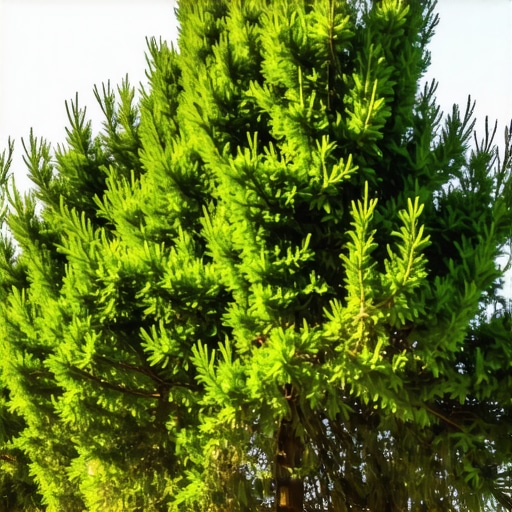
The Engineering of a Pruning Cut: Why Timing is a Biological Mandate
I always drill into my new crew members: if you don’t fix the soil grading first, every plant you put in the ground is just expensive compost. The same logic applies to maintenance. You don’t just walk up to a $15,000 Blue Spruce with a pair of dull shears at noon because you had a gap in your schedule. Pruning is surgery. It is a calculated wounding of a living organism. When we talk about the best time of day to prune your evergreens, we are talking about managing transpiration rates, turgor pressure, and the tree’s ability to initiate CODIT (Compartmentalization of Decay in Trees). If you get the timing wrong, you aren’t just ‘cleaning up the yard’; you are inviting cytospora canker and needle cast to take up permanent residence in your landscape.
What is the best time of day to prune evergreens?
The optimal time of day to prune evergreens is early morning, specifically between 6:00 AM and 9:00 AM, before the heat of the day triggers high transpiration. This window ensures the plant has maximum moisture content in its cells, allowing for cleaner cuts and faster sealing of the vascular tissue. Cold, crisp mornings are best. Avoid late afternoon when the plant is stressed from UV exposure.
Why Morning Cuts Save Your Canopy
In the world of high-end landscaping, we look at the physics of the plant. Evergreens, unlike deciduous trees, never truly go dormant; they just slow down. During the middle of the day, specifically from 11:00 AM to 3:00 PM, the sun is at its zenith. The stomata on the needles are working overtime to manage gas exchange. If you make a major heading cut or thinning cut during this peak period, you are opening a massive exit ramp for moisture. The plant loses hydrostatic pressure. This leads to ‘tip burn,’ where the needles surrounding the cut turn a sickly brittle brown within forty eight hours. It is avoidable. Early morning pruning allows the cut surface to begin its natural sealing process before the sun starts baking the resins. I have seen amateur ‘mow and blow’ crews scalp a hedge of Emerald Green Arborvitae at 2 PM in July, and by August, the homeowner is calling me to quote a $5,000 removal because the trees are 40% dead. It is a preventable tragedy of ignorance.
“The branch collar contains the specialized cells necessary for compartmentalization. Damaging this zone or pruning during periods of high thermal stress leads to permanent structural decay and fungal entry.” – Arboricultural Standards Manual
How much moisture does a pine lose after a mid-day cut?
While specific measurements vary by species and humidity, a mid-day cut can increase localized moisture loss by up to 300% compared to a morning cut. This is because the sap is flowing at a different viscosity during peak heat. When you prune early, the resin—the tree’s natural bandage—is more manageable. It sets properly. Think of it like pouring concrete: if it’s too hot, it cracks before it cures. Trees are no different. They need that cool morning window to stabilize the wound site.
| Evergreen Type | Primary Pruning Window | Secondary Window | Risk Factor |
|---|---|---|---|
| Pines (Pinus) | Early Spring (Candle Stage) | Late Winter | Sap Bleeding |
| Spruce (Picea) | Late Winter | Early Summer | Needle Cast |
| Junipers (Juniperus) | Early Spring | Late Summer | Internal Browning |
| Yews (Taxus) | Late Winter | Early Autumn | Regrowth Frost Damage |
The Critical Role of Yard Cleanup and Tool Sanitation
Pruning is only half the battle. If my crew leaves a single clipping on the ground, they’re doing it over. Proper yard cleanup is not about aesthetics; it is about pathology. Evergreens are notorious for harboring fungal spores like Rhizosphaera. When you prune, you are inevitably knocking spores loose. If those needles sit on your mulch, they will reinfect the lower canopy during the next rain cycle. You must bag and remove every bit of debris. Furthermore, sanitation of tools is non negotiable. We use a 70% isopropyl alcohol dip between every single tree. If you prune a diseased juniper and then move to a healthy one without sanitizing, you are essentially a needle sharing addict for plant pathogens. You will kill your landscape. Don’t be that guy. Keep your bypass pruners sharp. A crushed branch is a dead branch. A clean slice allows the cambium layer to roll over the wound effectively.
The Connection Between Irrigation and Pruning Success
You cannot talk about pruning without talking about irrigation. A tree that is water stressed should never be pruned. Period. If I walk onto a site and the soil is bone dry or the sod install nearby is turning yellow, I pull the crew. We won’t touch the trees. We first ensure the irrigation system is delivering the required 1 inch of water per week, delivered deeply and infrequently. This builds the turgor pressure I mentioned earlier. After a heavy pruning session, I actually recommend a deep root watering. We use a probe to get water 12 to 18 inches down, right into the rhizosphere. This gives the tree the hydraulic resources it needs to push resin and start the healing process. If your irrigation is poorly designed—hitting the needles instead of the soil—you are just begging for needle blight. Fix your zones before you fix your branches.
“Proper pruning is a combination of timing, technique, and post-operative care. Neglecting the biological clock of the species is the primary cause of secondary pest infestation.” – University Extension Agronomy Guide
The Myth of Fall Pruning
Every year, homeowners think fall is the time for a ‘big cleanup.’ It is a lie. Pruning evergreens in the late fall is a death sentence in many climates. It stimulates a flush of new growth. That new growth is ‘succulent,’ meaning it is full of water and hasn’t lignified (turned woody). When the first hard freeze hits, those cells rupture. You end up with a tree that looks like it’s been through a fire. Stick to late winter or early spring for major structural changes. Use the morning hours for maintenance. If you are doing a new sod install, coordinate your tree work first so you aren’t trampling your expensive new turf while hauling away heavy pine limbs.
- Inspect all tools for sharpness and rust before 6:00 AM.
- Sanitize blades with 70% alcohol between every individual plant.
- Identify the branch bark ridge and branch collar; never flush cut.
- Limit removal to no more than 25% of the live canopy in a single season.
- Immediately bag all debris to prevent fungal spread.
- Monitor soil moisture and adjust irrigation to support wound closure.
Pruning for Engineering: The Wind Load Factor
We don’t just prune for ‘looks.’ We prune for physics. Evergreens act like giant sails in a windstorm. If the interior of the tree is too dense, a heavy wind will catch it and snap the trunk or heave the root ball. This is especially true if you have loose soil from a recent landscaping project. We use ‘thinning cuts’ to allow wind to pass through the canopy. This reduces the PSI exerted on the trunk. It’s civil engineering with needles. Again, doing this in the morning when the wood is most flexible prevents ‘checking’ or splintering of the wood. Splintered wood cannot seal. It rots. Don’t let it happen to your property. Hire a pro who knows the difference between a heading cut and a thinning cut. Your property value depends on it.