
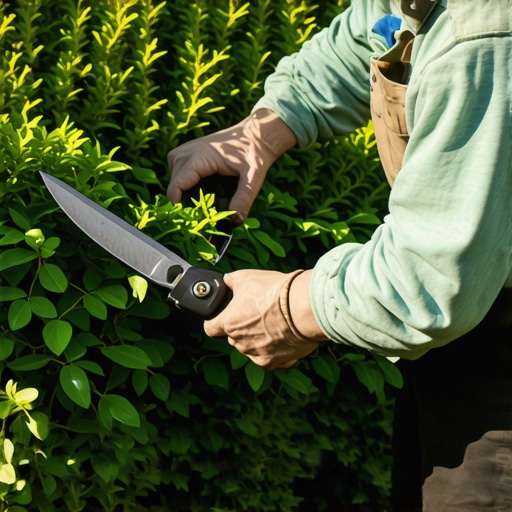
The Horticultural Blueprint for Dense Hedge Growth
To make hedges grow back thicker, you must use strategic heading cuts to break apical dominance, allowing dormant lateral buds to activate. Proper trimming creates a tapered ‘A’ shape, ensuring essential sunlight reaches the lower branches to prevent bottom-thinning, woodiness, and unsightly gaps in your landscape.
I always drill into my new crew members: if you do not fix the soil grading and plant depth first, every plant you put in the ground is just expensive compost. I have seen countless homeowners waste thousands on high-end nursery stock only to watch it wither because they ignored the root flare or the soil chemistry. When we talk about hedge thickness, we are talking about manipulating the plant’s internal hormonal balance. Most people think trimming is just about aesthetics. It is not. It is about civil engineering with living cells. If you do not understand how auxins move through the phloem, you are just a hack with a pair of shears.
Hedges fail to thicken because of a biological phenomenon called apical dominance. The terminal bud at the tip of a branch produces chemicals that suppress the growth of buds further down the stem. This is the plant’s way of racing toward the sun. When you make a clean heading cut, you remove that chemical source. This triggers a surge of cytokinins, hormones that tell the lower buds it is their turn to grow. The result is two or three new stems where there was once only one. This is how you build density. It is math. It is biology. It is not magic.
“Proper pruning at the time of planting and during the first few years is essential to develop a thick, well-branched hedge.” – University of Tennessee Agricultural Extension
How much do I need to prune for thicker growth?
For most deciduous and evergreen hedges, you should remove the top one-third of the current season’s growth during the first few years of establishment. This aggressive approach forces the plant to branch out near the base, creating a structural foundation that supports dense, heavy foliage later.
The Physics of Sunlight and the Tapered Cut
A dense hedge requires a specific geometric profile where the base is wider than the top to prevent lower branch die-off. This trapezoidal shape allows sunlight to hit the bottom leaves, maintaining the photosynthetic capacity needed for the plant to push out new, thick growth.
Light is fuel. If the top of your hedge is wider than the bottom, the top will shade the bottom. In the landscaping world, we call this “leggy” growth. The bottom branches lose their leaves, the wood becomes brittle, and eventually, you have a line of sticks with a green hat. You cannot fix a leggy hedge easily. It often requires radical rejuvenation pruning, which can take years to recover from. When we perform a yard cleanup, we often find hedges that have been butchered by electric trimmers used at the wrong angle. Stop doing that. The sun must reach the soil line.
| Hedge Species | Growth Rate | Pruning Frequency | Soil Preference |
|---|---|---|---|
| Boxwood | Slow | 2x Per Year | Well-drained Loam |
| Privet | Fast | 3-4x Per Year | Adaptable/Heavy Clay |
| Arborvitae | Moderate | 1x Per Year | Moist/Neutral pH |
| Holly | Moderate | 1x Per Year | Acidic (pH 5.0-6.0) |
Soil quality is the next pillar. If you are doing a sod install nearby, you likely have the irrigation and soil prep tools ready. Use them. A hedge is a massive consumer of nitrogen and micronutrients. If your soil is compacted, the roots cannot breathe. I have seen hedges fail because the contractor didn’t consider hydrostatic pressure or drainage. Water sits at the roots, the roots rot, and the hedge thins out. You need deep, infrequent watering. This forces the roots to chase moisture down into the subsoil, creating a more resilient plant that can support thicker top-growth.
Mechanical Execution: Tools and Timing
To achieve a professional thick hedge, use sharp bypass pruners for branches over half an inch and high-torque shears for the outer foliage. Ensure cuts are made at a 45-degree angle just above a node to prevent water pooling and fungal pathogens from entering the vascular system.
“Light must reach all parts of the hedge for it to remain dense and green at the base.” – University of Idaho Extension
The timing of your cuts matters as much as the angle. If you prune too late in the fall, you stimulate new growth that will get decimated by the first frost. This wastes the plant’s energy and leads to thinning. In my 20 years of landscaping, I have found that early spring, just as the buds begin to swell, is the prime time for structural pruning. This aligns with the plant’s natural growth surge. For a professional yard cleanup, we remove the deadwood first. Deadwood is a magnet for pests and disease. Remove it. It is useless.
What is the best fertilizer for thick hedge growth?
The best fertilizer for hedge density is a slow-release granular formula with a high nitrogen ratio, such as a 10-6-4 or 16-4-8. Nitrogen drives the vegetative growth needed for thick foliage, while the slow-release mechanism prevents the chemical burn associated with cheap, fast-acting fertilizers.
Checklist for a Thicker Hedge
- Sterilize all blades with 70% isopropyl alcohol to prevent disease spread.
- Assess the root flare; ensure it is not buried under a mulch volcano.
- Check the irrigation system for consistent coverage across the entire drip line.
- Identify the “leader” branches and decide which to head back.
- Measure the base width vs. top width; the base must be 6-12 inches wider.
- Remove any competing weeds or old sod from the base of the hedge.
Irrigation management is the final piece of the puzzle. If you are running a drip line, ensure the emitters are not directly against the trunk. This causes rot. Move them out to the edge of the foliage. This is where the feeder roots are. If you treat your hedge like a structural element of the house, it will perform like one. If you treat it like a weed, it will look like one. Follow the science, watch your angles, and feed the soil. That is how you build a wall of green that actually lasts.