
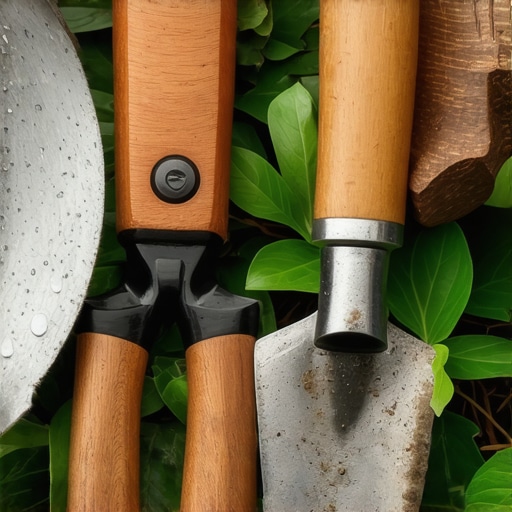
The Forensic Autopsy of a Gummed-Up Bypass Pruner
The blade doesn’t snap back. You squeeze the handles of your $80 Swiss-made bypass pruners and instead of a clean, surgical snip, you get a sluggish, grinding resistance that feels like cutting through cold molasses. Look closely at the pivot point and the bevel. That amber-colored, glass-hard crust isn’t just dirt; it is a complex matrix of terpenes and resin acids that have polymerized onto your tool steel. If you leave it there, you aren’t just working harder; you are actively dulling the edge through increased friction and creating a breeding ground for Cytospora canker and other pathogens. Sap is the blood of the tree, and when it dries on your blades, it acts as a high-friction adhesive that destroys your efficiency and ruins the plant’s health.
I always drill into my new crew members: if you don’t fix the tool maintenance first, every cut you make in the field is just an invitation for infection. I’ve seen ‘pros’ try to force a sap-covered blade through a two-inch oak limb, only to have the blade twist and snap because the resin had increased the lateral pressure on the pivot bolt. That is amateur hour. You don’t need a gallon of gasoline or harsh chlorinated solvents to fix this. You need to understand the chemistry of the bond. Resin is fat-soluble. To break it down without destroying the tempering of your steel or poisoning the soil during your next yard cleanup, you have to use a solvent that mirrors the molecular weight of the sap itself.
How to Remove Tree Sap from Garden Tools Without Chemicals
To remove tree sap from garden tools without harsh chemicals, apply a high-fat vegetable oil or isopropyl alcohol (70% or higher) to the affected area, let it sit for five minutes to dissolve the resin bonds, and then scrub the blade with grade 0000 steel wool. This mechanical and organic approach preserves the tool’s edge retention and prevents phytotoxicity in future plant cuts.
The Chemical Nightmare of Sap Polymerization
Sap is composed of water, minerals, and sugars, but the ‘sticky’ part is the resin produced in the xylem and phloem. When you prune a pine, spruce, or even a heavy-bleeding maple, those resins hit the air and begin to oxidize. This process, called polymerization, turns a liquid defense mechanism into a hard, plastic-like coating. On a microscopic level, tool steel is not perfectly smooth; it has ‘peaks and valleys’ known as asperities. The sap fills these valleys and hardens, effectively ‘gluing’ the blades together at the pivot. If you are doing a sod install and need to trim edges or clear brush, a gummed-up tool will tear the grass rather than slice it, leading to brown-edge desiccation.
“Pruning tools should be cleaned and disinfected regularly to prevent the spread of vascular wilts and cankers. Organic solvents like ethanol are preferred over bleach which can cause pitting and corrosion of high-carbon steel.” – University of Florida IFAS Extension
Step-by-Step Remediation: The Heat and Oil Method
First, use a heat gun on its lowest setting. I am talking about 120 degrees Fahrenheit—just enough to make the resin viscous again. Do not use a torch; you will ruin the heat-treat on the steel and make the blade soft as butter. Once the sap is tacky, apply a generous layer of cheap olive oil or even peanut butter. The fats in these household items act as a non-polar solvent. They get under the resin and lift it from the steel’s pores. Let it sit. Patience is a tool, use it.
| Cleaning Agent | Action Type | Steel Safety | Environmental Impact |
|---|---|---|---|
| Vegetable Oil | Lipid Solvent | Excellent (Prevents Rust) | Zero / Biodegradable |
| Isopropyl Alcohol | Evaporative Solvent | Good (Needs Re-oiling) | Low |
| Steel Wool (0000) | Mechanical Abrasive | High (Surface Only) | None |
| Commercial Degreaser | Chemical Surfactant | Variable (Can Pitting) | High / Toxic |
After the oil has dwelled for five to ten minutes, take your steel wool. Scrub in the direction of the factory grind. Never scrub across the edge; you will create burrs. You should see the amber sap begin to ball up and slough off. Wipe it clean with a microfiber cloth. If there is still a ‘ghost’ of the resin left, repeat the process. This is basic engineering: reduce friction to increase force. A clean tool requires 30% less hand-grip force than a sap-laden one. That matters when you are 10 hours into a landscaping contract.
How much oil do I need to clean my pruning shears?
You only need enough oil to completely coat the visible resin. Usually, one tablespoon of vegetable or olive oil is sufficient for a standard pair of bypass pruners. The key is the dwell time; the oil must penetrate the hardened sap layers before you attempt mechanical removal with steel wool or a stiff brush.
Does vinegar remove tree sap from metal?
Vinegar is an acetic acid and is generally ineffective against tree resins because resins are not acid-soluble. While vinegar can help remove rust, it will not dissolve the terpenes in sap and may actually lead to flash-rusting of high-carbon steel tools if not neutralized and dried immediately after use.
“Tool maintenance is the first step in successful arboriculture. A jagged cut from a dirty tool increases surface area for fungal spores to land and germinate.” – ANSI A300 Pruning Standards
The Micro-Climate Factor: Why Sap Varies
If you are working in the Pacific Northwest with Douglas Fir, your sap profile is different than a pro in Georgia dealing with Loblolly Pine. The viscosity changes with the temperature. In colder climates, sap is more brittle. You can often ‘chip’ it off with a plastic scraper before even applying oil. In the heat of a Florida summer, that sap is basically liquid glue. It gets into the irrigation timers and valves if you aren’t careful during a yard cleanup. Always clean your tools before moving between different species of trees to prevent cross-contamination of diseases like Oak Wilt.
- Inspect the Pivot: Check for sap buildup inside the spring and around the center bolt.
- Mechanical Scrub: Use a brass brush for heavy deposits to avoid scratching the steel.
- Sanitize: Wipe with alcohol to kill pathogens after the sap is removed.
- Lubricate: Apply a drop of 3-in-1 oil or camellia oil to the pivot point.
- Hone: Give the edge two passes with a diamond stone to realign the molecules.
Don’t be a hack. I see guys throw their tools in the back of the truck, covered in gunk, and then wonder why their hands hurt at the end of the week. It’s the friction. Your tools are an extension of your body. Treat them like a surgical instrument. If you treat a $100 pair of loppers like a $5 disposable toy, you don’t belong on my crew. Clean them daily. It takes five minutes. The oil is cheap. The steel is not.