
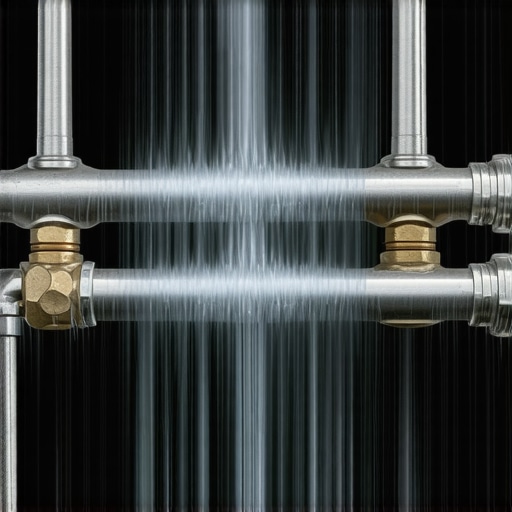
That violent, metallic thud echoing through your basement walls the moment your irrigation zone shuts off isn’t a ghost. It is water hammer—a high-velocity pressure surge that can rip copper joints apart and shatter PVC fittings. I have seen $50,000 landscapes ruined because a contractor ignored basic fluid dynamics during a sod install. When you hear that shackle, your plumbing is literally screaming under the weight of excessive kinetic energy.
The Anatomy of a Plumbing Autopsy
Water hammer occurs when the flow of water is stopped abruptly, causing a shockwave that travels backward through the system at over 4,000 feet per second. This kinetic energy must go somewhere; usually, it dissipates by rattling pipes against studs or blowing out the diaphragm in your expensive irrigation valves. I recently got called out to a property in the suburbs where a $30,000 patio was literally being undermined by a slow leak. The homeowner thought it was a drainage issue. It wasn’t. A fast-closing solenoid valve on their backyard zone had caused a hairline fracture in the main line. Every morning at 4:00 AM, the system was pumping 15 gallons per minute directly into the modified gravel base of their pavers. The base washed out, the pavers sank, and the contractor who installed it was long gone. They ignored the shackle. Don’t be that guy.
“The instantaneous closure of a valve converts the kinetic energy of flowing water into a pressure spike that can exceed ten times the static operating pressure.” – ASSE International Plumbing Standards
The Physics of the Hammer: Velocity vs. Pressure
Most residential landscaping hacks think higher pressure is always better for sprinklers. They are wrong. While you need pressure to pop the heads up, high velocity is the true killer. If your water is moving faster than 5 feet per second (FPS), you are asking for a catastrophic failure. When that solenoid valve snaps shut in 50 milliseconds, the water column slams into the valve seat like a freight train. This is the Joukowski Equation in action. It’s physics. It’s brutal. It will rot your plumbing from the inside out.
How much water pressure is too much for a home?
A standard residential plumbing system should never exceed 80 PSI at the main entry point. For irrigation systems, 40 to 60 PSI is the sweet spot. Anything higher increases the risk of water hammer and premature wear on sod install zones. If your street pressure is 100+ PSI, you need a pressure-reducing valve (PRV) immediately.
The Correlation Between Yard Cleanup and Irrigation Stress
During a heavy yard cleanup, people often move soil, change grades, or accidentally nick a subsurface line with a rake or aerator. If you introduce air into the system during these repairs, the water hammer effect is amplified. Air is compressible; water is not. When air pockets move through your pipes and hit a valve, they compress and then expand violently. This creates a vacuum-slug effect. It’s loud. It’s damaging. If you just finished a massive landscaping overhaul, you must purge every zone of air before you let the timer run its course.
| Pipe Diameter (PVC) | Max Flow (GPM) at 5 FPS | Potential Pressure Spike (PSI) |
|---|---|---|
| 3/4 Inch | 8 GPM | +120 PSI |
| 1 Inch | 13 GPM | +145 PSI |
| 1.25 Inch | 22 GPM | +180 PSI |
Why Your Solenoid Valves are the Culprit
The cheap valves found at big-box stores are designed for one thing: profit. They snap shut. High-end, commercial-grade valves feature a slow-closing diaphragm. This allows the water column to decelerate over a second or two, rather than a millisecond. If you are doing a sod install, spend the extra $20 per valve for a scrubber-style or slow-closing model. It saves the copper inside your house. It stops the shackle.
“Velocity should never exceed 5 feet per second in plastic irrigation piping to prevent surge pressures that lead to fatigue failure.” – Irrigation Association Technical Manual
Can a sprinkler system damage my home foundation?
Yes, repeated water hammer can loosen the mechanical fasteners holding your pipes to the floor joists. Over time, the vibration creates stress fractures in the concrete or allows water to seep behind the sill plate. If a pipe bursts near the foundation, the hydrostatic pressure can cause basement wall bowing or significant interior flooding.
The Professional Remediation Checklist
- Test your static pressure with a $10 gauge at the hose bib. If it’s over 75 PSI, install a PRV.
- Check the pipe sizing. If you’re pushing 15 GPM through a 3/4-inch pipe, your velocity is too high.
- Install a water hammer arrestor (piston-style) near the irrigation shut-off valve inside the house.
- Replace fast-closing plastic solenoids with brass, slow-closing alternatives.
- Secure all loose interior piping with copper straps and rubber insulators. No more rattling.
The Long-Term Cost of Neglect
Ignoring a water hammer is like ignoring a knocking engine. You might get another season out of it, but the bill is coming. When we do a landscaping project, we don’t just look at the plants. We look at the hydraulics. If your sod install is getting saturated by a system that sounds like a jackhammer, your roots will eventually drown in the leaks you can’t see yet. Fix the pressure. Slow the flow. Stop the shackle. Hard work deserves a system that doesn’t self-destruct.