
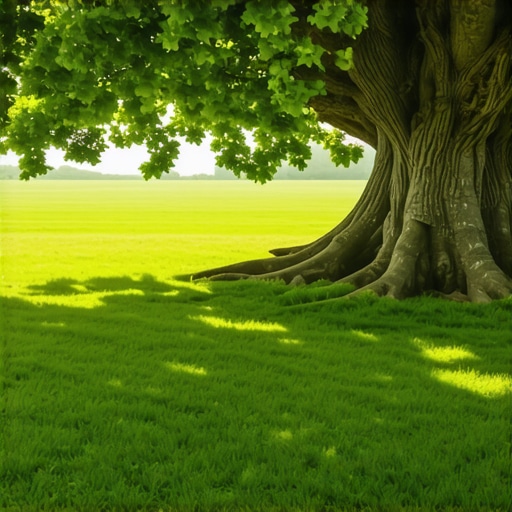
The Anatomy of a Dying Lawn: Why Shade Grass Fails Under Oak Canopies
You see it every spring: a patch of bare, compacted dirt or thin, wispy blades that look like they are gasping for air. Most homeowners think they have a ‘shade’ problem, but what they really have is a biological war zone. Growing grass under a massive White or Red Oak isn’t just about finding a seed that likes the dark; it is about managing a complex ecosystem where the tree is the apex predator of nitrogen, moisture, and light. If your yard looks like a mud pit by July, you are likely dealing with a combination of allelopathy from leaf litter and extreme root competition. It is a structural failure of the soil environment.
The Apprentice Lesson: Soil Grading and the Expensive Compost Myth
I always drill into my new crew members: if you don’t fix the soil grading first, every plant you put in the ground is just expensive compost. Last season, I had a rookie try to ‘fix’ a client’s shade patch by dumping three inches of topsoil over the existing oak roots. I had to stop him before he killed the tree and the grass. You cannot simply bury the problem. If you don’t understand how the soil sits, how the water moves, and how the tree roots occupy the top six inches of the horizon, you are wasting the client’s money. Soil is a living matrix, not a filler material. We spent that day hand-raking the area to avoid root damage while ensuring the grade directed water toward the turf, not away from it. That is the difference between a landscaper and a guy with a truck.
Choosing the Best Grass Seed for Shady Oak Environments
The best grass seed for shady spots under big oak trees is a Fine Fescue blend, specifically Hard Fescue, Chewings Fescue, and Creeping Red Fescue, because these species have a lower compensation point for light and higher drought tolerance than traditional turf. These varieties are engineered to handle the low-PAR (Photosynthetically Active Radiation) environments found beneath dense leaf canopies. They thrive where Kentucky Bluegrass fails.
“The intensity and quality of light reaching the turfgrass under a tree canopy are significantly reduced, often by as much as 95%.” – Penn State Center for Turfgrass Science
How much sunlight does grass under an oak tree really need?
Turfgrass under a mature oak tree requires a minimum of 4 to 6 hours of filtered sunlight or 2 to 3 hours of direct, unobstructed sun to maintain root density. Without this, the plant cannot produce enough carbohydrates to survive the winter or the heat of summer. We measure this using a light meter; guessing is for amateurs. If the canopy is too thick, even the best seed will fail. This is where a professional yard cleanup and selective canopy thinning (not topping!) become non-negotiable. You have to let the photons in or the grass will starve to death at a cellular level.
Will sod install work under a large oak tree?
A sod install in deep shade is usually a recipe for expensive failure. Most sod is grown in wide-open fields under 100% full sun. When you move that turf to the dark, damp environment under an oak, the plant goes into immediate shock. The blades thin out, the root system fails to knit with the native soil, and within two seasons, you are back to bare dirt. Seeding with a specific fine fescue blend is almost always superior because the grass acclimates to the specific light levels of your yard from day one. If you must use sod, you need to find a specialist grower who produces ‘shade-grown’ fescue, and even then, the site prep must be perfect.
The Engineering of Shade-Specific Irrigation
Proper irrigation for shade grass is the opposite of what most people think. Because the grass is in the shade, the evaporation rate is lower, which leads homeowners to under-water. However, the oak tree is a massive hydraulic pump. A single mature oak can pull 200 gallons of water out of the soil per day. This creates a ‘rain shadow’ effect where the soil under the tree remains bone-dry even after a light storm. You need deep, infrequent watering cycles that penetrate at least 6 inches to ensure the grass roots get a drink before the tree sucks it all up. We recommend 1 inch of water per week, delivered in two 45-minute sessions rather than daily five-minute mists. Low-volume rotary nozzles are best here to prevent runoff on compacted shade soil.
Comparing Shade-Tolerant Grass Species
| Grass Species | Shade Tolerance | Drought Resistance | Wear Tolerance | Mowing Height |
|---|---|---|---|---|
| Hard Fescue | Excellent | High | Low | 3.0 – 4.0 inches |
| Chewings Fescue | Excellent | Medium | Moderate | 2.5 – 3.5 inches |
| Creeping Red Fescue | Very High | Medium | Moderate | 3.0 – 4.0 inches |
| Rough Bluegrass (Poa triv) | Superior | Very Low | Very Low | 1.5 – 2.5 inches |
| Tall Fescue | Moderate | Very High | High | 3.5 – 4.5 inches |
Notice that Rough Bluegrass (Poa trivialis) has superior shade tolerance but ‘Very Low’ drought resistance. This is why I rarely use it under oaks. Oaks dry out the soil. Poa triv needs a bog. If you put Poa triv under an oak without a dedicated, high-frequency irrigation system, it will be dead by July. Stick to the fescues.
The Forensic Process: Remediating a Failed Shade Lawn
When I walk onto a property with failing grass under trees, I look for the ‘tell.’ Is the ground mossy? That is a pH and compaction issue. Is it dusty and bare? That is a light and moisture issue. Most ‘mow-and-blow’ contractors will just throw more seed down and walk away. That is professional negligence. You have to address the underlying chemistry. Oak leaves are acidic, but the real issue is the tannins they leach into the soil, which can inhibit the germination of certain seeds. A heavy yard cleanup to remove leaf litter is the first step in any landscaping plan for shade.
“Soil compaction and moisture stress are the primary drivers of turf failure in established landscapes.” – Texas A&M Agrilife Extension
Step-by-Step Restoration Checklist
- Core Aeration: Use a machine to pull 3-inch plugs. This breaks up the compaction caused by years of foot traffic and tree root expansion.
- Soil Testing: You must check pH. If you are below 6.0, the grass cannot uptake phosphorus, no matter how much you fertilize.
- Dormant Pruning: Have a certified arborist thin the oak canopy to increase light penetration without stressing the tree.
- Seed Selection: Use a ‘Shade Master’ blend containing at least three types of fine fescue. Avoid ‘contractor grade’ bags that contain 50% annual ryegrass.
- Topdressing: Apply 1/4 inch of leaf compost. This adds biology back to the ‘dead’ soil under the tree.
- Moisture Management: Set your irrigation to water early in the morning (4 AM to 7 AM) to prevent fungal outbreaks in the damp shade.
Maintenance: The Long-Term Survival Strategy
Once the seed is in the ground, the work is only 20% done. You cannot treat shade grass like a sunny fairway. First, stop scalping the lawn. Shade grass needs more surface area on the blade to catch the limited sunlight. Set your mower to its highest setting (4 inches). If you cut it short, you are effectively killing its solar panels. Second, go easy on the nitrogen. Too much nitrogen in the shade creates ‘succulent’ growth: thin, weak cell walls that are easily attacked by powdery mildew and leaf spot. Use a slow-release, organic-bridge fertilizer with a 4-1-2 ratio. This encourages root development over top-growth. Finally, keep the leaves off the grass. In the fall, an oak tree can drop enough leaves to smother a fescue lawn in 48 hours. Frequent yard cleanup is mandatory to ensure the grass can breathe during its primary growing season in the autumn.
Landscaping under oaks is a game of compromise. You will never have a golf-course-quality carpet in deep shade, but you can have a clean, green, and resilient ground cover if you respect the biology of the site. Don’t fight the tree; work with the soil. [{“@context”:”https://schema.org”,”@type”:”Article”,”headline”:”The Best Grass Seed for Shady Spots Under Big Oak Trees”,”author”:{“@type”:”Person”,”name”:”Veteran Horticulturist”},”description”:”A comprehensive guide to selecting and growing grass seed in the difficult shade of mature oak trees, focusing on fine fescue and soil health.”},{“@context”:”https://schema.org”,”@type”:”FAQPage”,”mainEntity”:[{“@type”:”Question”,”name”:”What is the best grass for deep shade under oaks?”,”acceptedAnswer”:{“@type”:”Answer”,”text”:”A blend of Fine Fescues including Hard, Chewings, and Creeping Red Fescue is the best choice for the dry, shaded environment under oak trees.”}},{“@type”:”Question”,”name”:”Why does my grass die under my oak tree every summer?”,”acceptedAnswer”:{“@type”:”Answer”,”text”:”The failure is usually due to a combination of root competition for water, light starvation, and soil compaction. Oak trees consume vast amounts of moisture, leaving the grass roots dry.”}}]}]