
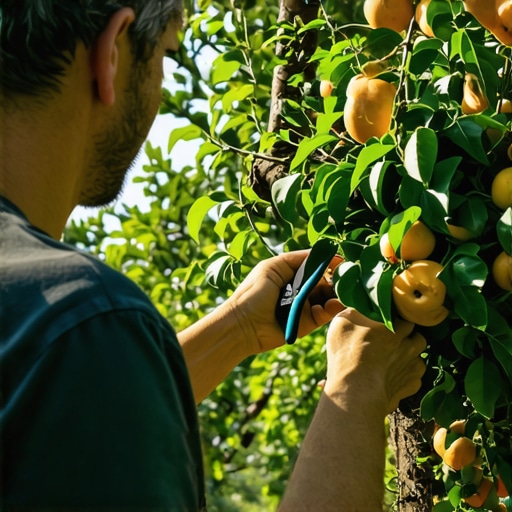
Pruning is not a cosmetic procedure; it is a high-stakes surgical intervention into the tree’s vascular system. I always drill into my new crew members: if you don’t fix the structural framework of the tree first, every plant you put in the ground or try to save is just expensive compost in the making. In 20 years of high-end landscaping, I have seen more fruit trees killed by ‘mow-and-blow’ crews with dull shears than by actual pests. We aren’t just ‘cleaning up the yard’; we are directing the flow of auxin and carbohydrates to ensure next year’s crop doesn’t snap your branches under its own weight.
The Biological Rationale Behind Dormant Season Pruning
Dormant season pruning involves removing specific branches during the winter to redirect the tree’s energy reserves toward fruit-bearing spurs and structural growth. By cutting while the cambium layer is inactive, we minimize pathogen entry and prevent the sap loss that attracts boring insects during the warmer months. This process ensures the apical dominance is managed properly to maximize light penetration and air circulation throughout the canopy.
When you look at a dormant apple or peach tree, you aren’t looking at a static object. You are looking at a pressurized system of stored sugars waiting for the first sign of ground thaw. If you leave too many lateral branches, the tree spreads its energy too thin. You get thousands of tiny, bitter fruits and a canopy so dense that powdery mildew becomes an inevitability. We prune to force the tree to focus. It is a matter of resource allocation, much like how a sod install requires a perfectly graded base layer of topsoil to thrive. Without the right foundation, the system fails.
“Pruning is the most important cultural practice for maintaining the health and productivity of fruit trees. It influences tree vigor, fruit size, and the ability of the tree to withstand heavy crop loads.” – Penn State Agricultural Extension
The Anatomy of the Cut: Engineering for Wound Closure
To successfully prune fruit trees, you must understand the branch collar, the swollen area at the base of a limb where it meets the trunk. This collar contains a unique chemical barrier that prevents decay from entering the main stem. A flush cut—cutting too close to the trunk—destroys this barrier. Conversely, leaving a ‘stub’ prevents the callus tissue from sealing the wound, creating a direct highway for fungal infections. We aim for the ‘Goldilocks’ zone: just outside the branch bark ridge at a 45-degree angle away from the bud.
How do I know which branches to remove?
Identify the scaffold branches first, which are the primary limbs extending from the trunk. You want to remove any growth that is dead, damaged, or diseased, followed by water sprouts (vertical shoots) and suckers emerging from the rootstock. Any branches crossing or rubbing against each other must be eliminated to prevent bark wounding. The goal is an open center or a modified central leader that allows sunlight to reach the fruiting wood in the interior of the tree.
| Cut Type | Primary Purpose | Effect on Growth |
|---|---|---|
| Thinning Cut | Removing an entire shoot at its origin | Increases light and air; slows height |
| Heading Cut | Removing the tip of a branch | Stimulates lateral branching; thickens limbs |
| Bench Cut | Removing a vigorous upright to a horizontal limb | Spreads the canopy outward |
Integrated Yard Cleanup and Soil Health
Pruning is only one part of the yard cleanup protocol. The debris you drop on the ground is a biohazard. If you had scab or fire blight last year, those pathogens are overwintering in the fallen leaves and wood. We clear everything. This is also the time we inspect the irrigation system. Many homeowners over-water their trees during the dormant phase, leading to root rot. Fruit trees need deep, infrequent watering—never a daily misting from a lawn sprinkler. If your sod install is butted right up against the root flare, you are suffocating the tree. We always maintain a 3-foot ‘no-turf’ zone around the trunk, covered in aged woodchips, not ‘mulch volcanoes.’
How much of the tree can I safely remove?
For a neglected tree, never remove more than 25% of the canopy in a single year. Excessive pruning triggers a hormonal panic in the tree, causing it to send out a forest of epicormic shoots (water sprouts). These are weak, non-fruiting branches that suck energy away from the flower buds. It is a three-year process to bring a wild tree back into production. Slow and steady wins the race in landscaping and arboriculture.
“Water management is critical in orchards; hydrostatic pressure in the soil must be balanced to prevent root asphyxiation while ensuring enough moisture for cell expansion in the fruit.” – USDA Pomology Manual
The Master Pruning Checklist
- Sterilize Tools: Use 70% isopropyl alcohol between every tree to stop the spread of canker.
- Check the Root Flare: Ensure the graft union is at least 2 inches above the soil line.
- Angle Your Cuts: Always cut 1/4 inch above a lateral bud facing the direction you want the new branch to grow.
- Clear the Base: Complete a full yard cleanup; remove all mummified fruit from the ground and branches.
- Inspect Irrigation: Ensure drip lines are at the drip line of the tree, not the trunk.
Why is my fruit tree not producing fruit?
Non-production is usually caused by nitrogen toxicity, improper pruning, or frost damage to the blossoms. If you use high-nitrogen fertilizer meant for your sod install near your fruit trees, you will get a beautiful green tree with zero fruit. The nitrogen forces vegetative growth at the expense of reproductive buds. Switch to a balanced, low-nitrogen organic fertilizer in early spring to support fruit set.
The Long-Term Maintenance Cycle
Once the cuts are made, the work isn’t over. As the weather warms, you need to monitor for the first sign of bud break. This is when your irrigation needs to be dialed in. We use tensiometers to measure soil moisture at the root zone. If the soil is compacted from years of heavy foot traffic or poor landscaping habits, we recommend core aeration around the tree’s perimeter to get oxygen to the fine feeder roots. Remember, a tree is a living hydraulic system. You provide the structure through pruning, and the soil provides the fuel. Get either one wrong, and you’re just looking at an expensive stick in the mud. Consistency is the only way to ensure a heavy harvest year after year. Stay off the ladder if your tools are dull, and never trust a contractor who doesn’t know the difference between a fruit spur and a water sprout. Proper landscaping is about the details under the bark.