
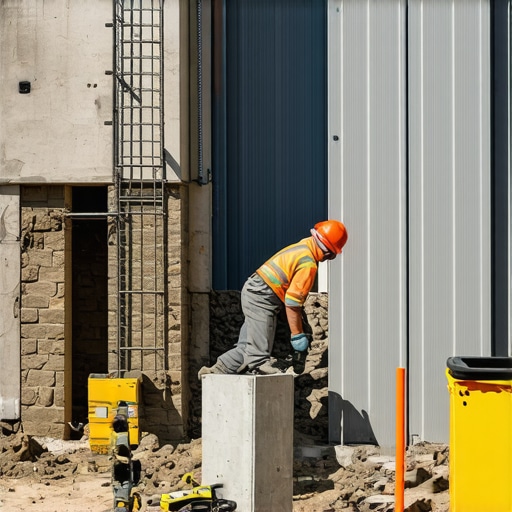
The Anatomy of a Leaning Wall Failure
To fix a leaning retaining wall, you must identify the hydrostatic pressure buildup caused by poor soil drainage and implement a relief system. This usually involves a $50 investment in perforated PVC and non-woven geotextile to divert water away from the wall’s structural base.
I have spent twenty years in the dirt, and if there is one thing that keeps me awake at night, it is the sound of a thousand-pound block of granite shifting one millimeter. I recently got called out to tear up a $30,000 patio that was sinking because the previous contractor failed to understand the weight of water. The homeowner thought they had a ‘settling’ issue. They did not. They had a hydraulic bomb behind their masonry. When it rains, soil expands. If that water has nowhere to go, it exerts thousands of pounds of pressure per square foot against your wall. No amount of mortar or heavy stone can hold back the weight of the earth when it is saturated. You can see the failure in the cracks. You can feel it in the squish of the turf near the footer. It is a slow-motion disaster. Most people think they need a new wall. Usually, they just need a way to let the wall breathe.
Why Gravity Always Wins Against Poor Engineering
Water weighs 62.4 pounds per cubic foot. When your backyard drains toward a retaining wall without a dedicated exit path, the soil becomes a heavy slurry. This is hydrostatic pressure. It is the primary reason walls tilt, bow, or collapse. During a yard cleanup, if you notice water pooling at the base of your hardscape, you are already in the danger zone. Most DIY builders and cheap contractors skip the drainage because it is buried. It is invisible. But it is the only thing that matters. You can buy the most expensive stone in the world, but if it is sitting on a bed of wet, uncompacted clay, it will fail. Period.
“A retaining wall doesn’t fail because of the stone; it fails because of the water trapped behind it.” – Hardscape Engineering Axiom
The $50 Hydrostatic Relief Trick
The solution to a leaning wall is rarely more stone. It is the installation of a French drain or a hydrostatic relief pipe. For about $50 in raw materials, specifically a 10-foot length of 4-inch perforated PVC pipe, a roll of non-woven geotextile fabric, and a few bags of clean aggregate, you can create a path of least resistance for groundwater. You must excavate a narrow trench directly behind the wall, down to the level of the footer. You line this trench with the fabric to prevent soil ‘fines’ from clogging the system. You lay the pipe with the holes facing down (not up, never up) and cover it with 3/4-inch clean stone. This creates a vacuum effect. Water entering the soil hits the gravel, drops into the pipe, and is carried away to a ‘daylight’ exit point before it ever touches the back of your wall.
| Material Component | Estimated Cost | Primary Function |
|---|---|---|
| 4-inch Perforated PVC | $15.00 | High-volume water transport |
| Non-Woven Geotextile | $12.00 | Filters silt and prevents clogging |
| No. 57 Clean Stone | $20.00 | Provides rapid percolation path |
| PVC Exit Grate | $3.00 | Protects outlet from debris/rodents |
How much modified gravel do I need for a patio base?
Calculating base material volume requires multiplying your square footage by the desired depth (usually 6 inches for patios) and dividing by 27 to find cubic yards. For a standard 10×10 area, you will need approximately 2.5 tons of CR-6 or 21A modified gravel to ensure a stable, non-shifting foundation. Do not estimate this. If you are short by even half an inch, the compaction will be uneven. Use a plate compactor. The machine should literally bounce off the surface when the base is fully locked. If the dirt is still soft, keep compacting.
The Role of Irrigation and Sod in Wall Stability
Your irrigation system might be the silent killer of your hardscape. If a zone is over-watering the area directly behind a wall, you are artificially creating a high-pressure environment every single morning. When we perform a sod install, we ensure the grade slopes away from the wall at a minimum of 2 percent. This means for every 10 feet of distance, the ground should drop about 2.5 inches. This surface drainage prevents the ‘sponge effect’ where the lawn holds water against the masonry. A yard cleanup should always include checking that your downspouts are piped at least 5 feet away from any retaining structures. Water is the enemy. Control it or it will control you.
Step-By-Step Drainage Remediation Checklist
- Locate the lowest point of the wall for the drainage exit.
- Excavate a 12-inch wide zone behind the wall face.
- Ensure the trench has a 1 percent slope toward the exit.
- Wrap the trench with non-woven geotextile fabric.
- Install perforated pipe with holes facing the bottom of the trench.
- Backfill with 3/4-inch clean stone to within 6 inches of the surface.
- Fold fabric over the top of the stone to create a sealed ‘burrito.’
- Replace topsoil and finish with a proper sod install.
“Proper drainage is the difference between a hundred-year wall and a five-year wall.” – ICPI Installation Standards
How do I know if my wall is failing or just settling?
Determining wall failure involves measuring the vertical plumb; any tilt exceeding 1 inch for every 4 feet of height indicates a structural issue rather than natural settling. Look for ‘stair-step’ cracking in the mortar or gaps opening between the blocks. If you see white powder on the stones, that is efflorescence. It is a sign that water is constantly moving through the stone itself. It is the wall’s way of crying for help. Don’t ignore the salt. It means the drainage behind the wall has already failed. You need to act before the next heavy freeze-thaw cycle turns those small cracks into a total collapse.
Long-Term Maintenance and Yard Cleanup
A professional landscaping strategy includes an annual inspection of all drainage outfalls. During your fall yard cleanup, find where your wall pipes exit. Clear away leaves, mulch, and debris. If the pipe is clogged, the pressure will back up instantly. It takes ten minutes to clear a pipe, but it takes ten days to rebuild a wall. If you are planning a new sod install, ensure your landscaper isn’t burying your weep holes. Those small gaps at the bottom of the wall are there for a reason. They are the safety valves of your property. If they are covered in dirt, the wall is a ticking clock. Stay ahead of the water, keep your base dry, and your stones will stay where you put them for a lifetime.
Comments are closed.