
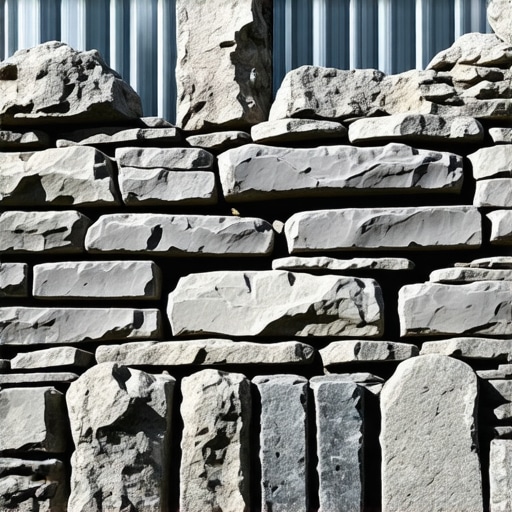
The Hardscape Autopsy: Why Your Wall is Moving
I recently got called out to tear up a $30,000 project that was sinking because the previous contractor thought he could just stack heavy fieldstone on top of raw topsoil. It was a disaster. The wall was belly-bulging toward the driveway, and every time it rained, mud seeped through the gaps. This is a classic case of base-layer failure and a complete lack of hydrostatic pressure management. When a dry-stack wall wobbles, it is not a stone problem; it is a physics problem. You are fighting gravity and water, and right now, you are losing. We are going to fix it by going back to the dirt.
Why Dry-Stacked Stone Walls Lose Stability Over Time
To fix a wobbly stacked stone wall, you must identify the structural failure point, which usually involves soil saturation, inadequate base compaction, or lack of batter. By removing the unstable stones and rebuilding from a compacted gravel trench, you restore the gravitational friction that holds the dry-stack system together without brittle mortar.
“A retaining wall doesn’t fail because of the stone; it fails because of the water trapped behind it.” – Hardscape Engineering Axiom
A dry-stack wall is a flexible gravity structure. Unlike a mortared wall, which cracks when the ground heaves, a dry-stack wall can move slightly and survive. But that flexibility has limits. If you see stones kicking out at the bottom, your base is too thin. If the middle is bowing, you have water building up behind the stone. You cannot just shove a shim into a gap and call it a day. You have to understand the hearting—the internal packing of the wall. If the hearting is just dirt, the wall is doomed. It will rot from the inside out as the soil washes away.
How much modified gravel do I need for a wall base?
For a standard dry-stack wall up to 3 feet high, you need a base trench at least 12 inches deep and 18 inches wide. Fill this with 6 inches of 2A modified gravel (also known as 3/4-inch minus), compacted in 2-inch lifts using a plate compactor. Do not use pea gravel. Round stones do not lock; they act like ball bearings under weight. You need angular, crushed stone that bites into itself. I have seen guys try to use sand. Sand is for playgrounds, not for holding back three tons of fieldstone.
The Anatomy of a Corrective Rebuild
Fixing a leaning stone wall requires a complete teardown of the affected section to the subgrade level. You must install a geotextile fabric between the soil and the stone to prevent fines migration, which is the primary cause of internal void creation and eventual stone shifting. Proper repair ensures the wall can withstand freeze-thaw cycles without losing its vertical alignment.
| Material Component | Recommended Specification | Purpose in Dry-Stack |
|---|---|---|
| Base Material | 2A Modified / Crushed Stone | Provides rigid, non-shifting foundation |
| Backfill | Clean 3/4″ Angular Stone | Relieves hydrostatic pressure |
| Drainage Pipe | 4″ Perforated PVC | Channels water away from wall base |
| Filter Fabric | Non-woven Geotextile | Prevents soil from clogging drainage stone |
Once your base is set, the most important rule is the “one-over-two” rule. Every stone should span the joint of the two stones beneath it. If you have vertical seams running up the wall, you have created a fault line. It will split. I tell my crew: if you can see a straight line from the top of the wall to the bottom, start over. You are building a puzzle, but every piece has to weigh enough to pin the one below it. Use the longest stones as “deadmen”—these are stones that stick back into the hillside to anchor the face of the wall into the earth.
How do I stop a stone wall from leaning?
To stop a wall from leaning forward, you must build it with a batter, which is an intentional inward slope toward the bank. For every 12 inches of height, the wall should step back at least 1 inch. This uses the force of gravity to push the wall’s weight into the hillside rather than away from it, neutralizing the lateral earth pressure.
Managing Water: The Hidden Killer of Hardscapes
Successful stone wall repair depends entirely on hydrostatic pressure relief achieved through the installation of clear-drainage stone and perforated pipes. Without a path for water to exit, the weight of the saturated soil behind the wall will eventually exceed the frictional resistance of the dry-stacked stones, causing a catastrophic blowout.
“Effective drainage is the single most critical factor in the longevity of any segmental or natural stone retaining system.” – USDA Soil Conservation Service Manual
- Step 1: Excavate. Dig out 12 inches of soil behind the wall.
- Step 2: Fabric. Line the trench with non-woven geotextile to keep dirt out of your rocks.
- Step 3: Pipe. Lay a 4-inch perforated pipe at the bottom, sloped to daylight.
- Step 4: Stone. Fill the gap with clean 3/4-inch crushed stone. No fines.
- Step 5: Cap. Seal the top with a heavy capstone or sod to minimize water entry.
If you are also dealing with landscaping or sod install nearby, make sure your irrigation heads are not spraying directly onto the wall face. I have seen $50,000 walls undermined by a $5 sprinkler head that was misaligned. Constant saturation softens the base and accelerates settling. During your yard cleanup, check the drainage outlets of your wall. If they are clogged with mulch or grass clippings, clear them. A dry-stack wall is a living machine; it has to breathe. Don’t choke it.
The Professional Checklist for Stone Wall Stability
Before you place the final capstone, run through this checklist. If you skip one, you’ll be doing this again in three years. 1. Is the first course of stone buried at least 3-6 inches? (Crucial for toe-hold). 2. Is there a layer of filter fabric between the dirt and the drainage stone? 3. Is the batter consistent across the entire length? 4. Are the joints tight with no “shrapnel” shims visible? 5. Did you use a plate compactor on the base? If you used a hand tamper, do it again. Your arms aren’t as strong as a gas engine. The stones should feel like part of the mountain, not a pile of rocks. It will hold. Don’t skip the drainage.
Comments are closed.