
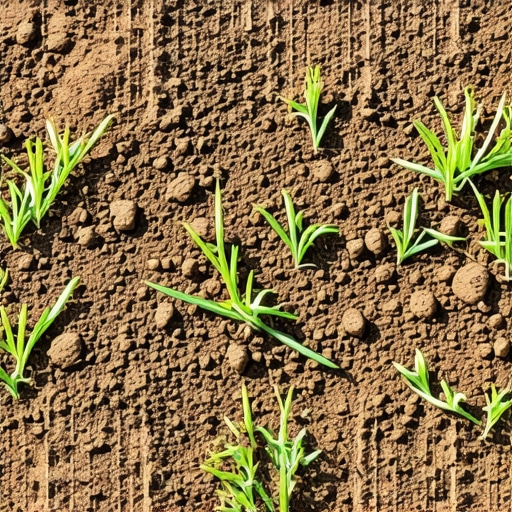
The Forensic Reality of Seeding Failure
You stare at a patch of brown dirt for fourteen days, waiting for a green haze that never arrives. Most homeowners think they have a “black thumb,” but the reality is usually a failure of physics, chemistry, or engineering. I always drill into my new crew members: if you don’t fix the soil grading and chemistry first, every plant or seed you put in the ground is just expensive compost. I have seen guys throw down five hundred dollars of high-grade tall fescue seed onto hard-packed clay and wonder why the birds are the only ones getting a meal. Grass seed is a biological machine. It requires specific environmental triggers to break dormancy. If your yard cleanup didn’t involve removing the layer of debris blocking seed-to-soil contact, you are essentially seeding a parking lot. Professional landscaping isn’t about hope; it is about managing the variables of germination until the biology takes over.
“A retaining wall doesn’t fail because of the stone; it fails because of the water trapped behind it.” – Hardscape Engineering Axiom
The Anatomy of a Failed Seeding Project
Grass seed fails to sprout primarily due to poor seed-to-soil contact, inconsistent moisture levels, and incorrect soil temperatures. To fix it, you must evaluate the compaction levels of the substrate and ensure the micro-environment provides oxygen, heat, and water simultaneously without drowning the embryonic plant. It is a delicate balance of mechanical preparation and biological timing.
Why is my grass seed not growing in patches?
Uneven germination is usually a sign of poor distribution or localized soil issues. If you didn’t use a calibrated broadcast spreader, you likely have heavy concentrations in some areas and nothing in others. However, the more common culprit is hydrophobic soil. In certain spots, the soil becomes so dry and compacted that it actually repels water. The seed in these patches stays bone dry even while the rest of the yard is damp. You fix this with core aeration. We use machines to pull three-inch plugs out of the earth, breaking that surface tension and allowing the irrigation to reach the root zone. Without those holes, your water is just running off into the storm drain. Another factor is allellopathy. If you have walnut trees nearby, they release chemicals into the soil that actively prevent other plants from growing. No amount of watering will fix a chemical war you are losing.
How long does grass seed take to sprout?
The timeline depends entirely on the species and the soil temperature. Perennial ryegrass might show its face in five to seven days. Kentucky Bluegrass? You might be waiting twenty-one days before you see a single blade. This is where most people quit. They stop watering on day ten because they think the seed is dead. In reality, the bluegrass is just starting to wake up. You need a soil thermometer, not a calendar. Most turfgrass seeds require a consistent soil temperature between 55 and 70 degrees Fahrenheit. If you plant too early in the spring, the seed sits in cold, wet mud and rots. If you plant too late in the summer, the heat kills the tender shoots before they develop a cuticle to retain moisture. Timing is the difference between a sod install lookalike and a dirt patch.
Soil Physics and Germination Barriers
Successful germination requires the seed coat to be in direct physical contact with moist soil particles to initiate imbibition. If the seed is sitting on top of a thatch layer or mulch, it cannot draw the necessary capillary water to trigger the growth of the radicle. This is why mechanical yard cleanup is non-negotiable before any seeding operation occurs.
| Grass Species | Germination Time (Days) | Ideal Soil Temp (F) | Drought Tolerance |
|---|---|---|---|
| Perennial Ryegrass | 5 – 10 | 50 – 65 | Low |
| Tall Fescue | 7 – 14 | 60 – 75 | High |
| Kentucky Bluegrass | 14 – 30 | 55 – 70 | Medium |
| Bermuda Grass | 10 – 21 | 70 – 85 | Extreme |
We often see soil pH issues that act as a chemical lock on nutrients. If your pH is below 6.0, the phosphorus your new grass needs for root development is chemically bound to iron and aluminum in the soil. It is there, but the plant can’t touch it. It is like being in a room full of food with your hands tied behind your back. We apply pelletized lime to move that pH toward 6.5, which is the sweet spot where the cation exchange capacity allows the plant to feed. Professional landscaping isn’t just moving dirt; it is chemistry. If you skipped the soil test, you are just guessing with your money.
- Check Soil Temperature: Ensure it is above 55F for cool-season and 70F for warm-season.
- Verify Seed-to-Soil Contact: Use a peat moss spreader or a light rake to cover seed.
- Monitor Hydration: Keep the top 1/2 inch of soil moist, not saturated, 24/7.
- Clear the Thatch: Remove the dead organic layer that prevents seed from touching mineral soil.
- Test the pH: Apply lime or sulfur based on a lab-verified soil analysis.
“Soil is not a static medium; it is a living bioreactor that requires oxygen, water, and mineral balance to support high-performance turf.” – Agronomy Field Manual
The Irrigation Protocol: Hydration vs. Drowning
Irrigation management for new seed is a high-frequency, low-duration task that must maintain a constant moisture film around the seed. If the seed dries out once after it has started to swell, the embryo dies. If the soil becomes anaerobic due to over-watering, the seed rots in the ground because the microbial activity consumes all available oxygen. Accuracy is mandatory here.
I have seen homeowners set their sprinklers for an hour once a day. That is a death sentence. The water soaks in deep where there are no roots yet, and the surface dries out by noon under the sun. You need to water for five to ten minutes, four times a day. You want the ground to look like a wrung-out sponge. Never let it get dusty, but never let it get muddy. If you see algae or moss growing, you are drowning the site. If the ground cracks, you are dehydrating it. This is why professional irrigation systems with smart controllers are worth their weight in gold. They take the human error out of the equation. You are managing hydrostatic tension at the surface level. It is a game of inches.
Chemical Barriers and the Pre-Emergent Trap
Chemical interference from pre-emergent herbicides is the leading cause of “invisible” seeding failure where the homeowner did everything else correctly. These chemicals are designed to create a vapor barrier in the top inch of soil that prevents seeds from sending out a root. If you applied a “Step 1” fertilizer from a big-box store in the spring, you likely applied a barrier that will kill your new grass seed for up to four months. You cannot seed through a chemical wall. If you must seed and prevent weeds, you have to use a specific molecule like Mesotrione, which is selective enough to allow turfgrass to emerge while nuking the weeds. Most people don’t read the label. They just see the green bag and think it helps. It doesn’t. It is a chemical sod install in a bag that only works for existing plants, not babies. If you are struggling, wait for the chemical to break down or use an active carbon application to neutralize the barrier. It is technical, but it works.