
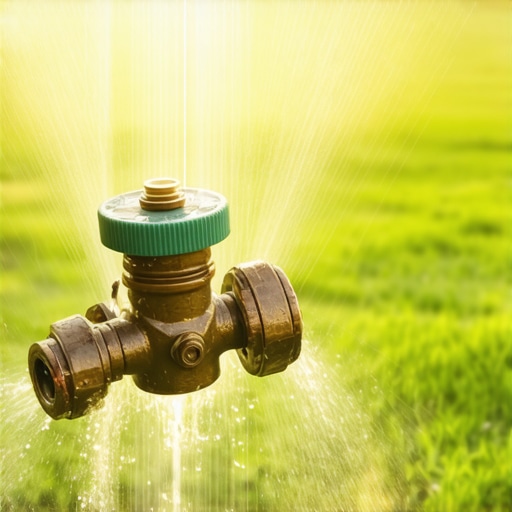
The Anatomy of a Failed Irrigation Zone: A Forensic Autopsy
To fix low sprinkler pressure, you must diagnose the hydraulic friction loss or mechanical failure within the valve assembly. Often, a distorted rubber diaphragm or a clogged solenoid bleed port restricts flow, reducing the downstream PSI required for head pop-up and uniform water distribution. It is not always a broken pipe. It is rarely the city’s fault. Usually, it is a small piece of rubber failing under the constant stress of thousand-gallon cycles.
I always drill into my new crew members: if you don’t fix the soil grading first, every plant you put in the ground is just expensive compost. The same logic applies to irrigation. You can buy the most expensive gear in the world, but if your valves are failing, your yard is going to die. I’ve seen it a thousand times. A guy spends five grand on a high-end sod install, skips the valve maintenance, and three weeks later, he’s got a brown, dormant mess that looks like a hayfield. He blames the sod farm. I blame the lack of respect for the engineering. Landscaping is not just about the green stuff on top. It is about the hydraulics underneath. If your heads aren’t popping up fully, they are not hitting their designed radius. That leads to uneven watering. Uneven watering leads to localized dry spots. Those dry spots become hydrophobic, and suddenly, you are dumping gallons of water onto soil that cannot absorb it. It is a cycle of waste. We stop it today.
Identifying the Hydraulic Bottleneck
Low pressure at the head is a symptom of one of three things: a leak, a clog, or a restriction. If you do not see a geyser in your yard, you do not have a major break. If you see the heads struggling to lift their stems, you are likely dealing with a restriction at the zone valve. The valve is the heart of the system. Inside that plastic housing is a diaphragm that separates the pressurized mainline from the lateral lines. When it gets old, the rubber loses its elasticity. It becomes gummy or stiff. This prevents it from opening fully, creating a bottleneck that drops your pressure from 50 PSI down to 10 PSI before it even hits the first head.
“Low pressure at the sprinkler head often results from friction loss in undersized piping or malfunctions in the zone control valve.” – Irrigation Association Standards
How do I know if my sprinkler valve diaphragm is bad?
To determine if the diaphragm is the culprit, manually open the valve using the bleed screw or by turning the solenoid. If the heads pop up fully during a manual bleed but fail when the controller runs it, you have a solenoid or porting issue. If they fail regardless of how you open it, the diaphragm is physically obstructed or worn out. This is a definitive mechanical test.
- Check the flow control handle: Many valves have a knob to limit water flow. Ensure it is fully open.
- Listen for humming: A vibrating solenoid indicates an electrical connection but a potential mechanical blockage.
- Observe the ‘donut’ effect: If the grass is green near the head but brown two feet away, your pressure is too low to throw the water.
- Inspect the bonnet: Look for hairline cracks in the plastic that might be leaking air or water.
- Test the static pressure: Use a gauge on a hose bib to ensure your home’s main pressure hasn’t dropped.
[IMAGE_PLACEHOLDER]
The $5 Solution: Replacing the Valve Diaphragm
You do not need to dig up the whole valve box. You do not need to call a plumber. Most residential valves, like those from Hunter, Rain Bird, or Irritrol, are serviceable from the top. You are going to spend five dollars on a replacement diaphragm kit rather than sixty dollars on a new valve and three hours of labor. First, shut off the main water supply. If you skip this, you will get a face full of water at 60 PSI. Once the pressure is off, unscrew the bonnet. There are usually four to six screws. Be careful. There is a heavy-duty spring inside. Do not let it fly into the bushes. You will never find it again. Take out the old diaphragm. You will likely see mineral deposits, sand, or a small tear in the rubber. Clean the seat of the valve with a clean rag. Any grit left behind will prevent the new diaphragm from sealing, leading to a valve that never shuts off. That is a different nightmare. Drop the new diaphragm in, seat the spring, and screw the bonnet back on. Tighten them in a star pattern, just like the lug nuts on a truck. This ensures even pressure on the seal. It is a ten-minute job that saves a thousand-dollar lawn.
| Part Replacement | Average Cost | Time Required | Pressure Gain Potential |
|---|---|---|---|
| New Diaphragm | $3.00 – $7.00 | 15 Minutes | High (20-30 PSI) |
| Solenoid Coil | $12.00 – $18.00 | 5 Minutes | Low (Electrical Fix) |
| Complete Valve | $25.00 – $55.00 | 2 Hours | High (Full Reset) |
| Sprinkler Nozzle | $1.50 – $3.00 | 2 Minutes | Medium (Local Fix) |
What causes low water pressure in only one zone?
When low pressure is isolated to a single zone, the problem is downstream of the main manifold. This usually points to a partially clogged valve, a crushed lateral line, or a clogged internal filter at the base of each head. Since multiple heads are failing simultaneously, the valve is the primary suspect in the diagnostic tree.
“Proper irrigation system maintenance is essential to prevent water waste and ensure that the landscape receives the necessary moisture for plant health.” – Texas A&M AgriLife Extension
The Biological Cost of Low Pressure
We talk about valves and pipes, but we are really talking about soil microbiology. When your pressure is low, the water droplets are larger and heavier. They do not travel as far. This creates a saturated zone around the head and a desert everywhere else. In that desert zone, your soil begins to compact. As the soil dries, the pore space collapses. When you finally do get water on it, it runs off the surface rather than infiltrating the root zone. This is why yard cleanup often involves more than just raking leaves. It involves core aeration to fix the damage caused by poor irrigation. If you are doing a sod install, this is even more critical. New sod needs uniform moisture to encourage the roots to knit into the existing soil. If one section of the sod receives 1/4 inch of water and the other receives 1 inch, the dry section will shrink. Those gaps between the sod pieces will allow weeds to germinate and heat to reach the tender root flares. It is a disaster. Fix the pressure before you lay the first piece of grass. Don’t be a hack. Do the engineering first.
Post-Fix Calibration and Maintenance
Once you have replaced the diaphragm and restored your PSI, you must recalibrate. Check your spray patterns. Now that the heads have full pressure, they might be overshooting their targets and hitting your house or your windows. This leads to hard water stains and wood rot. Adjust the radius screws on the top of each head. This is also the time for a thorough yard cleanup. Trim back any perennials that have grown over the heads. Remove any mulch that has migrated into the head’s path. A mulch volcano around a head is just as bad as a bad valve. It blocks the flow and creates a soggy mess that invites fungal pathogens like Rhizoctonia solani. Keep your heads clear. Keep your pressure high. Keep your soil healthy. Your lawn isn’t a decoration. It is a living, breathing ecosystem. Treat it with some respect. Don’t skip the maintenance. Do the work. That is the difference between a landscaper and a guy with a lawnmower.
Comments are closed.