
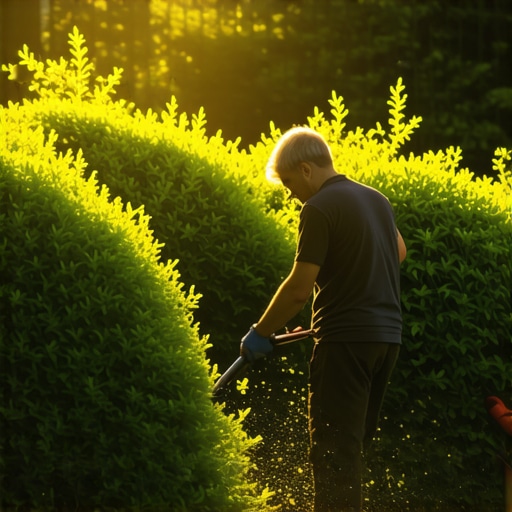
The Science of the Cut: Why Timing and Biology Dictate Shrub Health
I always drill into my new crew members: if you don’t fix the soil grading first, every plant you put in the ground is just expensive compost. But once those plants are in, the battle shifts from civil engineering to biological management. Last season, I walked onto a property where a ‘landscaping’ hack had taken a pair of dull gas-powered shears to a row of 10-foot Buxus sempervirens (Boxwoods) at 2:00 PM in the middle of a 95-degree July heatwave. By Thursday, the shrubs weren’t green; they were a sickly shade of rust. That’s the cost of ignoring plant physiology. Pruning is surgery. You are creating an open wound in a living organism that relies on internal pressure and chemical signaling to survive. If you don’t understand the metabolic cost of a cut, you shouldn’t be holding the shears.
The Critical Window for Pruning Overgrown Shrubbery
The best time of day to trim overgrown shrubbery is in the early morning, specifically between dawn and 10:00 AM, to capitalize on peak turgor pressure and low transpiration rates. This timing ensures the plant has maximum hydration levels to begin the compartmentalization of the wound before afternoon heat increases metabolic stress. This isn’t just about aesthetics; it’s about the hydraulic integrity of the plant’s vascular system.
How does temperature affect shrub pruning?
Temperature is a primary driver of the transpiration rate—the process by which water moves through a plant and evaporates from leaves. When you prune in high heat, you accelerate moisture loss at the site of the cut. This can lead to desiccation of the cambium layer. High temperatures also favor the movement of fungal spores and bacteria. By pruning in the cool morning, you allow the cut surface to begin its natural sealing process—forming a ‘callus’—before the environment becomes hostile. We aim for days where the ambient temperature is between 50 and 75 degrees Fahrenheit for optimal recovery. Cold snaps can be just as dangerous, as frozen wood is brittle and prone to splitting, which creates jagged wounds that never heal properly.
When should you avoid trimming overgrown bushes?
Avoid trimming in the late afternoon or evening. While it might be cooler for the worker, the plant is entering a state of darkness where photosynthesis stops. Plants need the energy produced by sunlight to fuel the chemical response required to seal a wound. Pruning at night leaves a raw, open cut exposed to high-humidity nocturnal environments, which are prime breeding grounds for pathogens like Cercospora leaf spot or powdery mildew. Furthermore, never prune during a drought unless the plant is already dead. The lack of available moisture in the soil means the plant cannot spare the resources to heal. This is where your irrigation system becomes your most valuable asset in a landscaping recovery plan.
“Proper pruning requires understanding the plant’s growth cycle; removing more than 25% of the canopy in one season can lead to root starvation.” – Penn State Extension Horticulture Manual
The Anatomy of an Overgrown Shrub: A Forensic Autopsy
When a shrub becomes overgrown, it’s usually because the apical dominance—the hormone-driven growth at the tips—has been allowed to run wild, shading out the interior of the plant. This creates a ‘hollow’ shrub. If you look inside an overgrown Yew or Privet, you’ll see bare wood and dead twigs. This is because the plant has abandoned those leaves due to lack of light. To fix this, you can’t just shave the outside. You have to perform ‘rejuvenation pruning.’ This involves selective thinning cuts that allow light to penetrate the center, ‘waking up’ latent buds on the old wood. If you do this at the wrong time of day or season, you shock the system. The sudden exposure of tender interior bark to direct afternoon sun can cause sunscald, effectively killing the very tissue you’re trying to revive. It’s a delicate balance of engineering light and managing stress.
Pruning Management and Material Logic
| Shrub Category | Optimal Pruning Window | Biological Goal | Tool Requirement |
|---|---|---|---|
| Spring Flowering | Immediate Post-Bloom | Preserve next year’s buds | Bypass Pruners |
| Evergreens | Late Winter/Early Spring | Minimize sap loss | Hedge Shears (Manual) |
| Deciduous (Overgrown) | Late Winter (Dormant) | Structural Visibility | Loppers/Hand Saw |
| Broadleaf Evergreens | Early Morning (Spring) | Transpiration Control | Bypass Pruners |
Quality landscaping isn’t just about the cut; it’s about the tools. I see homeowners using dull, bypass pruners that crush the stem instead of slicing it. A crushed stem is a dead stem. You need a razor-sharp blade that leaves a smooth surface. This allows the plant to form a clean ‘branch collar’ seal. If you’re doing a yard cleanup, don’t just throw the debris in a pile. Overgrown material often harbors pests. Bag it and remove it from the site to prevent re-infestation. If you’re planning a sod install nearby, do the pruning first. The foot traffic and debris from a major shrub overhaul will destroy new turf faster than a heatwave.
The Master Pruner’s Gear Audit
- Bypass Pruners: For clean cuts on living tissue up to 1 inch thick.
- 70% Isopropyl Alcohol: To sterilize blades between every single plant to prevent disease spread.
- Folding Hand Saw: For structural limbs over 1.5 inches.
- 12-inch Soil Probe: To check irrigation depth before and after the cut.
- Heavy-duty Tarp: For immediate yard cleanup of diseased or pest-ridden foliage.
“A clean cut at the branch collar allows the plant to form a callus layer, effectively compartmentalizing the wound against decay.” – International Society of Arboriculture (ISA) Standards
Hydrostatic Pressure and Root Zone Support
After you’ve performed a heavy pruning on overgrown shrubbery, the plant’s irrigation needs change. It has less leaf surface to transpire water, but it needs more soil nutrients to repair its structure. This is a critical time. Over-watering will lead to root rot because the plant isn’t ‘drinking’ as much. I use a soil probe to ensure the moisture is reaching the root flare but not pooling. If the soil is compacted red clay, you’re in trouble. The plant needs oxygen in the root zone to fuel the metabolic repair of those branches. If you’ve just finished a sod install, be careful not to over-saturate the shrubs while trying to knit the new grass. It’s a common mistake that leads to ‘wet feet’ and fungal dieback in mature landscaping.
The Long-Term Recovery Protocol
Once the pruning is done, the work isn’t over. You need to monitor for ‘water sprouts’—those thin, vertical shoots that pop up as a stress response to heavy cutting. They are weak and drain the plant’s energy. Snip them. Watch the soil pH. A plant under stress from heavy pruning is more susceptible to nutrient deficiencies. If your soil is too alkaline, your shrubs won’t be able to take up the iron they need for recovery. Don’t just dump fertilizer on it. That’s a hack move. Test the soil first. Real professionals work with data, not guesswork. It’s about building a sustainable ecosystem, one cut at a time.
Comments are closed.