
Why Your Fall Lawn Strategy Determines 2027 Success
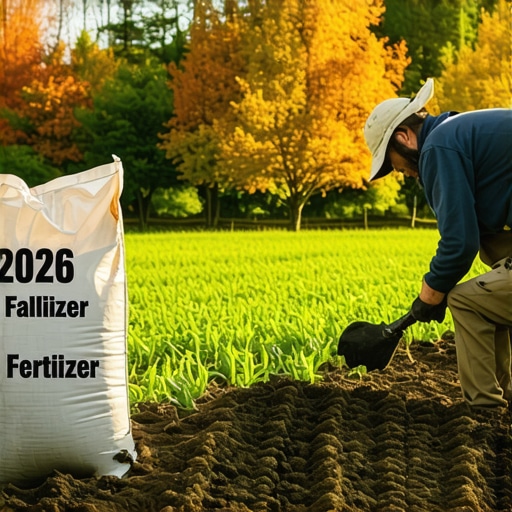
The best month to apply 2026 fall fertilizer is September or October, specifically when soil temperatures drop to 55-65 degrees Fahrenheit. This timing allows cool-season grasses to store essential carbohydrates in the root system before the winter dormancy period begins, ensuring rapid spring green-up and drought resistance. For many homeowners, the concept of fall maintenance is relegated to leaf blowing, but the horticultural reality is that your turf does more work in the autumn than it does in the height of summer. If you miss this window, you are not just missing a green lawn; you are actively shortening the lifespan of your sod install and inviting fungal pathogens to take hold in the spring.
The Chemical Nightmare: A Cautionary Tale of Improper Application
I recently got called out to a job site where the homeowner had effectively sterilized their front yard. They were trying to be proactive about their 2026 fall fertilizer and applied a high-concentration, quick-release urea during a 90-degree heat spike in late August. By the time I arrived, the turf was bleached and brittle. The salt index in the fertilizer was so high it caused osmotic stress, literally sucking the moisture out of the plant cells. We had to perform an emergency yard cleanup and flush the soil with three inches of water just to lower the EC levels. It was a $4,000 mistake that could have been avoided by waiting for the correct soil temperature and using a controlled-release product. This is why I drill into my crew: nature does not care about your schedule. You work on the soil’s clock or you pay the price in dead biomass.
“Fall is the most important time of year to fertilize cool-season grasses such as Kentucky bluegrass, perennial ryegrass, and tall fescue. Fertilizer applied in late summer and fall helps the plant recover from summer stress and prepares it for the following growing season.” – Penn State Center for Turfgrass Science
How much modified gravel do I need for a patio base?
While we are discussing site preparation, remember that any landscaping project involving hardscape requires precise calculation. For a standard four-inch base, you generally need one ton of modified gravel per 50 square feet. Do not eyeball this. Poor base compaction leads to heaving when the ground freezes in late 2026. If the base fails, the landscape fails. Period.
The Biology of Fall Nutrient Uptake
When the air cools but the soil remains warm, turfgrass switches its energy production from leaf growth to root and rhizome development. This is a critical physiological pivot. During this time, the plant is scavenging for nitrogen to build amino acids and proteins. However, the type of nitrogen matters. In 2026, we are seeing a shift toward more sustainable, polymer-coated fertilizers that release nutrients based on temperature and microbial activity rather than just water solubility.
The N-P-K Breakdown for Fall 2026
Standard fertilizer bags show three numbers. For fall, you want a higher first and third number. Nitrogen (N) drives the root storage, while Potassium (K) strengthens the cell walls against freezing. Phosphorus (P) is usually restricted by local codes unless you are doing a new sod install. If you are laying new grass, phosphorus is essential for ATP production and root elongation.
| Month | Action Priority | Primary Nutrient Focus |
|---|---|---|
| September | Recovery and Repair | Nitrogen (High) |
| October | Root Architecture | Potassium (High) |
| November | Dormancy Prep | Slow-Release Balance |
Yard Cleanup and Mechanical Preparation
Applying fertilizer to a yard covered in oak leaves is like throwing money into a wood chipper. You must execute a thorough yard cleanup before any granules hit the soil. This means removing all debris that blocks the fertilizer from reaching the soil surface. Furthermore, I recommend core aeration during the fall. You need to pull 2-3 inch plugs to alleviate soil compaction. This allows the fertilizer to penetrate the root zone directly. If you skip aeration, you are only fertilizing the thatch layer, which promotes shallow rooting and makes your lawn susceptible to drought in 2027.
What is the best irrigation schedule after fall fertilization?
Immediately after application, you must irrigate with at least 1/4 inch of water to wash the granules off the leaf blades and into the soil. Afterward, shift your irrigation to deep, infrequent cycles. Water exactly one inch per week, delivered in one or two heavy sessions. This forces the roots to chase the moisture downward, creating a deep, resilient root mass that can withstand a hot 2027 summer. Daily light misting is for amateurs; it creates weak, surface-level roots.
“Nitrogen applied in the fall is more efficiently used by the grass plant than nitrogen applied in the spring. This results in a healthier plant with more stored energy.” – Texas A&M AgriLife Extension
The 2026 Fall Landscape Checklist
- Test your soil pH: Aim for 6.5 to 7.0 for optimal nutrient availability.
- Mow at 2.5 inches: Lowering the height slightly in late fall prevents snow mold.
- Check the 811 marks: If you are doing any deep aeration or irrigation repair, call before you dig.
- Calibrate your spreader: An uncalibrated spreader leads to striping and chemical burns.
- Assess irrigation heads: Ensure no heads are leaking, which can cause local nutrient leaching.
Hardscaping and Drainage Integration
In my 20 years of experience, I have seen hundreds of sod installs fail because the contractor ignored the grading. Fall is the best time to fix drainage issues before the winter rains and snow arrive. If you have standing water, your fertilizer will simply wash away, contributing to nitrate runoff in local waterways. Installing a French drain or adjusting the pitch of the yard ensures your fertilizer stays where it belongs: in the root zone. Remember, a retaining wall doesn’t fail because of the stone; it fails because of the water trapped behind it. Use a modified gravel base and proper screed pipes to ensure stability. Do not skip the compaction. The tamper should literally bounce off the base if it is done correctly. It will rot if you leave pockets of air in the soil or gravel.