
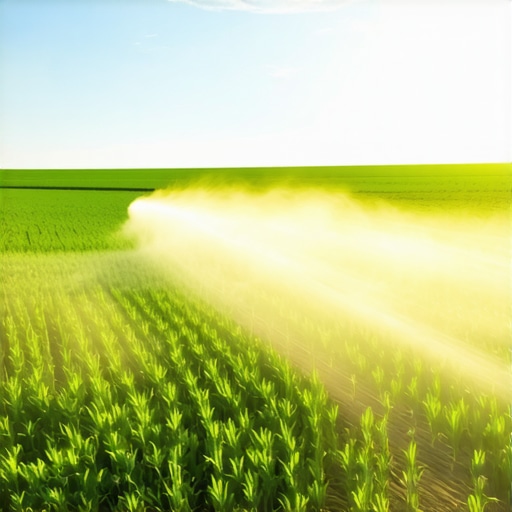
A homeowner called me in a panic last spring after they completely torched their front lawn by applying a high-dose agricultural-grade liquid urea during a 90-degree heatwave. The grass didn’t just turn brown; it turned a ghostly, translucent white. This is what happens when you treat your yard like a science experiment without understanding the osmotic pressure of salt-based nutrients. In 20 years of landscaping, I have seen more yards destroyed by ‘fast green-up’ promises than by genuine neglect. If you want that deep emerald color by Saturday, you have to understand the microscopic reality of foliar feeding and soil microbiology. This isn’t just about dumping chemicals; it is about managing the nitrogen cycle and ensuring your irrigation system is calibrated to handle the salt index of your inputs.
The Anatomy of a Failed Green-Up: Why Your Grass is Yellowing Despite Feeding
To achieve a fast green-up with liquid fertilizers, you must use chelated iron and high-bioavailability nitrogen sources that bypass the soil-root interface through foliar absorption, which provides visible results within 24 to 72 hours without causing the long-term structural damage associated with cheap, high-salt synthetic salts. When a lawn fails to respond to fertilizer, the culprit is rarely the product itself but rather the underlying soil chemistry. If your pH is sitting above 7.2 or below 5.5, those expensive nutrients are essentially ‘locked’ in the soil, unavailable to the plant regardless of how much you spray. I often tell my crew that applying fertilizer to a lawn with a 1-inch thatch layer is like trying to feed a person through their winter coat. You have to clear the debris first. This is where a proper yard cleanup becomes a biological necessity, not just an aesthetic one.
“Nitrogen is the most limiting nutrient in turfgrass systems, but excessive application leads to succulent growth that is highly susceptible to disease and environmental stress.” – Penn State Center for Turfgrass Science
The Science of Foliar Absorption and Nitrogen Loading
Liquid fertilizers in 2026 have moved beyond simple urea. We are now seeing sophisticated delivery systems using carbon-loaded molecules that act as Trojan horses, slipping through the waxy cuticle of the grass blade. This is critical because root-zone uptake is slow. When you spray, you are looking for stomatal entry. If the humidity is too low, the stomata close. If you spray at noon, the liquid evaporates, leaving behind salt crystals that suck the moisture out of the leaf. I’ve seen $5,000 sod install projects fail in a week because the contractor used a high-salt liquid on fresh roots. You need a product with a low salt index (below 20) if you want speed without the burn.
| Fertilizer Type | NPK Ratio | Target Result | Application Frequency |
|---|---|---|---|
| Chelated Iron Blend | 6-0-0 + 5% Fe | Instant Deep Green | Every 14 Days |
| Nitrogen Boost (Urea-based) | 28-0-0 | Massive Growth | Every 30 Days |
| Micro-Nutrient Complex | 0-0-2 + Micros | Stress Recovery | Every 21 Days |
| Humic Acid Base | 0-0-1 | Soil Remediation | Monthly |
Evaluating the Best 2026 Liquid Fertilizers for Rapid Color
The top-performing 2026 liquid fertilizers utilize a combination of methylated urea for sustained release and seaweed-derived cytokinins to stimulate chloroplast production, ensuring that the ‘green-up’ is a result of increased chlorophyll density rather than just bloated, water-filled cells that will collapse under heat stress. If you’re looking for professional-grade results, you need to look at the ingredients list for ‘complexing agents’ like fulvic acid. These agents prevent the nutrients from binding with other elements in your tank mix, ensuring that every drop you spray is actually functional. I’ve had to perform ‘forensic autopsies’ on yards where the homeowner mixed two incompatible liquids, creating a sludge that clogged their irrigation heads and turned the lawn into a grey, moldy mess. Precision matters.
How much modified gravel do I need for a patio base?
While this seems unrelated to fertilizer, the engineering of your yard impacts your drainage and, subsequently, your nutrient runoff. For a standard 4-inch base, you need roughly 0.5 tons of modified gravel per 10 square feet. Poor drainage leads to anaerobic soil conditions where liquid fertilizer turns into ammonia gas (volatilization) rather than staying in the soil for the plants. You cannot fix bad engineering with a spray bottle. Fix the grade first.
Will liquid fertilizer burn my new sod?
Yes, it will rot the tender new roots if the salt index is too high. For a new sod install, you should avoid all high-nitrogen liquids for the first 21 days. Instead, use a phosphorus-heavy ‘starter’ liquid with humic acid to encourage root elongation. Once the roots are knitted into the soil, you can move to a light nitrogen foliar feed. Don’t rush the process. High-nitrogen early on creates a ‘lazy’ root system that won’t survive the summer.
The Professional Application Protocol: Avoiding the Hack Method
To apply liquid fertilizer like a pro, you must calibrate your sprayer to deliver precisely 1 gallon of finished solution per 1,000 square feet, using a flat-fan nozzle at 30 PSI to ensure uniform coverage and prevent the ‘tiger striping’ caused by uneven overlap. Most DIYers just walk and spray. That’s how you get dead spots. I make my guys use a marking dye—usually a temporary blue pigment—so they can see exactly where the product has landed. This eliminates double-dosing and ensures the edges of your landscaping beds don’t get scorched. Remember, 1 inch of water per week is the rule. If you apply liquid fertilizer and don’t have a functional irrigation system to wash the excess salts into the root zone after 24 hours, you are playing with fire. [image_placeholder_1]
- Test soil pH before the first application to ensure nutrient availability.
- Mow the lawn 24 hours before spraying to maximize leaf surface area.
- Avoid application if temperatures exceed 85 degrees Fahrenheit.
- Use a surfactant (spreader-sticker) to help the liquid adhere to the grass blades.
- Clean all equipment immediately after use to prevent corrosion from nitrogen salts.
“A retaining wall doesn’t fail because of the stone; it fails because of the water trapped behind it.” – Hardscape Engineering Axiom
This axiom applies to lawns too. A lawn doesn’t fail because of the lack of fertilizer; it fails because the soil structure is compacted and the water (and oxygen) can’t reach the roots. If your ground is hard as a brick, do a yard cleanup, aerate it, and then apply your liquid nutrients. The color will come naturally if the biology is right. Stop looking for a miracle in a bottle and start looking at the dirt. It’s the foundation of everything we do. If you treat your lawn like an ecosystem rather than a carpet, you’ll have the best yard on the block by 2026. Stick to the measurements. Trust the chemistry. Don’t be the homeowner who calls me to dig up their dead grass because they wanted a shortcut.